Manufacturing Pride: How to Build a Leading Muslim Identity in Western Societies?
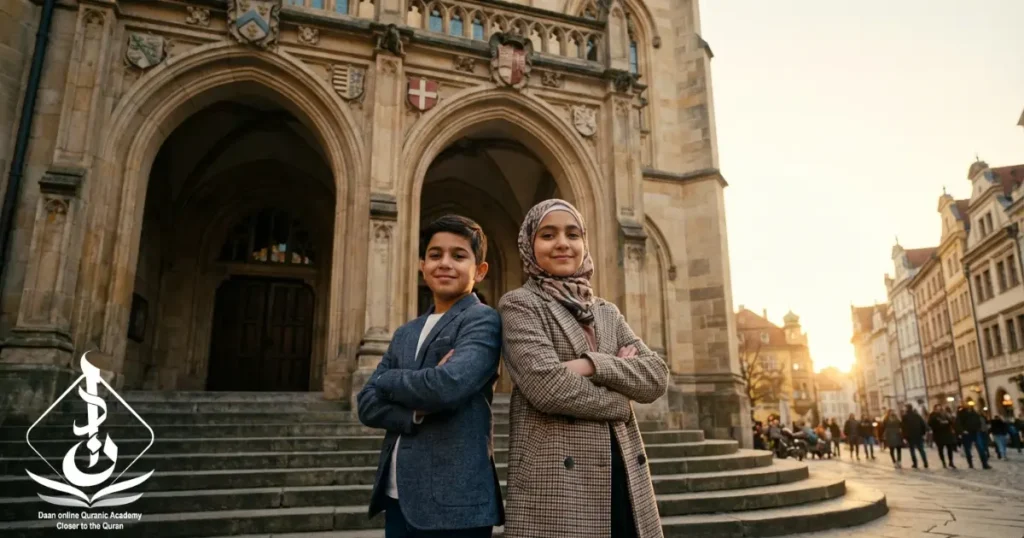
Introduction: From Defensive to Proactive Parenting For decades, the philosophy of raising Muslim children in the West was centered on “protection” and “prevention”—attempting to stop children from dissolving into the surrounding culture. However, in the age of digital and social openness, protection alone is no longer sufficient. Today, we need to shift from a “siege mentality” to a “leadership mentality.” The goal is not just for the child to keep their identity, but to see this identity as a source of strength and a Unique Selling Point (USP) that makes them a leader in their community. “Manufacturing Pride” is the process through which we transform belonging to Islam from a heavy obligation into a badge of honor worn with confidence. I. The Psychology of Pride: Why Does a Child Need to Feel Proud? In their early years, children are instinctively looking for a sense of belonging. If a child feels that their religion or culture puts them in a position of constant defense or apology for actions they didn’t commit, they will subconsciously begin to detach. II. Practical Steps to Building a Leading Muslim Identity 1. Instilling a “Global Worldview” A child must understand their place in the universe. They are not just a “minority” in a Western country; they are part of an Ummah that spans 1.5 billion people, with a scientific and civilizational history that changed the face of humanity. 2. Distinction, Not Isolation (Integration without Assimilation) A Muslim leader in the West is someone who understands their society perfectly, speaks the language fluently, and excels in its sciences, yet retains their moral compass. 3. Achievement is the Universal Language In the West, respect is earned through achievement. To be a leader, a child must be encouraged to excel academically, athletically, and socially. III. Navigating the “Identity Conflict” Children in the West face contradictions between what they hear at home and what they see at school (such as certain celebrations or different moral concepts). IV. The Five Leadership Skills for the Young Muslim Leader To transform your child from a “follower” into an “influencer,” they must be trained in specific skills: V. The Academy’s Role in Manufacturing This Pride At Daan Quranic Academy, we realize that teaching the Noorani Qaida or Quranic memorization is not an end in itself, but a means to build a human being. Conclusion: The Most Valuable Investment Building a leading Muslim identity in the West is the “project of a lifetime.” It may require double the effort, long patience, and innovative educational tools, but the fruits are worth it. When you see your child standing in their university or workplace in the future, respected not just for their intelligence, but for their ethics and pride in their identity, you will realize that you didn’t just raise a child—you manufactured a leader. Remember: We don’t raise our children to hide; we raise them to shine. Experience our unique approach first-hand. Book your free free trial sessions now with no strings attached.
The Art of Celebration.. How to Restore the Spark of Eid in the West?
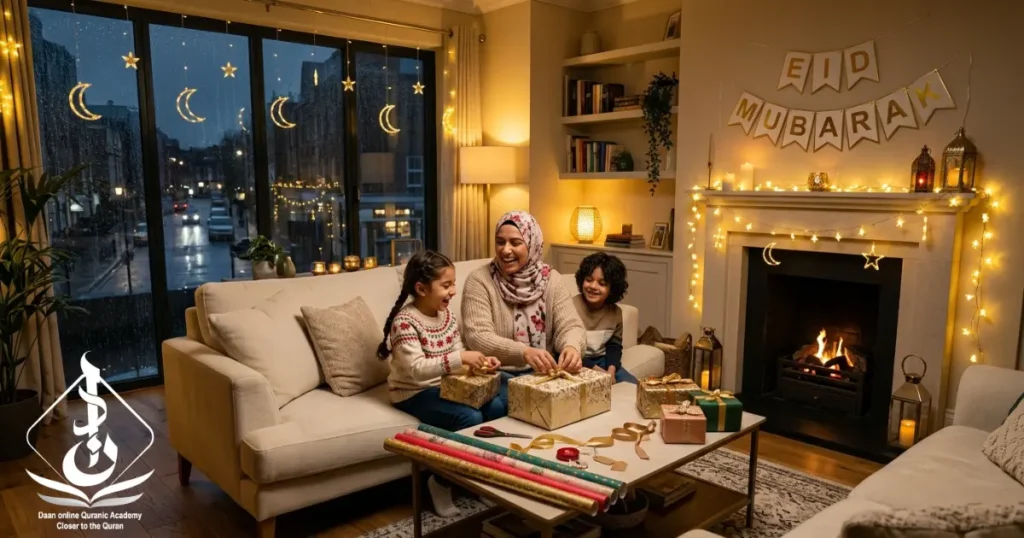
Introduction: Eid.. More Than Just a Day In the heart of Western societies, where streets glitter and decorations fill every corner during non-Islamic festive seasons, Muslim parents face a profound challenge: How do we plant the love of Eid in our children’s hearts? In the West, Eid is not just a religious ritual; it is a “Battle of Identity.” If a child doesn’t feel that their Eid is “more beautiful” and “more joyful,” they may seek belonging in others’ celebrations. At our Academy, we believe that “Manufacturing Joy” is an act of worship, and making your home a beacon of happiness is the first step in connecting your child to their roots. I. The Psychology of Celebration (Why Are Children Attracted to the ‘Other’?) Children are inherently visual beings. They are drawn to colors, lights, and music. In the West, celebrations engage all five senses: the scent of cinnamon, the glowing street lights, and meticulously wrapped gifts. To compete with this momentum, we must do more than say “Eid Mubarak.” We must embody Eid. A child needs to see Eid, smell it, taste it, and touch it. II. Transforming Your Home into an “Eid Kingdom” Don’t wait for the streets to celebrate you; create your own festival within your home. III. Creating Exclusive “Family Rituals” (The Power of Traditions) What makes a child anticipate Eid is the “ritual” that precedes it. IV. Gifts: The Art That Outshines the Material In the West, wrapping is often as important as the gift itself. V. Community Connection and Pride in Identity Do not let Eid be a time of isolation; let it be an opening with dignity. VI. The Eid Prayer: The Grand Festival Eid prayer in the West is often held in Islamic centers or rented halls. VII. The Academy’s Role in Reinforcing These Values At Daan Quranic Academy, we don’t just teach letters and verses; we teach a “Lifestyle.” Through our courses, we focus on linking the Arabic language and Islamic upbringing to lived reality. Eid is the true laboratory where we see the fruits of what the child learns. Conclusion: Eid is a Trust in Our Hands Dear parents, Eid in the West is not a burden; it is a golden opportunity to show them the beauty of our faith. When you make the Muslim Eid an artistic masterpiece that surpasses what they see on screens, you aren’t just providing fun—you are protecting their faith and planting an unshakable pride in their souls. Experience our unique approach first-hand. Book your free free trial sessions now with no strings attached.
How to Effectively Memorize the Holy Quran While Busy with Work or Studies?

Memorizing the Holy Quran is a profound spiritual journey that every Muslim aspires to undertake. It brings immense elevation in this life and the hereafter, filling the soul with divine light. However, many face a significant challenge: how to memorize the Quran while busy with professional life or demanding academic requirements. Some believe that Quranic Hifz requires total isolation, but the truth is that the Quran was revealed to organize life, not to hinder it. In this comprehensive guide, we will draw a clear and practical roadmap for memorizing the Book of Allah effectively, even if your schedule is packed with tasks. First: Preparing the Spiritual and Faith-Based Foundation Before taking any practical steps, one must realize that memorizing the Quran is a divine selection. The foundation of successful Hifz is not just innate intelligence, but rather sincerity and spiritual connection. Second: Time Management for Quran Memorization he secret to memorizing the Quran for busy professionals and students is not in “finding” new time, but in “investing” available time wisely through the following strategies: 1. The “Golden Hours” Rule for Hifz The best time for memorization is the time of Fajr (dawn). At this time, the mind is at its peak clarity, and the house is quiet. Dedicating just 30 to 45 minutes after Fajr for new memorization is a proven strategy for long-term success. 2. Utilizing “Dead Time” (Micro-Moments) We spend hours weekly in commuting, waiting in lines, or performing routine chores. This is a “lost treasure”: 3. The “Consistent Small Amount” Strategy Do not set impossible goals like memorizing a full page daily when you are overwhelmed. Consistency is more important than quantity. Memorizing just two verses daily with consistency is far better than memorizing a whole page once a week and then stopping due to burnout. Third: Proven Technical Methods for Effective Hifz To ensure your memorization is solid and doesn’t fade, follow this Hifz methodology: Fourth: Addressing the Dilemma of Forgetfulness and Revision The major challenge in Hifz is not the initial memorization, but the “retention.” As the saying goes, “Revision is the true memorization.” Fifth: Specific Advice for Students and Employees For Students: For Employees: Sixth: Utilizing Modern Technology and Apps We live in the digital age, and there are wonderful tools to help you: Seventh: Finding a Motivating Environment Individual memorization can lead to boredom. Look for a Hifz Buddy or join a community: Eighth: Dealing with Slumps and Despair Slumps are natural. When you feel your memory is weak, do not give up. Conclusion: Your Journey with Daan Quranic Academy Memorizing the Holy Quran is a lifelong journey, not a race. For those busy with work or study, every minute spent with a verse is a great spiritual investment. Allah rewards the effort and the sincerity, not just the speed of completion. Start today, even with a single verse. If you are looking for a professional, flexible, and structured environment to help you maintain discipline, Daan Quranic Academy is a leading platform designed specifically for busy individuals. They offer specialized programs and expert tutors who understand the challenges of modern life, guiding you step-by-step through this blessed journey. Always remember: “The small, consistent act is better than the large, interrupted one.” May Allah make you among the people of the Quran. Experience our unique approach first-hand. Book your free free trial sessions now with no strings attached.
The Ultimate Guide: A Plan for Teaching Salah to Non-Arabic Speaking Children
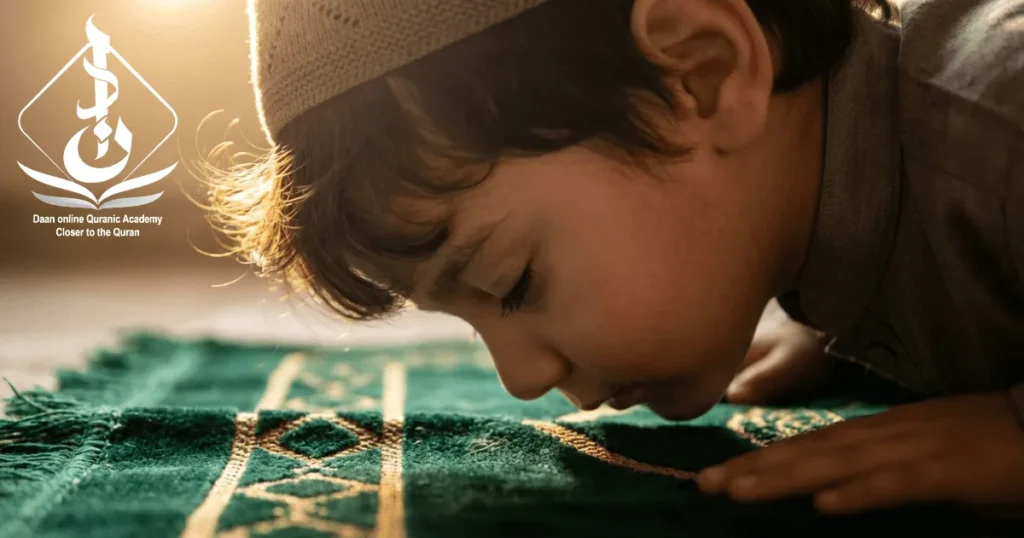
(An Educational and Spiritual Roadmap) Introduction Salah (prayer) is the second pillar of Islam and the direct link between a servant and their Creator. For children growing up in non-Arabic speaking environments, learning Salah presents a double challenge: it is not just about physical movements, but about learning a new language and a deep spiritual context. The goal of this plan is not merely to have children “memorize” words, but to build a relationship of love and belonging to this great ritual. Daan Academy stands as a leading educational partner in this journey, offering specialized courses designed specifically to help non-Arabic speaking children master Salah and its Adhkar (remembrances) through engaging and systematic methods. Phase 1: Psychological and Spiritual Foundation (Before Teaching) Before moving to “How do we pray?”, we must answer the child’s question: “Why do we pray?”. 1. Instilling the Love of Allah (Internal Motivation) Teaching Salah shouldn’t start with commands, but with introducing the Bestower of Blessings. The child should realize that Salah is a “special time” to talk to Allah, who loves them and gave them everything. 2. Leading by Example A child sees prayer before they learn it. When they see their parents happily leaving everything at the sound of the Adhan (not as a heavy burden), a natural curiosity to participate is born. Phase 2: Breaking the Language Barrier The biggest challenge for non-Arabic speakers is pronunciation and understanding meanings. This is a core focus at Daan Academy. 1. Connecting Sound to Meaning (Functional Translation) Do not settle for having the child repeat words they do not understand. In our courses at Daan Academy, we explain the meanings of the Adhkar in the child’s native language so their heart can connect with what their tongue utters. 2. Phonetic Transliteration We use phonetic writing (e.g., Al-ham-du lil-lah) in our educational materials to help the child with correct pronunciation in the early stages until they master reading Arabic script. Phase 3: The Role of Dan Academy in the Educational Journey At Daan Academy, we believe education must be interactive and professional. Our programs include: 1. Specialized Salah Courses We provide live online classes focusing on the correct performance of Salah. Our teachers are qualified to work with non-Arabic speakers, using the latest visual and educational tools to ensure clarity. 2. Comprehensive Adhkar Curriculum We don’t stop at the physical movements. Daan Academy offers a specific course for “Adhkar of Salah” and “Daily Remembrances.” Children learn the virtues of each Thikr and how to pronounce it correctly (Makharij al-Huruf), ensuring their tongue remains moist with the remembrance of Allah. 3. Monitoring and Assessment We understand the importance of consistency. We provide tracking schedules and conduct periodic assessments to ensure the child is praying with confidence and proficiency. Phase 4: Step-by-Step Implementation (Gradual Learning) Salah should be divided into “micro-learning” units to prevent the child from feeling overwhelmed. Week 1: Movements and Intention (Niyyah) Focus only on the physical actions (Standing, Bowing/Ruku, Prostrating/Sujud). Let the child perform the movements with you in congregation without demanding full memorization of the words yet. Week 2: Surah Al-Fatiha and Transition Phrases Surah Al-Fatiha is the essence of Salah. At Dan Academy, we focus on memorizing it slowly, emphasizing the articulation of difficult Arabic letters (like Haa, ‘Ayn, and Qaf) that non-native speakers often find challenging. Week 3: Postures and Adhkar Teach them what to say during Ruku (Subhana Rabbiyal ‘Adheem) and Sujud (Subhana Rabbiyal ‘A’la). Explain the spiritual logic: we glorify Allah’s greatness while we are in our humblest position (prostration). Phase 5: Innovative Teaching Strategies 1. Leveraging Technology and Visual Aids Dan Academy utilizes attractive presentations and educational videos in its lessons that explain Wudu (ablution) and Salah step-by-step, making the lesson an enjoyable time the child looks forward to. 2. Educational Flashcards We always recommend using colorful cards: one side featuring a picture of the movement, and the other containing the Thikr in Arabic, transliteration, and translation. 3. Building Identity through Community Taking the child to the Masjid helps them realize that Salah is a universal language. At the Academy, we provide a virtual classroom environment where the child sees peers from all over the world learning with them, reinforcing their sense of belonging to the global Ummah. Phase 6: Habit Building and Consistency 1. The 21-Day Rule and Motivation Charts A child needs consistent repetition to build a habit. Use a “Star Chart” for every prayer performed. At Daan Academy, we encourage students with certificates of appreciation and symbolic rewards upon completing each level. 2. Linking Prayer to Daily Routine For children in the West, the clock can be confusing. Link prayer to daily events: “Dhuhr is after lunch,” “Isha is before the bedtime story.” Special Challenges and How to Overcome Them 1. Shyness and Pronunciation Non-native children may feel shy about pronouncing Arabic letters. Our role at the Academy is to break this barrier through constant encouragement. We remind them of the Hadith: “The one who recites the Quran and stutters in it… will have a double reward.” 2. Environmental Pressure Teach them how to explain to their schoolmates with pride that Salah is their “special time for meditation and connection with the Creator.” Conclusion Teaching Salah to non-Arabic speaking children is a long-term investment in their identity. Combining the parents’ efforts at home with the professional, specialized education provided by Daan Academy ensures that the child reaches a stage of mastery, Khushu (devotion), and a deep heart-connection with Allah. Our courses at Daan Academy are not just lessons; they are a spiritual journey where we take your child’s hand to become a lover and establisher of prayer. We are here to make the task easier for you and to make learning Adhkar and Salah a sacred, enjoyable experience that stays with your child for a lifetime. Join us at Daan Academy, and let us begin the journey of planting the light of Salah in the hearts of our little ones. Book your free free trial
The Quran: A Guiding Light and a Gift for Every Child’s Future

In a rapidly changing world, our children in the West and non-Arabic speaking societies face significant cultural and identity challenges. The Holy Quran emerges not just as a book of worship, but as a comprehensive way of life and a compass guiding the new generation toward success in both worlds. Teaching the Quran to children at an early age, especially for those living in environments where Arabic is not the primary language, is an investment that transcends linguistic boundaries to shape personality and develop the mind. In this article, we explore in detail the multifaceted benefits of learning the Holy Quran and how it empowers “expatriate” Muslim children with the tools for academic success and psychological balance. 1. Building Islamic Identity in an Open Environment For a child growing up in Europe, America, or any non-Muslim country, “identity” is the greatest challenge. Learning the Quran gives them a sense of belonging to a great Ummah with a glorious history and a sacred language. 2. Linguistic Milestone: The Quran as a Gateway to Arabic For non-Arabic speakers, the Holy Quran represents the “Supreme Standard” of the language. Learning the Quran is not just about memorizing verses; it is intensive linguistic training. 3. Cognitive and Neurological Benefits: Developing Intelligence and Focus Educational studies have shown that children who memorize the Quran often excel academically in other fields such as mathematics and science. Why? 4. Psychological Balance and Spiritual Health Children abroad often experience psychological pressure from trying to reconcile two cultures. The Quran provides the “tranquility” they need. 5. Instilling Moral Values and Good Character The Quran is not just a text to be read; it is a constitution of ethics. For parents abroad, the Quran represents the “First Teacher” of morals. 6. Challenges for Non-Arabic Speakers and How to Overcome Them We understand that teaching the Quran to a child who does not speak Arabic may seem difficult, but with modern technology and specialized academies, it has become enjoyable. 7. The Role of Online Quran Academies In many places abroad, nearby mosques or full-time teachers may not be available. This is where specialized academies come in, providing: Conclusion: An Investment That Never Fails Teaching your child the Holy Quran while living in the West is the greatest gift you can give them. You are not just teaching them a religion and a language; you are building a leader, a thinker, and a balanced human being with a solid identity and an open mind. Start your child’s journey with the Quran today, to reap the fruits tomorrow in their academic success, their blessed character, and their high ranks with Allah. Looking for the best way to start your child’s Quran journey? At Daan Quranic Academy, we provide specialized programs for non-Arabic speaking children, with expert tutors and interactive methods that make Hifz an unforgettable joy. Book your free free trial sessions now !
Preserving Islamic Identity in the West: A Guide for Muslim Families

Raising children in Western societies presents a profound challenge for Muslim families. Children often find themselves immersed in environments where values, customs, and lifestyles differ significantly from Islamic principles. The goal is not to isolate the child from society, but to build a “value shield” that allows them to take pride in their Islamic identity while interacting positively with their surroundings. This article explores comprehensive strategies to root Islamic identity in the hearts and minds of children living in the West. I. Leading by Example: The Home as the Core Parents cannot expect children to adhere to values they do not witness in daily behavior. Children are precise “simulation devices”; they observe how their parents handle prayer, honesty, integrity, and respect for others. II. Building an Emotional Bridge with Allah A common mistake is turning religion into a list of “prohibitions” (Haram, shame, punishment). In the West, where temptations are plenty, a child will only resist them through an “internal compass” driven by love, not fear. III. The Arabic Language: The Key to Identity Language is more than a communication tool; it is the vessel of culture and the Quran. Losing Arabic often leads to a gradual loss of the ability to deeply understand religious texts. IV. Good Companionship and the “Alternative Community” Humans are social beings, and children need to feel they belong to a group that resembles them. In the West, a child may feel “different,” which is where the Muslim community plays its role. V. Fostering Pride in Historical Heritage Muslim children in the West sometimes suffer from an “inferiority complex” regarding Western material dominance. The solution lies in connecting them to their roots. VI. Navigating Western Holidays with Wisdom Children face social pressure during holidays like Christmas or Halloween. Absolute prohibition without an alternative creates feelings of deprivation. VII. Media Literacy and Digital Awareness In the era of TikTok and Netflix, ideas contrary to innate nature (Fitra) and religion seep into children’s rooms easily. VIII. Instilling “Positive Citizenship” Islamic identity does not mean isolation or resentment toward Western society. It means being a qualitative addition to it. Conclusion Preserving Islamic identity in the West is not a lost cause; it is a journey of patience and long-term investment. It requires an open heart, continuous dialogue, and much prayer (Dua). The ultimate goal is for the child to enter Western society carrying firm faith, useful knowledge, and refined character—acting as a true ambassador of their faith. Experience our unique approach first-hand. Book your free free trial sessions now with no strings attached.