Manufacturing Pride: How to Build a Leading Muslim Identity in Western Societies
Building a strong Muslim identity in Western societies is not achieved through isolation or fear — it is achieved through manufacturing genuine pride. The goal of Muslim parenting in the West is not merely to prevent your child from leaving their faith, but to raise a child who sees their Islamic identity as a source of strength, confidence, and leadership — not a burden to carry quietly. This guide provides a complete, evidence-based framework for every Muslim parent and educator in the UK, USA, Europe, and Australia who wants to shift from a defensive approach to a proactive one: raising children who are proud, rooted, and equipped to lead in the world they actually live in.
This ayah is the theological foundation of everything this guide addresses. Islam does not produce a community that retreats from the world — it produces the best nation, sent for mankind. Building a strong Muslim identity in Western societies begins with this Quranic conviction: your child’s faith is not a liability in the modern world. It is their greatest advantage, their most distinctive quality, and — when properly cultivated — the source of the leadership the world around them genuinely needs.
📑 Table of Contents
- The Psychology of Pride: Why Your Child Needs to Feel Proud of Their Muslim Identity
- From Defensive to Proactive: The Leadership Mentality for Muslim Families
- Navigating the Identity Conflict: When Two Worlds Seem to Collide
- Practical Strategies for Manufacturing Muslim Pride at Home
- Arabic and Quran Education: The Foundation of a Rooted Muslim Identity
- Building Muslim Identity in the Digital Age
- Frequently Asked Questions
The Psychology of Pride: Why Your Child Needs to Feel Proud of Their Muslim Identity
For decades, the philosophy of raising Muslim children in the West was centred on protection and prevention — attempting to stop children from dissolving into the surrounding culture. The mosque became a defensive fortress; Islamic education became a barrier against the outside world. This approach was understandable, but its results have been mixed. Children raised with a siege mentality often experience their Muslim identity in Western societies as a source of friction rather than strength — something to manage privately rather than express with confidence.
Modern developmental psychology and the Islamic tradition agree on something fundamental: a child who lacks positive identification with their community will not fight to protect it. Identity is not preserved through fear — it is preserved through pride. When a child genuinely believes that their faith makes them special, gives them purpose, and connects them to something greater than themselves, they do not need to be defended against the world. They enter the world with confidence.
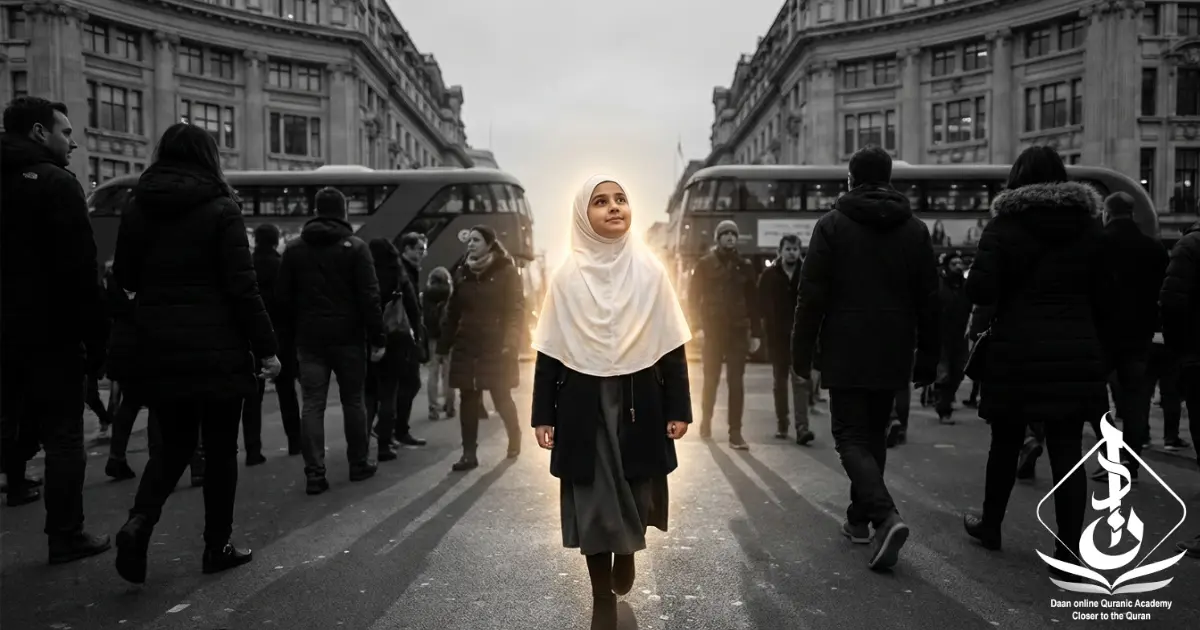
The Prophet ﷺ understood the psychology of identity deeply. He consistently reframed Islam not as a set of restrictions but as a source of elevation — the believer, in his framework, is khayr al-nas (the best of people) when they benefit others; the Muslim community is the khayra ummah (best nation) when it fulfils its role of guidance. This framing is not arrogance — it is purposeful identity: the conviction that your values, your character, and your connection to Allah give you something unique to contribute. Manufacturing pride in your child’s Muslim identity is the process of transmitting this conviction from the Quranic framework into their lived daily experience.
“Every child is born upon the Fitrah (natural disposition of Islam). Then his parents make him a Jew, a Christian, or a Magian.”
This hadith reveals something profoundly empowering for Muslim parents in the West: your child’s connection to Islam is not something you are imposing on them against their nature. It is something you are protecting and nurturing within their nature. The Fitrah — the natural disposition toward truth — is already there. Your task as a parent is not to create a Muslim identity from scratch; it is to tend to the one Allah placed in your child from birth, and to help them discover it as a source of joy rather than a source of difficulty. That is the essence of building Muslim identity in Western societies through pride rather than pressure.
From Defensive to Proactive: The Leadership Mentality for Muslim Families
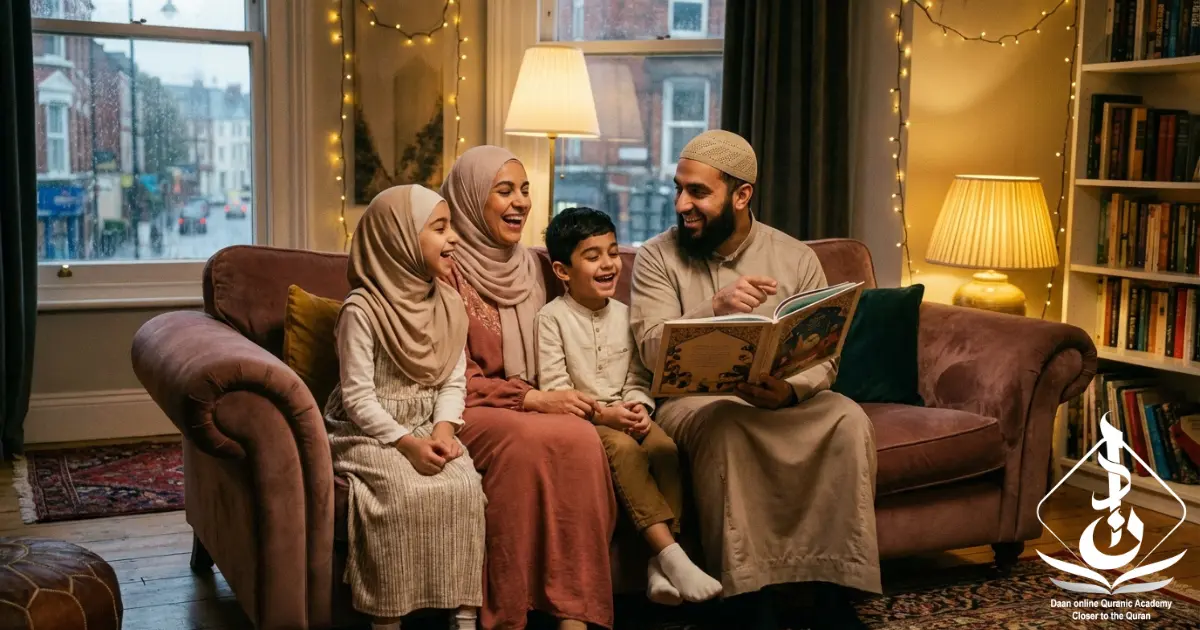
The shift from a defensive to a proactive approach to Muslim identity in Western societies is not merely strategic — it is theologically grounded. The Quran does not present the believer as someone retreating from the world. It presents them as a شَاهِد (Shahid — witness) over the world, a leader and model whose presence in any community is meant to be beneficial, visible, and confident.
The “leadership mentality” for Muslim families in the West means raising children who see their Islamic identity not as a mark that separates them from their peers, but as a Unique Selling Point — a set of values, disciplines, and perspectives that genuinely distinguish them in a positive way. A Muslim child who fasts during Ramadan while their classmates watch is not being excluded from the social experience. When framed correctly, they are demonstrating a discipline and spiritual depth that their peers find genuinely impressive. A Muslim teenager who does not drink at social events is not missing out. They are modelling a choice grounded in conviction — and conviction, in any context, commands respect.
From “Don’t Lose Your Faith” to “Lead With Your Faith”
The defensive framing tells a child: “Hold on. Don’t let go. Protect what you have.” The leadership framing tells a child: “You carry something exceptional. Share it. Lead with it.” The practical difference is enormous. A child told to “hold on” enters social situations anxiously, monitoring what they might lose. A child told to “lead with it” enters social situations curiously, looking for opportunities to express who they are. Both are Muslim — but only one is building a Muslim identity in Western societies that will sustain and grow through adulthood rather than fracturing under pressure.
From “Muslim Despite Being in the West” to “Muslim Leader Because of Being in the West”
One of the most powerful reframings available to Muslim parents is the recognition that raising a child between two cultures — Islamic and Western — is not a disadvantage. It is a remarkable education in navigating complexity, understanding multiple perspectives, and maintaining conviction under pressure. These are precisely the qualities of leadership. A Muslim child raised in the West who maintains their identity does not merely survive a challenge — they develop a resilience and a cross-cultural fluency that is genuinely rare and valuable. This perspective transforms the entire experience of building Muslim identity in Western societies from a struggle into a qualification.
From “Answering Questions About Islam” to “Explaining Islam With Pride”
When a Muslim child is asked about their faith at school, the question of whether they respond with apologetics or confidence is entirely shaped by how their parents have framed their identity at home. A child who has been taught that their faith is something requiring constant justification will stumble. A child who has been taught that their faith is a source of profound wisdom, historical greatness, and personal strength will respond with the calm assurance of someone who knows what they carry. Practical Islamic education — knowing the why behind every practice — is the foundation of this confidence. Explore our Quran and Islamic Studies courses designed to give children exactly this foundation from a young age.
Navigating the Identity Conflict: When Two Worlds Seem to Collide
No honest guide to Muslim identity in Western societies can avoid addressing the identity conflict that virtually every Muslim child in the West experiences at some point — the moment when being Muslim and being British, American, European, or Australian seem to pull in opposite directions. This conflict is real, it is normal, and — when handled well — it is one of the most productive experiences in a child’s development of their Islamic identity.
This ayah contains the Islamic resolution to the identity conflict: diversity of peoples and tribes is not a problem — it is divine design. A Muslim child who is British, or American, or French is not facing a contradiction. They are inhabiting exactly the kind of diversity the Quran describes as purposeful. The Islamic identity does not erase the national or cultural identity; it sits above it, providing the values and principles through which every aspect of cultural participation is filtered. The noble one in the sight of Allah is not the one who belongs to any particular nation or tribe — it is the most righteous. And righteousness is achievable from any national background.
The Three-Stage Identity Journey
Most Muslim young people in the West move through a recognisable pattern in developing their Muslim identity in Western societies:
- Imitation stage (early childhood). The child simply adopts the identity modelled at home without questioning it. This is the critical window for establishing positive emotional associations with Islamic practice — prayer, Quran, Ramadan, Eid — as sources of family joy rather than obligation.
- Tension stage (adolescence). The child begins experiencing the gap between home culture and peer culture more acutely. This stage is not a failure — it is a necessary part of identity formation. The parent’s task here is not to resolve the tension by loosening Islamic standards, but to equip the child with the intellectual and spiritual tools to navigate it with confidence.
- Integration stage (late teens and early adulthood). With the right foundation, the young Muslim moves from experiencing tension to experiencing integration — developing a coherent, confident identity that holds both dimensions without contradiction. This is the goal of building Muslim identity in Western societies: a young adult who does not compartmentalise their faith but leads with it in every context they inhabit.
When a teenager begins questioning or pulling away from their Islamic practice, the most counterproductive response is to increase pressure or restrict freedom. Research in identity development — and the wisdom of Islamic scholars — consistently points in the same direction: deepen the conversation rather than raising the walls. Ask about the questions behind the behaviour. Engage with the doubts rather than dismissing them. Connect your child with knowledgeable, articulate, relatable Muslim role models who demonstrate that a deep Islamic identity and full engagement with modern life are not mutually exclusive. The tension stage is where Muslim identity in Western societies is either strengthened into something owned and chosen, or pushed underground into something hidden and resentful.
Practical Strategies for Manufacturing Muslim Pride at Home
Theoretical frameworks only go so far. The actual work of manufacturing Muslim pride happens in the daily texture of family life — in the small, repeated moments that accumulate over years into the foundation of a child’s identity. The following strategies are drawn from the Prophetic tradition, developmental psychology, and the practical experience of Muslim families successfully raising confident children in Western contexts.
Make Islamic Practice Joyful, Not Just Obligatory
The single most powerful factor in a child’s long-term Islamic identity is the emotional association they develop with Islamic practice in early childhood. A child who experiences Ramadan as a month of family warmth, special food, late nights of Tarawih, and joyful Eid anticipation will carry a fundamentally different relationship to fasting and worship than a child who experiences it primarily as restriction. The Prophet ﷺ modelled a faith of warmth, humour, play with children, and celebration — the Sunnahs of Eid, the joy of Iftar, the beauty of Tarawih. Invest in making these moments genuinely special. The emotional memory of a beautiful Eid is an investment in your child’s Muslim identity in Western societies that compounds for decades.
Tell the Stories of Islamic Greatness
Children build identity through narrative. The stories they hear about who their people are, what they have achieved, and what they stand for form the foundation of how they understand themselves. Muslim children in the West are surrounded by Western historical narratives — they need Islamic historical narratives with equal richness and regularity. The story of Ibn Battuta’s extraordinary travels. The mathematical genius of Al-Khwarizmi, whose name gave us the word “algorithm.” The medical breakthroughs of Ibn Sina. The spiritual depth of Imam Al-Ghazali. Saladin’s generosity to his defeated enemies. These are stories of a civilisation of which your child is an inheritor — and knowing them transforms Muslim identity in Western societies from a religious obligation into a civilisational legacy to be proud of.
Create Eid and Islamic Celebrations That Compete With Nothing
One of the most practical and impactful investments Muslim parents in the West can make is in the quality of Eid celebrations. When Eid is genuinely more exciting and memorable than any secular holiday a child’s peers celebrate, the Islamic calendar becomes something to look forward to rather than something that makes a child feel excluded. Gifts, family gatherings, special food, beautiful clothes, Eid activities for children — these are not indulgences. They are deliberate investments in the emotional texture of your child’s Muslim identity in Western societies. A child who loves Eid loves being Muslim. That emotional foundation will carry them through every identity challenge the adolescent years bring.
Involve Children in Acts of Service and Charity
One of the most powerful sources of pride available to Muslim children in Western contexts is the Islamic ethic of service — Zakat, Sadaqah, volunteering, helping neighbours, caring for the weak. When a child participates in distributing food to the poor, in collecting for a charitable cause, or in helping an elderly neighbour, they experience their Islamic values producing tangible good in the world around them. This is one of the most direct routes from theoretical religious identity to lived, embodied pride: the child who has seen their Islamic values make someone’s life better understands, in the most concrete way possible, that being Muslim matters.
Connect Your Child With Positive Muslim Role Models
Children need to see that the version of Islamic identity you are asking them to embody is not only possible but genuinely attractive in the world they live in. Introduce them — through books, documentaries, community events, and personal networks — to contemporary Muslims who are excellent in their fields and openly, proudly Muslim. Muslim doctors, engineers, athletes, artists, scholars, and entrepreneurs who see their faith as integral to rather than in conflict with their professional excellence. These role models answer the implicit question every Muslim child in the West eventually asks: can someone like me — who lives where I live and wants what I want — truly live this faith fully? The answer must be a visible, confident yes.
Arabic and Quran Education: The Foundation of a Rooted Muslim Identity
Of all the investments a Muslim parent can make in their child’s Muslim identity in Western societies, none produces more long-term return than Quranic and Arabic education. The Quran is not simply a book of religious guidance — it is the living connection between a Muslim and their Lord, the source of the language in which they pray, and the primary text of the civilisation to which they belong. A Muslim child who can read, recite, and understand even a portion of the Quran in Arabic has an anchor to their identity that no cultural pressure can easily dislodge.
“The best of you are those who learn the Quran and teach it.”
Understanding Arabic — even at a foundational level — transforms the child’s relationship to every Islamic practice. When they understand what they are saying in Salah, the prayer shifts from a physical routine to a personal conversation with Allah. When they understand the meaning of the Quranic verses they recite, the Quran shifts from a sacred text to be handled with reverence to a living message addressing their specific situation. When they understand the Arabic phrases of daily dhikr — Alhamdulillah, SubhanAllah, Allahu Akbar — those phrases shift from habitual expressions to conscious acts of worship. This depth of understanding is one of the most powerful builders of Muslim identity in Western societies because it makes the faith intellectually satisfying, personally meaningful, and impossible to dismiss as mere cultural habit.
For a detailed exploration of the phrases that form the foundation of this Arabic vocabulary, read our guide on 10 Arabic Phrases Every Muslim Should Know and Their Deep Meanings.
Children’s phonological systems are dramatically more flexible than adults’. A child who begins Arabic and Tajweed instruction before the age of 10 acquires correct pronunciation with a naturalness that adult learners cannot replicate regardless of effort. Beyond pronunciation, children who grow up reading Arabic alongside English develop a bilingual relationship with the Quran that becomes part of their cognitive identity — not an add-on they must consciously maintain, but a native competence. Starting your child’s Arabic education now, at whatever age they currently are, is the right decision. Beginning earlier is simply even better. Explore our native Egyptian tutor approach to children’s Arabic and Tajweed instruction to understand what early, expert guidance produces.
Building Muslim Identity in the Digital Age
The single greatest change in the landscape of Muslim identity in Western societies since the turn of the century is the arrival of digital culture — social media, streaming content, online communities, and the constant availability of alternative worldviews on every device in every pocket. This is not simply a challenge to Islamic identity; it is also, when engaged with wisely, an unprecedented opportunity to reinforce it.
The Algorithm Problem: Passive Consumption vs. Active Seeking
Digital platforms are designed to serve content that generates engagement — often content that is provocative, anti-religious, or normalising of values that conflict with Islamic ethics. A Muslim child with unguided, unmonitored access to algorithmic content feeds is effectively placing their Muslim identity in Western societies in competition with a system engineered specifically to capture attention and reshape values. The solution is not to remove digital access — that is neither practical nor, in most contexts, advisable. It is to teach active seeking rather than passive consumption: to help children curate Islamic content creators, scholars, and communities that make their digital environment an extension of their Islamic identity rather than a challenge to it.
Online Muslim Communities: Belonging Beyond the Local Mosque
The digital age has created something unprecedented for Muslim identity: global online Muslim communities where young people can find peers who share their specific experience of being Muslim in the West. A Muslim teenager in a small British town who feels isolated in their faith can now easily connect with thousands of young Muslims across the globe who share their questions, their humour, their dual-culture experience, and their determination to maintain their identity. When parents help channel this toward positive Islamic community rather than leave it to chance, the digital world becomes a powerful ally in building Muslim identity in Western societies rather than an adversary.
Online Quran and Arabic Learning: Continuity Without Compromise
One of the most practical digital-age tools for building Muslim identity in Western societies is the availability of high-quality online Islamic education. A Muslim child in any Western city now has access to certified native Arabic and Quran teachers without the logistical constraints of geography, school schedules, or local mosque capacity. Private 1-on-1 online sessions with a qualified native teacher are now among the most effective available tools for equipping a child with the Quranic and Arabic foundation that makes their Islamic identity intellectually robust and personally meaningful. See our flexible learning plans starting from $9/hr — designed specifically for Muslim families in Western countries who want year-round, consistent, expert Islamic education for their children without compromising on quality or convenience.
Frequently Asked Questions About Building Muslim Identity in Western Societies
How do I raise a confident Muslim child in a non-Muslim majority country?
The foundation of raising a confident Muslim child in the West is positive identity formation — helping your child experience their Islamic identity as a source of strength rather than a source of friction. This means making Islamic celebrations genuinely joyful, telling stories of Islamic civilisational greatness, connecting them with positive Muslim role models, and equipping them with the Islamic knowledge to answer questions about their faith with confidence rather than defensiveness. Children who understand why they believe what they believe — who know the Quran, understand the Arabic prayers they recite, and have seen their values produce real good in the world — develop a resilience of Muslim identity in Western societies that pressure and peer influence cannot easily shake.
What age should I start Arabic and Quran education for my child?
As early as possible — ideally between ages 4 and 7 for the Arabic alphabet and basic Quran recitation, and with structured Tajweed instruction beginning around age 6 to 8. Children at this age acquire Arabic phonetics with a naturalness that becomes progressively harder to replicate as they get older. The goal is not to burden young children with intensive study but to create consistent, enjoyable, regular contact with the Quran and Arabic — even 15 minutes daily — that makes the language feel native rather than foreign. At Daan Quranic Academy, our certified native Egyptian tutors specialise in making early Arabic education engaging, effective, and age-appropriate for children from the UK, USA, Europe, and Australia. Book a free trial class to begin.
My teenager is pulling away from Islam — what should I do?
First: do not panic, and do not respond with increased restriction. Adolescent questioning of inherited identity is developmentally normal — and in the Islamic context, the tension stage is precisely when a child can move from a received identity to a chosen one. The most effective responses involve deepening the conversation rather than raising barriers: ask what specifically is creating distance, engage with the intellectual questions rather than dismissing them, and connect your child with knowledgeable Muslims who can model that a deep, authentic Islamic identity and a full, engaged life in the modern West are not contradictory. The goal is for your teenager to move toward a Muslim identity in Western societies they have genuinely chosen — which is far more durable than one maintained only through parental pressure.
How do I balance Islamic identity with helping my child fit in socially?
The reframe that matters most here is that Islamic values and social success are not opposites. The qualities Islam cultivates — honesty, generosity, self-discipline, respect for others, intellectual curiosity, strong character — are precisely the qualities that make a person genuinely respected in any social context. The child who maintains their Islamic identity under social pressure does not need to “fit in” by compromising that identity — they earn respect precisely by the conviction and consistency they demonstrate. Help your child understand that their Islamic identity is not a social liability to be managed; it is a character quality that makes them more interesting, more trustworthy, and more admirable to the peers who actually matter.
Does learning Arabic really help with a child’s Islamic identity?
Yes — in a way that is difficult to overstate. A child who understands even basic Quranic Arabic develops a qualitatively different relationship to every Islamic practice. Their Salah becomes a conversation they understand rather than a routine they perform. Their Quran recitation becomes a message they absorb rather than sounds they produce. Their daily dhikr becomes conscious worship rather than habitual phrase. This depth of understanding is one of the strongest anchors of Muslim identity in Western societies — it makes the faith intellectually satisfying and personally meaningful in a way that cultural habit alone cannot sustain through the pressures of adolescence and adult life. Our Arabic and Quran courses are designed specifically for English-speaking Muslim families who want this foundation for their children.
How do I explain Islamic practices to my child’s non-Muslim friends and teachers?
Equip your child with brief, confident, positive explanations for their most visible Islamic practices — fasting, prayer, hijab, halal food, Eid celebrations. The key is framing: not “I can’t do that because I’m Muslim” but “I choose not to do that — my faith teaches…” The shift from prohibition to conviction is the difference between a child who apologises for their identity and one who leads with it. Practical Islamic education that includes the why behind every practice gives children exactly this confidence. When non-Muslim peers and teachers see a child who understands and genuinely values their faith rather than merely following parental rules, their questions transform from skeptical to genuinely curious — and the child’s Muslim identity in Western societies becomes a source of positive distinction.
Give Your Child the Arabic and Quranic Foundation That Makes Their Muslim Identity Unshakeable
The most durable investment in your child’s Muslim identity in Western societies is equipping them with the Quranic and Arabic knowledge that makes their faith intellectually rich, personally meaningful, and genuinely their own. At Daan Quranic Academy, our certified native Egyptian tutors deliver exactly this — in private 1-on-1 live sessions for children and adults across the UK, USA, Europe, and Australia.
No commitment required. One free session to experience the Daan Academy difference.
Final Thoughts: Acceptance and Confidence
Manufacturing pride in your child’s Muslim identity in Western societies is not a single act — it is a sustained commitment to framing, narrative, education, celebration, and lived example over years. The goal is not a child who merely avoids leaving Islam. It is a child who inhabits their Islamic identity with such confidence and joy that the question of leaving never seriously arises — because what they carry is too valuable, too beautiful, and too much a part of who they are to abandon.
The Quran tells us we are the best nation produced for mankind — not produced against mankind, not isolated from mankind, but produced for it. A Muslim child raised with this conviction — who understands their faith, speaks its language, knows its history, and has seen its values produce good in the world — is not just a Muslim surviving in the West. They are a leader, a model, and a living demonstration that Islam is not a relic of a different world. It is the answer to the deepest questions of this one. Find more Islamic parenting and education guides on our Islamic education blog.
May Allah grant our children the pride of faith, the confidence of knowledge, the wisdom to lead, and the character to inspire. May He make our homes places where Islamic identity flourishes — not under pressure, but in joy, beauty, and sincere love for Him. Ameen.