10 Arabic Phrases Every Muslim Should Know and Their Deep Meanings
For a Muslim, Arabic is not just a medium of communication — it is the key to the soul of their faith. Arabic is the language of the Final Revelation, the Quran, and the tongue of the Prophet Muhammad ﷺ. The Arabic phrases every Muslim should know are not merely greetings or cultural habits — they are acts of worship, declarations of faith, and daily connections to Allah (SWT) that transform ordinary moments into spiritual experiences earning immense reward. Whether you are a new Muslim building your foundation, a revert learning the language of your faith, or a parent raising children upon the Quran across the UK, USA, Europe, or Australia — this guide provides the 10 must-know Arabic phrases with their linguistic roots, authentic evidence, and the deep spiritual meanings that make every one of them irreplaceable.
This verse is the theological foundation for every Arabic phrase every Muslim should know. When you use these phrases consciously — with knowledge of their meaning and sincere intention — you are remembering Allah, and He promises to remember you in return. That is the ultimate value of learning not just to pronounce these phrases, but to understand them.
📑 Table of Contents
- Why These Arabic Phrases Matter for Every Muslim
- The Core Dhikr Phrases: Bismillah, Alhamdulillah, SubhanAllah, Allahu Akbar
- Arabic Phrases for Planning, Trust, and Admiration: Insha’Allah and MashaAllah
- Arabic Phrases for Gratitude and Repentance: Jazakallahu Khayran and Astaghfirullah
- The Two Greatest Declarations: La Ilaha Illallah and Salawat
- Why Learning the Roots of These Phrases Matters
- Frequently Asked Questions
Why These Arabic Phrases Matter for Every Muslim
Arabic is the language in which Allah chose to reveal the Quran — and that choice is not incidental. The precision, layered meaning, and phonetic richness of Arabic make it uniquely suited to carry the weight of divine revelation. When a Muslim uses the Arabic phrases every Muslim should know in their daily life, they are not simply reciting culturally inherited phrases — they are using the exact words that the Prophet ﷺ used, earning the exact rewards he promised, and maintaining an unbroken chain of Prophetic practice stretching back fourteen centuries.
For non-native Arabic speakers, these 10 must-know Arabic phrases offer something even more powerful: a direct entry point into the language of the Quran itself. Each phrase is rooted in Arabic morphology (الصَّرْف — Sarf) and carries a depth of meaning that no English translation can fully capture. Understanding why these are the Arabic phrases every Muslim should know — not just what they mean but what they demand of the heart — transforms rote repetition into genuine worship. For a broader overview of how these phrases fit into daily Islamic vocabulary, read our companion guide on 15 Arabic Phrases and Islamic Sayings for Daily Use.
Arabic is built on a trilateral root system — almost every word derives from a three-letter root that carries a core semantic field. Understanding that ح-م-د (H-M-D) is the root of Alhamdulillah — and also of the names Ahmad and Muhammad — reveals that these must-know Arabic phrases are connected to an entire network of Quranic vocabulary. Each phrase you learn opens a door to dozens more.
The Core Dhikr Phrases: Bismillah, Alhamdulillah, SubhanAllah, Allahu Akbar
The following four phrases form the absolute core of daily Muslim Dhikr (remembrance of Allah). They are the first Arabic phrases every Muslim should know — the ones that consecrate daily actions, fill the scale of deeds, and open the prayer that every Muslim recites at minimum 17 times per day. Understanding their deep linguistic roots makes every repetition more conscious and more sincere.
Bismillah — بِسْمِ اللَّهِ
بِسْمِ اللَّهِ الرَّحْمَنِ الرَّحِيمِ
(Bismillāhir-Raḥmānir-Raḥīm — In the name of Allah, the Most Gracious, the Most Merciful)
Bismillah is the phrase that opens the Quran and the phrase that should open every action in a Muslim’s life. It is among the most important Arabic phrases every Muslim should know precisely because of its universality — it precedes eating, drinking, entering the home, studying, working, and beginning any permissible task.
Linguistically, starting with “Bismillah” means you are seeking the help of Allah and asking for His بَرَكَة (Barakah — divine blessing) in whatever you are about to do. The two divine attributes that follow — Ar-Raḥmān and Ar-Raḥīm — both derive from the root ر-ح-م (mercy), appearing together to establish that Allah’s mercy is both all-encompassing (for all creation) and specific (sustained for the believers). When you say Bismillah before eating, studying, or entering your home, you are consciously shifting an ordinary mundane act into an act of worship — acknowledging that nothing can be achieved without the will and support of the Creator.
Before meals, before wudu, before entering your car, before starting any task, before reading, before intimate relations — essentially before everything you do. Bismillah is the gateway phrase of the Arabic phrases every Muslim should know precisely because it applies to every moment of life.

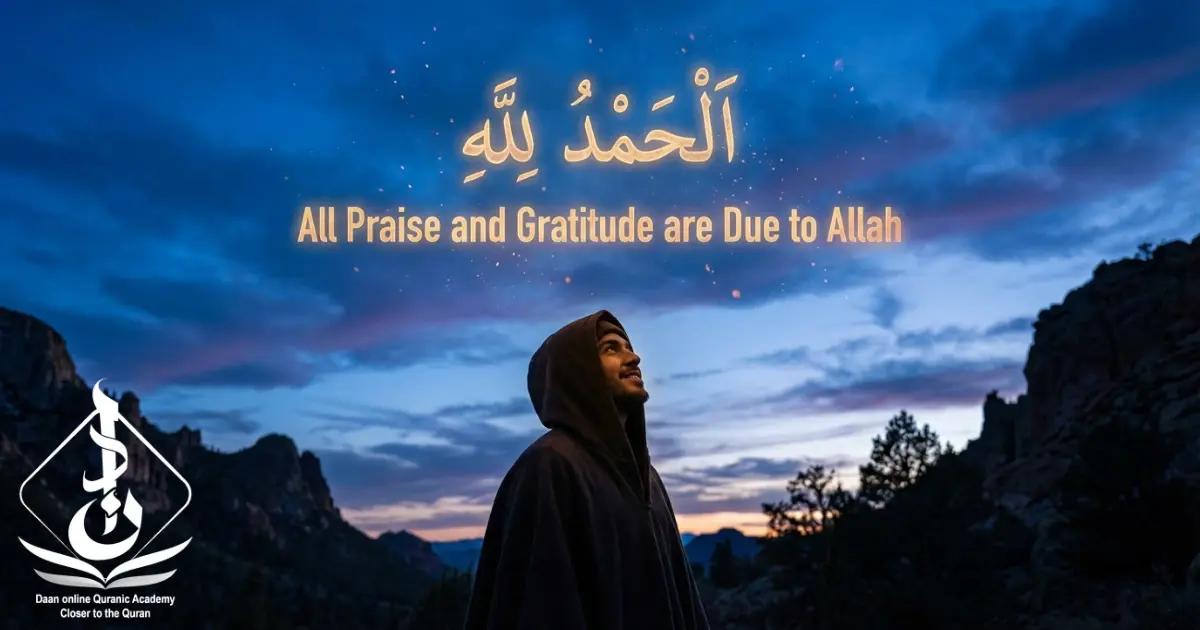
Alhamdulillah — الْحَمْدُ لِلَّهِ
الْحَمْدُ لِلَّهِ
(Al-ḥamdu lillāh — All praise and gratitude are due to Allah)
Alhamdulillah is the ultimate expression of شُكْر (Shukr — gratitude) and one of the heaviest of all must-know Arabic phrases on the scale of deeds. Unlike the English phrase “Thank God,” Alhamdulillah is linguistically far more profound — it combines حَمْد (Hamd — praise for Allah’s inherent perfection) with the gratitude of a servant for the favours he has received. The definite article الْـ at the beginning makes it all-encompassing: not some praise, not most praise, but all praise belongs to Allah alone.
Muslims say Alhamdulillah in times of joy and, more profoundly, in times of trial. It reflects a heart that is content with Allah’s decree, acknowledging that He is the Most Wise and the Most Merciful regardless of current circumstances. This is what separates it from every secular expression of gratitude and places it among the most spiritually significant of the Arabic phrases every Muslim should know.
“Purification is half of faith. Alhamdulillah fills the scale. SubhanAllah and Alhamdulillah together fill what is between the heavens and the earth.”
SubhanAllah — سُبْحَانَ اللَّهِ
سُبْحَانَ اللَّهِ
(Sub-ḥānal-lāh — Glory be to Allah; Allah is entirely free from every imperfection)
SubhanAllah is used to express awe and to declare Allah’s absolute perfection — and it is among the Arabic phrases every Muslim should know that carry the most theological precision. It literally means that Allah is free from any imperfection, deficiency, or partner. The Arabic root سَبَّحَ (sabbaḥa) conveys the image of swift, free movement through open water — implying that Allah transcends every limitation and boundary that creation is subject to.
When you see a beautiful sunset, a newborn child, or reflect on the vastness of the universe, saying SubhanAllah connects your senses directly to the greatness of the Designer. It is one of the most powerful of all must-know Arabic phrases for Dhikr, specifically because it humbles the human ego by directing every experience of beauty back to its Source. The extended form سُبْحَانَ اللَّهِ وَبِحَمْدِهِ is described by the Prophet ﷺ as one of the two most beloved phrases to Allah.

“Two words which are light on the tongue, heavy on the Scale, and beloved to the Most Merciful: SubhanAllahi wa bihamdihi, SubhanAllahil-Azeem.”
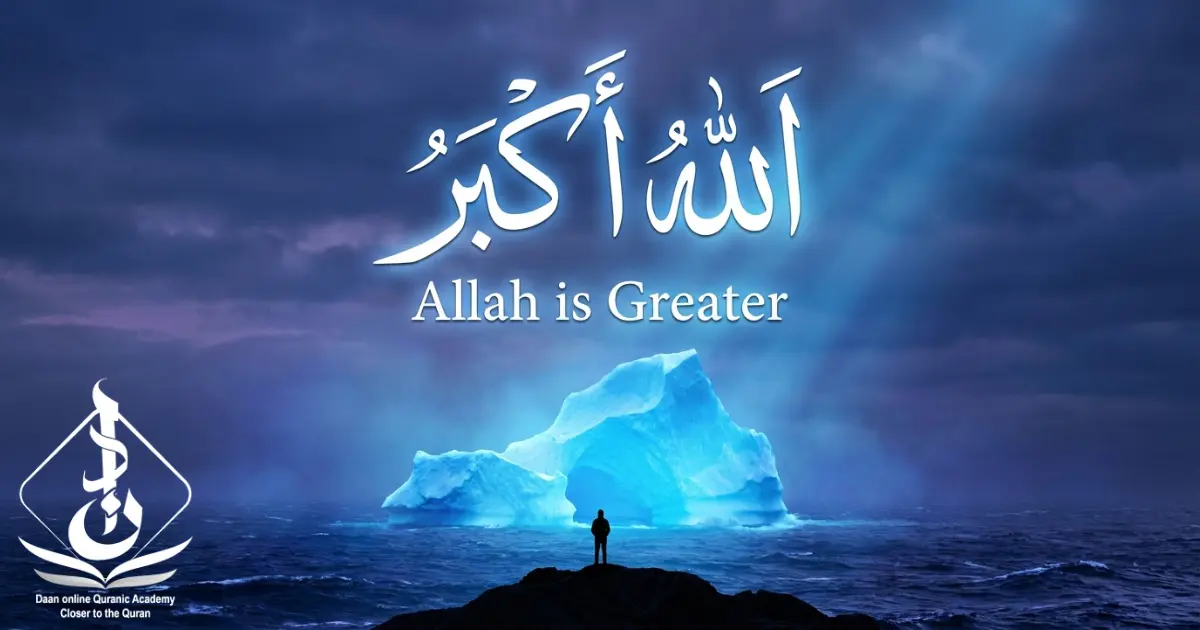
Allahu Akbar — اللَّهُ أَكْبَرُ
اللَّهُ أَكْبَرُ
(Al-lāhu Akbar — Allah is Greater; Allah is the Greatest)
Allahu Akbar is among the most frequently repeated of all Arabic phrases every Muslim should know — opening every Adhan, beginning every rakat of every prayer, and filling the air during Eid. A critical linguistic point is often missed: the correct translation is not “God is great” but “Allah is Greater” — the word أَكْبَرُ (Akbar) is an elative form meaning “greater than.” The comparison is intentionally left open-ended. Allah is greater than your worries, greater than your enemies, greater than your desires, and greater than any worldly power.
This phrase serves as a constant spiritual recalibration — reminding the believer that no matter how enormous a problem seems, Allah is infinitely greater. Repeating Allahu Akbar during every transition of Salah is precisely this: a complete reset between postures, reorienting the worshipper toward the One who is greater than everything they carry into the prayer with them.
Arabic Phrases for Planning, Trust, and Admiration: Insha’Allah and MashaAllah
Two of the most universally recognised Arabic phrases every Muslim should know — and two of the most commonly misunderstood outside the Muslim community — are Insha’Allah and MashaAllah. Each one carries a specific theological position about Allah’s will: one regarding the future, one regarding what has already occurred. Understanding the distinction between them is essential for any Muslim serious about the must-know Arabic phrases of their daily speech.
Insha’Allah — إِنْ شَاءَ اللَّهُ
إِنْ شَاءَ اللَّهُ
(In shā-ʾal-lāh — If Allah wills)
Insha’Allah is a cornerstone of the Muslim mindset regarding the future — and among the most important of all Arabic phrases every Muslim should know, because it is not simply culturally encouraged but explicitly Quranic commanded. Allah directly instructs believers never to speak of future actions without attaching His will to the statement. Using Insha’Allah prevents the arrogance of assuming control over outcomes we do not possess.
A common misconception — particularly among non-Muslims — is that this phrase signals reluctance or procrastination. In authentic Islamic practice, the opposite is true: Insha’Allah is the language of someone who plans seriously and tries their best while humbly surrendering the outcome to Allah. It should never be used as an excuse for laziness; rather, it is sincere submission to Divine Will after firm intention and genuine effort.
MashaAllah — مَا شَاءَ اللَّهُ
مَا شَاءَ اللَّهُ
(Mā shā-ʾal-lāh — What Allah has willed [has come to pass])
MashaAllah is the counterpart to Insha’Allah among the must-know Arabic phrases relating to Allah’s will. While Insha’Allah looks forward to a future outcome, MashaAllah looks at a blessing already present. It is said when expressing appreciation for something beautiful or successful — a child’s achievement, someone’s health, a flourishing home, or any gift of Allah you witness or receive.
In Islamic teaching, saying MashaAllah is also a protection against الْعَيْن (Al-Ayn — the evil eye). By attributing the blessing back to Allah rather than to human power alone, the speaker acknowledges the true Source of every good. The Quran uses this exact phrase in Surah Al-Kahf (18:39), where the believing man says: مَا شَاءَ اللَّهُ لَا قُوَّةَ إِلَّا بِاللَّهِ — modelling the correct response to any blessing, which is to recognise Allah, not oneself, as its source.
Arabic Phrases for Gratitude and Repentance: Jazakallahu Khayran and Astaghfirullah
Among the Arabic phrases every Muslim should know, these two address the essential spiritual acts of gratitude between people and repentance before Allah. Both transform ordinary social and personal moments into acts of worship — and both reveal how Islam integrates the sacred into the fabric of daily human interaction. For a fuller exploration of how these phrases function in Islamic social life, read our guide on Common Arabic Expressions with “Allah”: Meanings and Pronunciation.
Jazakallahu Khayran — جَزَاكَ اللَّهُ خَيْرًا
جَزَاكَ اللَّهُ خَيْرًا
(Jazākal-lāhu Khayran — May Allah reward you with goodness)
Jazakallahu Khayran is the Islamic way of saying “thank you” — and one of the most socially transformative of all must-know Arabic phrases, because it transforms an expression of gratitude from a simple social courtesy into a Dua (supplication). By saying this, you acknowledge that you cannot adequately repay the person for their kindness, so you are asking the Most Generous (الكَرِيم — Al-Kareem) to reward them on your behalf with the best of rewards.
This is one of the Arabic phrases every Muslim should know precisely because it reframes interpersonal relationships through a divine lens. Rather than keeping gratitude between two people, Jazakallahu Khayran elevates it to a supplication — strengthening the bonds of brotherhood and sisterhood in the community while simultaneously earning reward for the one who says it.
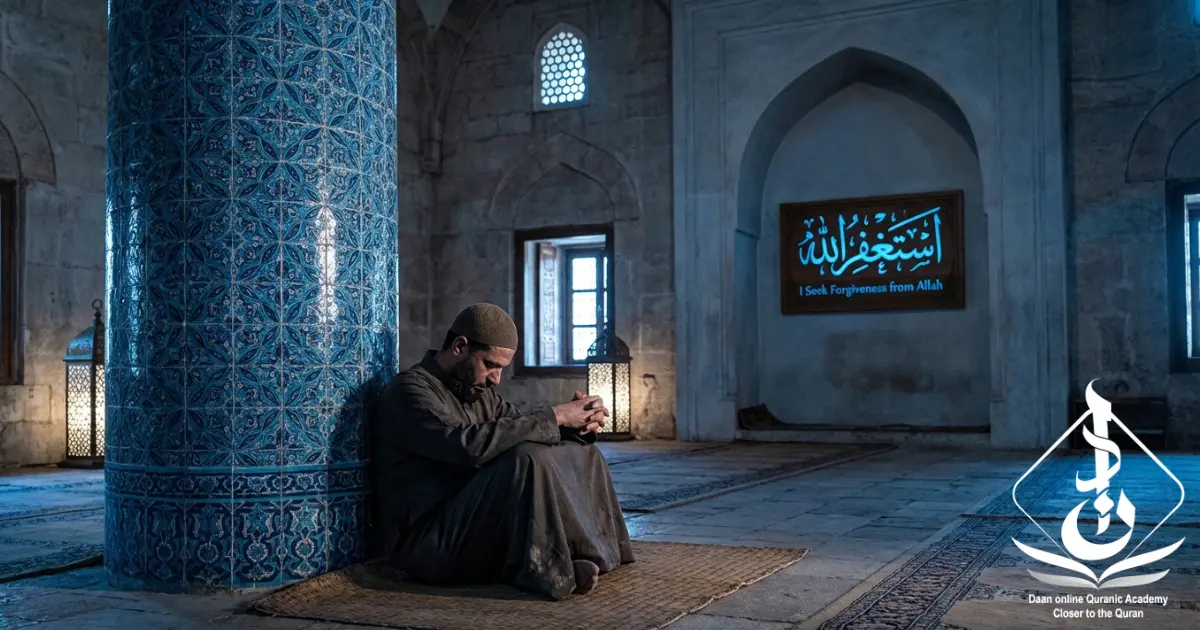
Astaghfirullah — أَسْتَغْفِرُ اللَّهَ
أَسْتَغْفِرُ اللَّهَ
(Astaghfirullāh — I seek forgiveness from Allah)
Astaghfirullah is the phrase of الاِسْتِغْفَار (Istighfar — seeking forgiveness) and one of the most spiritually essential of all Arabic phrases every Muslim should know. Human beings are inherently imperfect; Istighfar is the bridge that keeps the servant connected to the Master. Saying Astaghfirullah is not reserved for major sins — it is a daily cleansing of the heart from what the scholars call the “rust” of ordinary mistakes, heedlessness, and distraction from Allah.
The Prophet ﷺ himself sought forgiveness more than seventy times a day despite being sinless — teaching us that among the must-know Arabic phrases, Astaghfirullah is not only for the guilty but for every believer as a means of drawing closer to Allah, expanding provision, and maintaining the luminosity of the heart. It is, above all, a phrase of hope: a constant reminder that Allah’s mercy is always wider than human fault.
The Two Greatest Declarations: La Ilaha Illallah and Salawat
The final two of the Arabic phrases every Muslim should know are in a category of their own. One is the foundation upon which the entire religion rests; the other is an act of worship in which Allah Himself and His angels participate. No list of must-know Arabic phrases is complete without these two at its apex.
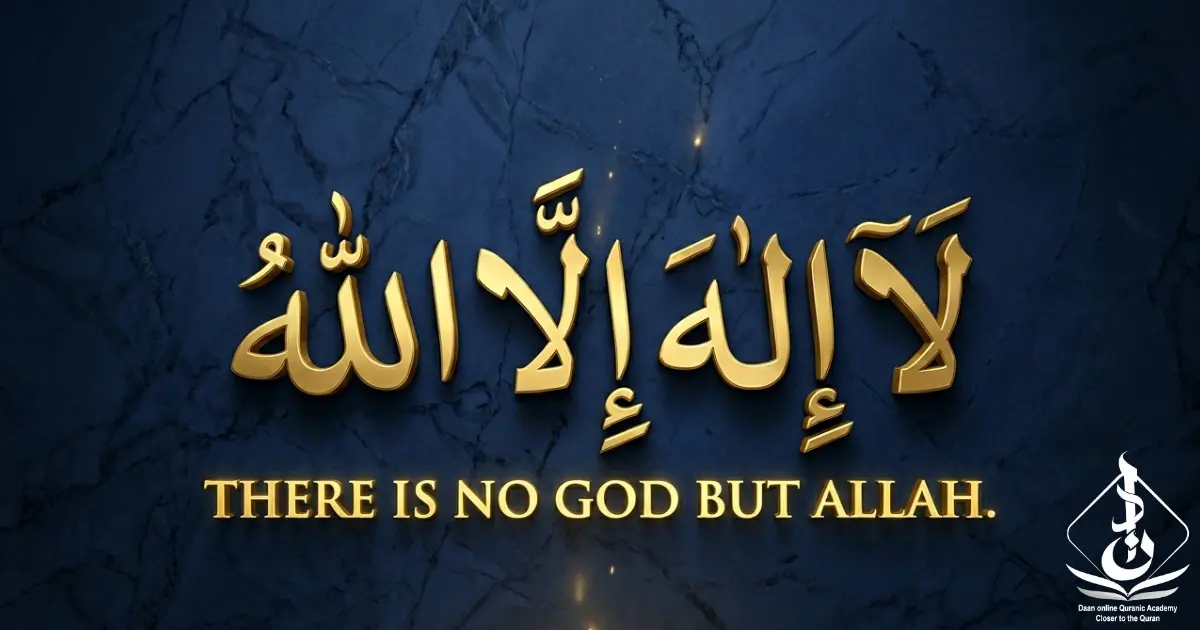
La Ilaha Illallah — لَا إِلَٰهَ إِلَّا اللَّهُ
لَا إِلَٰهَ إِلَّا اللَّهُ
(Lā ilāha illal-lāh — There is no deity worthy of worship except Allah)
La Ilaha Illallah is the Kalimah — the testimony of faith, the first pillar of Islam, and the heaviest phrase on the scales of the Hereafter. It is not merely a statement to be memorised; it is a way of life, a complete worldview, and the ultimate expression of التَّوْحِيد (Tawheed — the Oneness of Allah). Among all Arabic phrases every Muslim should know, this is the one upon which all others rest.
Linguistically, this phrase begins with a negation — لَا (Lā — No) — and ends with an affirmation — إِلَّا اللَّهُ (illal-lāh — except Allah). This structure is profoundly intentional: before we can truly affirm the Oneness of Allah, we must first negate all false idols — money, ego, fame, fear, worldly power — from our hearts. La Ilaha Illallah is the ultimate declaration of spiritual freedom, the phrase Muslims strive to have on their lips as their last words in this world.
Sallallahu Alayhi Wasallam — صَلَّى اللَّهُ عَلَيْهِ وَسَلَّمَ
صَلَّى اللَّهُ عَلَيْهِ وَسَلَّمَ
(Ṣallal-lāhu ʿalayhi wa sallam — May Allah’s blessings and peace be upon him)
Sallallahu Alayhi Wasallam — the Salawat upon the Prophet Muhammad ﷺ — is the only phrase among the must-know Arabic phrases in which Allah Himself participates. Muslims say this every time the Prophet’s name is mentioned, every day in the Tashahhud of prayer, and as a regular act of daily Dhikr. Sending Salawat earns ten blessings from Allah for each one, removes ten sins, and raises the believer ten degrees — making it among the most rewarding of all Arabic phrases every Muslim should know.
Allah directly commands this must-know Arabic phrase in the Quran, establishing it as a divine instruction rather than a cultural courtesy:
Sending Salawat connects the believer to the legacy of the Messenger ﷺ, acts as a means of gaining his intercession on the Day of Judgement, and binds the Muslim community — across every country and century — to the same act of love and reverence. It is the most fitting final phrase among the Arabic phrases every Muslim should know, because it connects every believer to the one who taught them all the others.
Why Learning the Roots of These Arabic Phrases Matters
For those learning Arabic as a second or foreign language, these 10 must-know Arabic phrases offer a perfect entry point into Arabic Grammar (النَّحْو — Nahw) and Morphology (الصَّرْف — Sarf). Arabic is built on a root-based system — almost every word derives from a three-letter root that carries a core semantic field. Once you understand these roots, you begin to see the connections between the Arabic phrases every Muslim should know and the Quranic vocabulary surrounding them.
Consider these root connections among the must-know Arabic phrases:
- The root ح-م-د (H-M-D) in Alhamdulillah connects to the names Ahmad and Muhammad — meaning every time you say Alhamdulillah, you are invoking the same root as the Prophet’s own name
- The root س-ب-ح (S-B-H) in SubhanAllah connects to the verb used when the heavens and earth glorify Allah in Surah Al-Hadid — the entire universe performs the same act your tongue performs when you say this phrase
- The root ك-ب-ر (K-B-R) in Allahu Akbar connects to the word for great throughout the Quran — learning it unlocks dozens of Quranic words immediately
- The root غ-ف-ر (Gh-F-R) in Astaghfirullah appears over 200 times in the Quran in various forms — knowing it from this Arabic phrase every Muslim should know transforms Quranic comprehension
At Daan Quranic Academy, we believe that learning Arabic phrases every Muslim should know should go beyond rote memorisation. We focus on the “Why” and the “How” — ensuring students understand the linguistic depth of the Quranic language that underlies every phrase. Our Arabic language and Quran courses are designed precisely for English-speaking Muslims who want to progress from these foundational phrases to full Quranic comprehension. For guidance on the correct pronunciation of these phrases — including the Tajweed rules that govern the name Allah itself — read our detailed guide on Arabic Pronunciation Challenges for English Speakers.
When children hear and use these Arabic phrases every Muslim should know from an early age — tied to specific daily moments like Bismillah before meals, Alhamdulillah after sneezing, and Allahu Akbar at the Adhan — they develop both the vocabulary and the worldview these phrases carry. Early structured Arabic education, before age 10, dramatically accelerates this acquisition. Explore our Quran and Arabic courses for children taught by certified native Egyptian tutors in private 1-on-1 live sessions.
Frequently Asked Questions About Arabic Phrases Every Muslim Should Know
What are the most important Arabic phrases every Muslim should know?
The 10 Arabic phrases every Muslim should know are: (1) Bismillah — before any action; (2) Alhamdulillah — gratitude and praise; (3) SubhanAllah — glorification of Allah; (4) Allahu Akbar — declaration of Allah’s greatness; (5) Insha’Allah — submission of future plans to Allah’s will; (6) MashaAllah — acknowledging present blessings and protecting against the evil eye; (7) Jazakallahu Khayran — Islamic gratitude as dua; (8) Astaghfirullah — seeking forgiveness; (9) La Ilaha Illallah — the declaration of Tawheed; (10) Sallallahu Alayhi Wasallam — sending blessings on the Prophet ﷺ. Together these must-know Arabic phrases cover every major category of daily Muslim life: worship, planning, social interaction, repentance, and faith.
Why does Allahu Akbar mean “Greater” rather than “Great”?
This is one of the most important linguistic points among the Arabic phrases every Muslim should know. The word أَكْبَرُ (Akbar) is the elative form of كَبِيرٌ (Kabeer — great), meaning “greater than.” The comparison is intentionally left open: Allah is greater than everything — your fears, your enemies, your desires, your problems, every earthly power. Translating it as simply “God is great” loses this open-ended comparison that makes the phrase a complete spiritual recalibration. This is why it opens every prayer and every Adhan — it is a declaration that whatever you were thinking about before, Allah is greater than it. Understanding this linguistic nuance is part of what makes these must-know Arabic phrases so spiritually powerful.
What is the difference between Insha’Allah and MashaAllah?
Both are among the Arabic phrases every Muslim should know relating to Allah’s will, but they refer to different time frames: Insha’Allah (إِنْ شَاءَ اللَّهُ) refers to the future — “If Allah wills” — said when speaking of plans or intentions not yet realised, as commanded in Surah Al-Kahf (18:23–24). MashaAllah (مَا شَاءَ اللَّهُ) refers to something already present — “What Allah has willed has come to pass” — said when admiring an existing blessing. Insha’Allah expresses humble dependence on Allah for future outcomes; MashaAllah attributes current blessings to Allah’s will rather than human power. Both are non-interchangeable must-know Arabic phrases with distinct theological and practical functions.
Why is La Ilaha Illallah considered the most important Islamic phrase?
La Ilaha Illallah is the most important of all Arabic phrases every Muslim should know because it is the Kalimah — the declaration of faith upon which the entire religion is built. The Prophet ﷺ described it as the best of Dhikr and the heaviest phrase on the scales of the Hereafter. Its linguistic structure is also uniquely powerful among must-know Arabic phrases: it begins with a negation (Lā — No) before the affirmation (illal-lāh — except Allah), teaching that genuine Tawheed requires first emptying the heart of false devotions — wealth, ego, status, fear — before the affirmation of Allah’s Oneness can take full root. It is also the phrase Muslims strive to say as their final words, making it simultaneously the first and last of the Arabic phrases every Muslim should know.
How can I remember these Arabic phrases and use them naturally every day?
The most effective method for internalising the Arabic phrases every Muslim should know is contextual pairing — not memorisation drills. Tie each must-know Arabic phrase to a specific recurring moment: Bismillah before every meal; Alhamdulillah after every sneeze and after eating; Allahu Akbar when the Adhan plays; SubhanAllah when you encounter something beautiful in nature; Astaghfirullah in the last few minutes before sleep; Insha’Allah whenever you make a plan with anyone. Within two to three weeks of conscious practice, these Arabic phrases every Muslim should know will become second nature — and their meanings will be felt in the heart, not merely produced by the tongue. Structured Arabic instruction significantly accelerates this. Book a free trial class to begin with a qualified native teacher.
Why is Astaghfirullah said even by people who haven’t sinned?
This is one of the most profound aspects of Astaghfirullah among the Arabic phrases every Muslim should know: the Prophet ﷺ himself sought forgiveness more than 70 times a day despite being sinless. Scholars explain that Istighfar is not only reactive (responding to sin) but also proactive — it is a recognition of the gap between how we should be worshipping Allah and how we actually do. Every moment that passes without conscious remembrance of Allah is a moment of غَفْلَة (Ghaflah — heedlessness) that Astaghfirullah helps address. It is also established in hadith that Astaghfirullah opens doors of provision and removes difficulties — making it one of the most practically impactful of the must-know Arabic phrases for daily life regardless of sin.
Where can I learn these Arabic phrases with proper pronunciation online?
Correct pronunciation of the Arabic phrases every Muslim should know requires understanding Tajweed rules — particularly the Laam al-Jalaalah (which changes the sound of the name Allah depending on the preceding vowel), long vowels in phrases like SubhanAllah and La Ilaha Illallah, and the pharyngeal letters like Ayn and Hha. At Daan Quranic Academy, our certified native Egyptian tutors teach Quran, Tajweed, and Arabic language in private 1-on-1 live sessions available to students across the UK, USA, Europe, and Australia — from complete beginners to advanced learners. Book your free trial class with no commitment, and explore our flexible plans from $9/hr.
Go Beyond These Phrases — Learn the Language of the Quran
Learning the 10 Arabic phrases every Muslim should know is the beginning of a beautiful journey. The next step is understanding where they come from — the Arabic roots, the Quranic context, and the Tajweed rules that govern how every syllable is correctly pronounced. At Daan Quranic Academy, our certified native Egyptian tutors teach you exactly this, in private 1-on-1 live sessions available from the UK, USA, Europe, and Australia.
No commitment required. One free session to experience the Daan Academy difference.
Final Thoughts: Beyond the Words
Learning these 10 Arabic phrases every Muslim should know is the first step in a beautiful journey toward understanding the Quran in its original language. When a Muslim truly understands what they are saying — in Salah, in daily supplication, in every Bismillah and every Alhamdulillah — their concentration (خُشُوع — Khushu’) increases, their relationship with Allah flourishes, and the line between the sacred and the ordinary dissolves entirely.
These must-know Arabic phrases are not decorative vocabulary. They are the living language of faith — each one a declaration, a supplication, a reminder, or a protection embedded into the daily rhythm of a Muslim’s life. Every Bismillah before a task, every Astaghfirullah before sleep, every La Ilaha Illallah in a quiet moment is a seed planted for the Hereafter. Begin with these 10, understand their roots, pronounce them correctly, teach them to your children — and let them be the foundation upon which a life of Quranic language is built. Find more Arabic and Islamic knowledge guides on our Islamic education blog, and explore our tutor credentials and teaching methodology before you start.
May Allah (SWT) make these phrases beloved to your tongue, heavy on your Scale of good deeds, and a means of drawing you ever closer to Him and to the language of His Book. Ameen.