The Comprehensive Guide to Learn Noorani Qaida: From Zero to Mastery
To learn Noorani Qaida is to build the single most important foundation in your Quranic journey — mastering correct Arabic letter pronunciation, articulation points, and fundamental Tajweed rules before ever opening the Quran itself. Whether you are starting from absolute zero, helping your child take their first steps with Arabic letters, or correcting years of incorrect pronunciation habits, this step-by-step guide walks you through every stage of the Noorani Qaida curriculum — from isolated letter recognition all the way to reading full Quranic words with proper Tajweed applied automatically.
📑 Table of Contents
What Is Noorani Qaida?
Noorani Qaida is a sequential beginner’s curriculum designed to teach anyone — children, adult reverts, and non-Arabic speakers — the exact correct pronunciation of Arabic letters and the foundational rules of Tajweed through a progressive, level-by-level framework. It was formulated by Sheikh Noor Muhammad Haqqani and remains the most widely used Quran reading primer in the world.
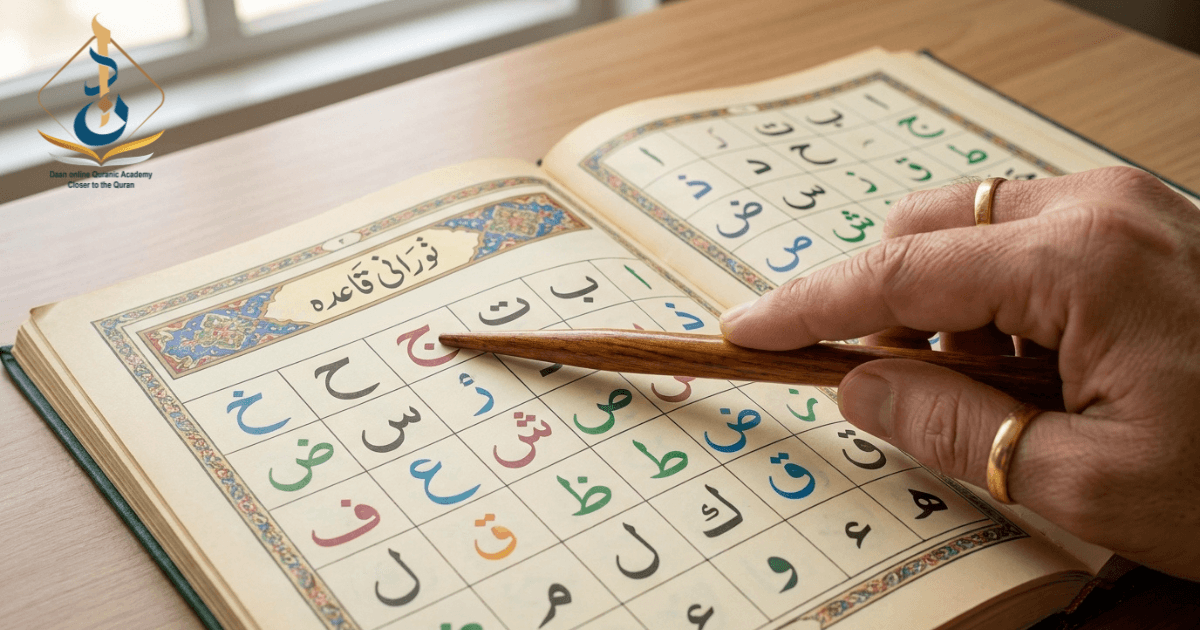
Its purpose is to take the learner from merely recognizing a letter’s shape and sound to reading full Quranic words and sentences while applying Tajweed rules automatically. Unlike generic Arabic primers, it was designed specifically for Quranic recitation — every lesson directly prepares the student for what they will encounter in the Quran.
Students who learn Noorani Qaida properly train their tongues on the correct articulation points (Makharij) from the very first lesson — which prevents common, hard-to-break pronunciation mistakes that form when students attempt to read Quran directly without this foundation. At Daan Quranic Academy, every new student — child or adult — begins with a Noorani Qaida assessment to establish exactly where they are and build from there.
Why Learn Noorani Qaida Before the Quran?
Learning Noorani Qaida before attempting to read the Quran is the difference between building on solid rock and building on sand — students who skip this step inevitably develop pronunciation habits that take years of corrective Tajweed study to undo. The Arabic language contains sounds that have no equivalent in English or any European language, and these sounds cannot be approximated — they must be trained from the correct anatomical points in the mouth and throat.
Allah ﷻ commands us to recite with precision:
وَرَتِّلِ الْقُرْآنَ تَرْتِيلًا
“And recite the Quran with measured recitation.”
This divine command requires that recitation be precise and measured — not rushed or approximated. To learn Noorani Qaida is to take this command seriously from the beginning, establishing the technical foundations that make true Tarteel possible.
The Prophet ﷺ further encouraged us:
The Prophet ﷺ said: “The best among you are those who learn the Quran and teach it.”
— Narrated by Uthman ibn Affan (RA) — Sahih al-Bukhari (5027)
Learning begins with Noorani Qaida. Those who invest in this foundation do not just learn to read — they learn to recite in the way that earns the reward the Prophet ﷺ described. For a detailed breakdown of the right age to begin this journey, read our guide on The Best Age to Start Teaching Your Child Noorani Qaida.
Stages of Learning Noorani Qaida: From Zero to Mastery
The Noorani Qaida journey is divided into five interconnected stages — a student cannot advance to the next stage without mastering the previous one, ensuring every layer of the foundation is solid before building higher. Here is the complete roadmap to learn Noorani Qaida from zero to mastery:
| Stage | What You Learn | Key Skill Developed |
|---|---|---|
| Stage 1: Foundation | Single letters (Huroof Mufradah) + joined letters (Huroof Murakkabah) | Correct articulation points (Makharij) for all 28 Arabic letters |
| Stage 2: Vowels | Short vowels (Harakat: Fatha, Kasra, Dhamma) + Tanween (double vowels) | Pronouncing letters with vowel sounds without elongation |
| Stage 3: Elongation | Letters of Madd and Leen (Alif, Waw, Yaa) | Knowing when and how long to stretch a sound — the rhythm of recitation |
| Stage 4: Power & Stopping | Sukoon (resting sound) + Shaddah (emphasis/doubling) | Clean stops without Qalqalah errors, and strong doubled letters |
| Stage 5: Full Practice | Complete Quranic words and short verses combining all rules | Independent Quran reading with automatic Tajweed application |
The Foundation — Single and Joined Letters
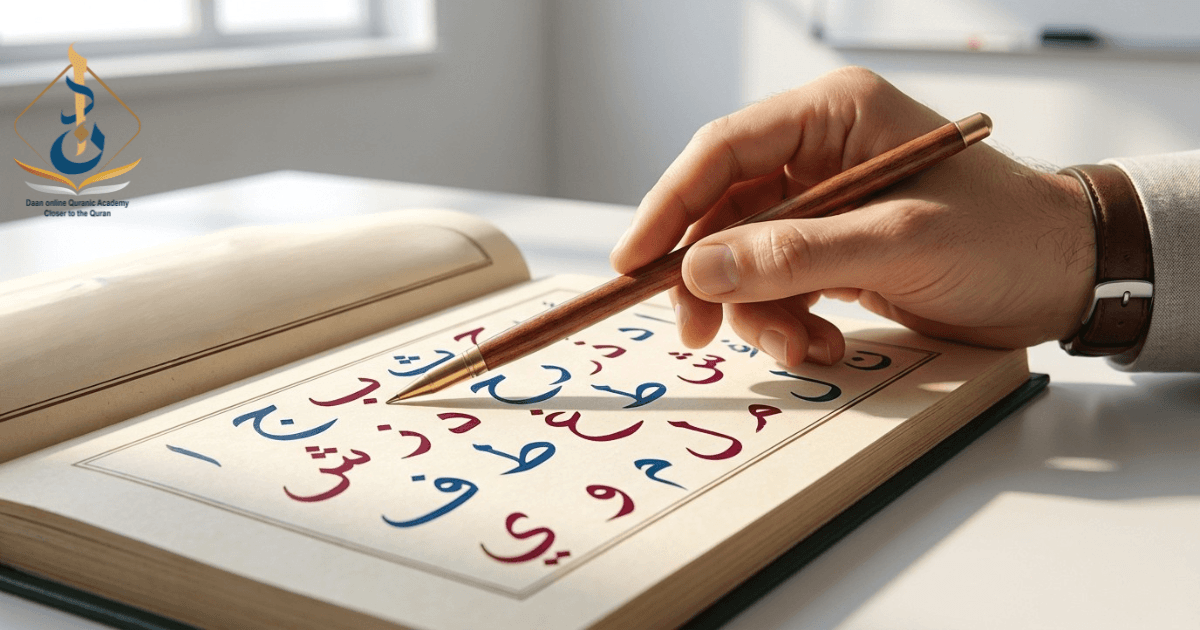
The journey to learn Noorani Qaida begins with the Arabic alphabet (Al-Huroof Al-Mufradah) — learning to articulate all 28 letters from their exact anatomical positions. This is the most crucial stage of all. A letter learned incorrectly here corrupts everything built on top of it. Students then progress to joined letters (Al-Huroof Al-Murakkabah), learning how each letter changes its shape at the beginning, middle, and end of a word.
Giving Voice to the Letters — Vowels and Tanween
Here, students learn the three short vowels (Harakat): Fatha (a sound), Kasra (i sound), and Dhamma (u sound) — how to pronounce each letter with its vowel marker without stretching the sound. Tanween adds a hidden “Noon” sound at the end of words that is pronounced but not written — one of the most common sources of error for English speakers who learn Noorani Qaida.
The Rules of Elongation — Madd and Leen
Students learn when to stretch a sound using the three Madd letters (Alif, Waw, Yaa). This is where students begin to taste the rhythmic beauty of Quranic recitation — the measured, flowing quality that Allah ﷻ commanded in Surah Al-Muzzammil. Incorrect Madd is one of the most common Tajweed errors among those who never properly learned Noorani Qaida.
Power and Stopping — Sukoon and Shaddah
Sukoon teaches how to stop cleanly on a letter without adding extra bouncing sounds — except for the five Qalqalah letters (ق ط ب ج د) which require a specific echo. Shaddah teaches the pronunciation of doubled letters with proper emphasis. This stage is vital for the rhythm of recitation and prevents the “lazy” pronunciation that flattens the weight of Quranic words.
Comprehensive Practice — The Path to Mastery
The final lessons consist of complete Quranic words and short verses that combine every rule from the previous four stages. A student who completes this stage with focused practice and a qualified teacher can open the Quran and read any word correctly. This is the graduation point — the proof that the student has truly learned Noorani Qaida from zero to mastery.
3 Golden Rules to Learn Noorani Qaida Successfully
Reaching mastery is not just about covering the curriculum — it requires the right learning habits that accelerate retention and prevent the formation of incorrect patterns. These three rules apply whether you learn Noorani Qaida with a private tutor, in a group class, or supporting your child at home:
The 3 Rules That Separate Fast Learners from Slow Ones
- Listen First, Then Repeat — Do not rely solely on visual reading. Repeatedly listening to high-quality Noorani Qaida audio recordings programs your ear to recognize correct Arabic pronunciation before your tongue attempts it. Listen to each lesson multiple times before trying to repeat. This is how children absorb their mother tongue — through listening before speaking.
- Always Read Aloud — Silent study does not train pronunciation. You must hear your own voice to compare it with the teacher’s. Reading aloud also exposes errors that your eye skips over when reading silently. Every practice session should involve actual vocalization — even a whisper is better than silence.
- Never Skip the Teacher — No matter how well a book is written, the Quran is an oral science. Immediate error correction from a qualified native Arab teacher is irreplaceable. A single uncorrected mispronunciation, repeated hundreds of times, becomes nearly impossible to undo. The right teacher does not just correct — they prevent the error from embedding in the first place.
At Daan Quranic Academy, every student who wants to learn Noorani Qaida is paired with a native Egyptian tutor who holds certification in Tajweed sciences. Because every session is private 1-on-1, the tutor hears every sound you make and corrects every error in real time — exactly what these three golden rules require. View our flexible pricing plans starting from $9/hr.
The difference between students who master Noorani Qaida in 4 months and those who struggle for years is almost always the same: the fast learners had a qualified native Arab tutor correcting them from day one. The slow learners self-studied or learned from non-native teachers who could not hear or correct their specific errors.
How Long Does It Take to Learn Noorani Qaida?
With consistent practice of 3–4 sessions per week with a qualified tutor, most students complete Noorani Qaida in 4–8 months — though the timeline varies significantly based on age, session frequency, and practice between lessons.
- Children (ages 5–7): 5–8 months with 3 sessions/week of 25–30 minutes each
- Children (ages 8–12): 3–5 months — stronger analytical skills accelerate progress
- Adults and reverts: 3–6 months — faster conceptual understanding but may need more repetition for muscle memory
- Accelerated track (daily sessions): As fast as 6–8 weeks for highly motivated adult learners
The most important factor is not speed — it is the quality of each stage’s mastery before advancing. Students who rush through Noorani Qaida to “finish faster” consistently struggle when they reach the Quran itself. The goal when you learn Noorani Qaida is not completion; it is transformation.
For a deeper look at how non-Arabic speakers approach Quran learning, read our guide on How to Learn Quran for Non-Arabic Speakers: The Ultimate 2026 Guide.
And if you are looking for the best structured Noorani Qaida course after completing this guide, our article on the Best Online Tajweed Course in 2026 covers what to look for in a qualified program.

Frequently Asked Questions
What is Noorani Qaida and why do I need it to learn the Quran?
Noorani Qaida is a progressive curriculum that teaches correct Arabic letter pronunciation and foundational Tajweed rules before Quran reading begins. Without it, students develop incorrect pronunciation habits that are extremely difficult to correct later. To learn Noorani Qaida properly is to ensure that every word of Quran you read for the rest of your life is pronounced correctly from the start.
Can adults learn Noorani Qaida from scratch?
Absolutely. Adults who want to learn Noorani Qaida often progress faster than children because they understand rules conceptually and have stronger self-discipline. Many adult Muslims and reverts start from zero with Noorani Qaida and complete it in 3–6 months with consistent sessions. At Daan Academy, you can book a free trial session to begin with a personalized assessment — no prior Arabic knowledge needed.
Do I need a teacher to learn Noorani Qaida or can I self-study?
A qualified teacher is essential. The Quran is an oral science — pronunciation errors cannot be detected or corrected through self-study alone. Students who learn Noorani Qaida without a native Arab teacher almost always develop incorrect habits that require significant corrective work later. The investment in a qualified tutor from the start saves months of remediation.
How many lessons are in Noorani Qaida?
The Noorani Qaida typically contains 17 lessons covering the complete progression from individual letters to full Quranic words. The lessons are interconnected — mastery of each lesson is required before advancing to the next. At Daan Academy, tutors assess each student’s pace individually and never rush past a lesson until genuine mastery is demonstrated.
Is Noorani Qaida the same as Tajweed?
Not exactly — but the best approach integrates them. Noorani Qaida teaches letter recognition and basic pronunciation rules; formal Tajweed study goes deeper into all the rules governing recitation. However, the best way to learn Noorani Qaida is with Tajweed principles woven in from lesson one — teaching correct articulation points alongside letter shapes. This is the approach used at Daan Academy, taught by certified native Egyptian tutors trained in Quranic sciences.
What comes after completing Noorani Qaida?
After completing Noorani Qaida, students transition directly to Quran reading and recitation — applying everything learned to actual Surahs. From there, the path continues to Tajweed Rules Mastery, and eventually Hifz (memorization) or Ijazah programs for those who want scholarly certification. View all available pathways on our courses page.
Begin Your Noorani Qaida Journey — First Session Completely Free
Reaching mastery when you learn Noorani Qaida requires the right environment: a patient native Egyptian tutor, private 1-on-1 sessions, and a structured curriculum that never skips foundations. At Daan Quranic Academy, that is exactly what every student receives — from the very first lesson.
No payment required. No commitment. One free session to experience the difference a qualified native tutor makes.
Final Thoughts
To learn Noorani Qaida is not simply to memorize a few lessons — it is to build the solid foundation that creates a strong, lifelong relationship with the Book of Allah. Every letter articulated correctly, every vowel applied precisely, every rule of elongation and stopping internalized through repetition — these become the building blocks of a recitation that honors the divine command to read with measured precision.
Whether you are starting from scratch with your child or correcting your own path after years of self-taught habits, the journey is the same: gradual progress, patient practice, and the right teacher. Explore more Quran learning guides on our blog, and may your journey with the Quran be blessed from its very first letter.
May Allah ﷻ make the Quran easy upon your tongue and the tongue of your children, grant you sincerity in seeking this knowledge, and accept your efforts as a means of drawing closer to Him. Ameen.