The Best Age to learn Teaching Your Child Noorani Qaida
The best age to learn Noorani Qaida is around 5 years old — when children have developed sufficient vocabulary, motor skills, and attention span for structured Arabic letter learning. As Muslim parents, we all share a beautiful dream: to see our children confidently reciting the Holy Quran with perfect pronunciation and precise Tajweed. The Noorani Qaida is the essential foundational step to achieving this milestone — but knowing exactly when your child is ready makes the difference between a joyful journey and a frustrating one.
📑 Table of Contents
What Is Noorani Qaida and Why Is It Crucial?
Noorani Qaida is a progressive beginner’s curriculum designed to teach correct Arabic letter pronunciation and foundational Tajweed rules — the essential prerequisite before any child can read the Quran independently. Formulated by Sheikh Noor Muhammad Haqqani, it takes learners from zero Arabic knowledge to confident letter-joining and basic recitation readiness.
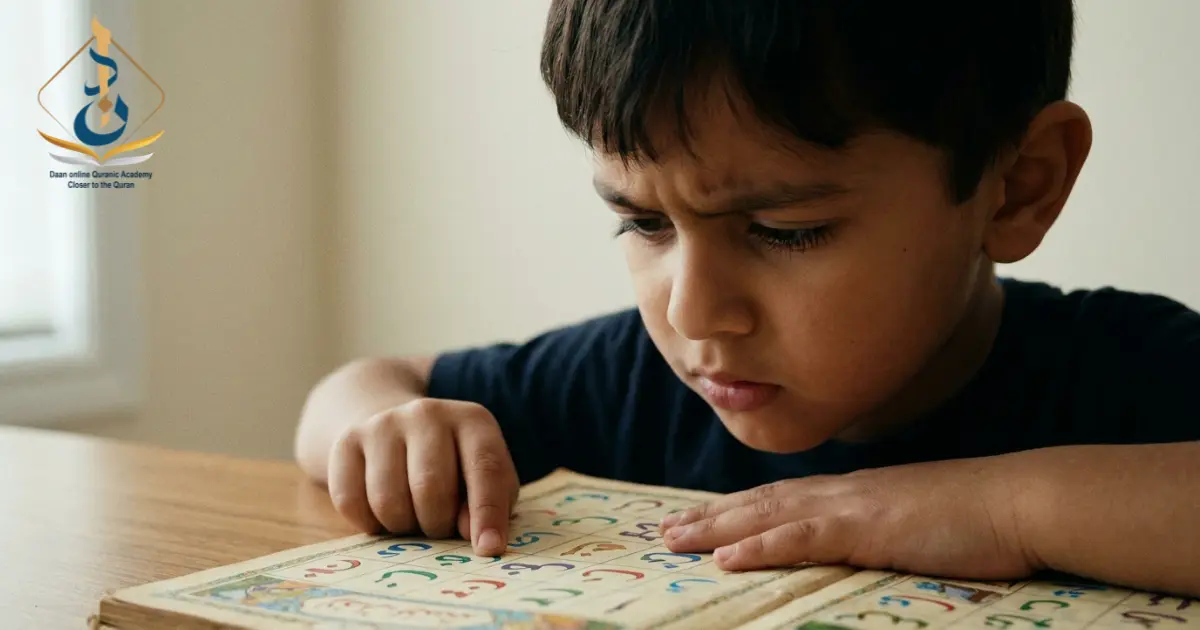
The book progresses logically: starting from single isolated letters (Huroof Mufradah), moving to compound joined letters (Huroof Murakkabah), then introducing vowels (Harakat), elongation (Madd), and rules of stopping (Waqf). Mastering the Noorani Qaida ensures that your child trains their tongue on the correct articulation points (Makharij) — which prevents common, hard-to-break reading mistakes later in life.
The Prophet ﷺ emphasized the virtue of learning and teaching the Quran:
The Prophet ﷺ said: “The best among you are those who learn the Quran and teach it.”
— Narrated by Uthman ibn Affan (RA) — Sahih al-Bukhari (5027)
This journey begins with Noorani Qaida — the gateway through which every young Muslim enters the world of Quran reading. Understanding the best age to learn Noorani Qaida helps parents time this introduction perfectly, ensuring their child absorbs Arabic phonetics naturally rather than struggling against developmental limitations.
The Best Age to learn Noorani Qaida: Age-by-Age Breakdown
The best age to learn Noorani Qaida for structured learning is between 5 and 7 years old — the golden window when children’s memory growth, visual-audio linking ability, and attention span align perfectly for systematic letter study. However, gentle exposure can begin earlier, and older children can complete the curriculum faster.
There is no absolute “one-size-fits-all” answer, as cognitive, linguistic, and emotional development varies significantly from child to child. Experienced Quran educators generally categorize the learning stages as follows:
| Age Group | Cognitive Capacity | Recommendation |
|---|---|---|
| 3–4 Years | High indirect visual and auditory absorption | Start very slowly — play alphabet Nasheeds and show colorful letter flashcards without any pressure to memorize or sit still |
| 5–7 Years | Excellent memory growth and ability to link visual shapes to audio sounds | The Golden Age! The child is mentally prepared to systematically learn letters, apply vowels, and follow a structured curriculum |
| 8+ Years | High analytical skills, rapid comprehension, and logical thinking | Can complete entire Noorani Qaida in a few months if a consistent daily schedule is maintained |
The ideal and most recommended age to begin a serious, structured study of the Noorani Qaida is around 5 years old. By this age, a child has developed sufficient vocabulary, better motor skills, and the necessary attention span for focused lessons. If your child shows readiness signs earlier, gentle exposure at 4 is perfectly fine — but never force formal study before they are developmentally ready.
Allah ﷻ reminds us of the importance of this reading journey:
اقْرَأْ بِاسْمِ رَبِّكَ الَّذِي خَلَقَ
“Read in the name of your Lord who created.”
The very first revelation commanded reading — and Noorani Qaida is the tool that makes reading possible for our children. Whether your child starts at the best age to learn Noorani Qaida (around 5) or begins later at 8, the key is starting with the right method and the right teacher.
5 Signs Your Child Is Ready to Begin Noorani Qaida
Beyond age alone, specific developmental readiness signs indicate whether your child will benefit from structured Noorani Qaida study. Look for these five indicators before enrolling them in formal lessons:

Readiness Indicators
- Clear Articulation — They can speak basic words clearly, form simple sentences, and communicate their thoughts effectively
- Sufficient Attention Span — They can focus on a single quiet task (coloring, puzzles, listening to a story) for 10–15 minutes without getting overly distracted
- Natural Curiosity for Books — They show interest in holding books, turning pages, and pointing at pictures or symbols
- Visual Discrimination — They can easily differentiate between basic shapes and patterns (e.g., distinguishing a letter with one dot from a letter with two dots)
- Following Instructions — They can comfortably listen to and follow simple two-step instructions from adults
If your child demonstrates 3 or more of these signs — regardless of whether they have reached the best age to learn Noorani Qaida — they are likely ready for gentle, structured introduction. At Daan Quranic Academy, tutors assess each child’s developmental readiness in the free trial session and recommend the appropriate starting point.
Proven Tips to Teach Noorani Qaida Without Tears
The key to successful Noorani Qaida learning is keeping sessions short, consistent, and fun — transforming Arabic letters from a chore into an adventure your child looks forward to. If you have determined that your child is ready, these strategies prevent frustration and build lasting love for Quran learning:
- Keep Sessions Short and Consistent (10–15 minutes daily) — Children have very short attention spans. Brief daily practice yields far better results than a grueling one-hour session once a week. Consistency builds habits that compound over months
- Embrace Gamification — Turn learning into a game. Use colorful flashcards for Qaida letters, play memory matching games, or use a whiteboard with bright markers to draw letters together
- Focus on Repetitive Listening — Play high-quality audio recitations of Noorani Qaida chapters in the background while they play. Repetitive listening programs their subconscious mind to absorb the correct Arabic accent naturally
- Generous Positive Reinforcement — Celebrate every small victory! When your child masters a difficult letter or finishes a lesson, reward them with a sticker on an achievement chart, their favorite snack, or extra playtime
- Choose a Patient, Specialized Tutor — Teaching young children requires immense patience and child-specific pedagogy. A native Arab tutor experienced with children makes a transformative difference compared to generic instruction
- Never Compare or Pressure — Every child develops at their own pace. Avoid comparing siblings or peers — this destroys motivation faster than anything else
For a deeper dive into the complete curriculum structure, read our comprehensive guide on Learning Noorani Qaida: From Zero to Mastery.
Why Online Noorani Qaida Classes Work Better for Young Children
Online 1-on-1 Noorani Qaida classes offer children a safe, distraction-free environment with undivided tutor attention — advantages that traditional group settings at mosques rarely provide for this age group.
Young children (ages 5–7) thrive when learning is personalized to their pace. In group classes with 10–15 students, tutors cannot possibly hear and correct every child’s pronunciation individually. Online private sessions solve this — your child receives 100% of the tutor’s attention for the entire lesson.
Additional advantages of online Noorani Qaida for young learners:
- Parent can sit beside them — full supervision without disrupting the class dynamic
- Familiar home environment — reduces anxiety that young children feel in unfamiliar settings
- Flexible timing — schedule sessions when your child is most alert (not when the mosque happens to offer classes)
- Interactive digital tools — at Daan Academy, 600+ educational games reinforce Arabic letter recognition between sessions
- Same tutor every session — builds trust and rapport that young children need to open up and participate
At Daan Quranic Academy, children’s Noorani Qaida sessions are taught by native Egyptian tutors who speak fluent English and specialize in teaching young learners aged 5–13+. Every session is private 1-on-1, with plans starting from just $9/hr. The Smart Student Dashboard lets parents track progress milestones without needing to ask.
To understand what makes Daan Academy’s approach different, visit our Why Choose Us page for tutor credentials and methodology details.

Frequently Asked Questions
What is the best age to learn Noorani Qaida?
The best age to learn Noorani Qaida for structured learning is around 5 years old. At this age, children have developed sufficient vocabulary, attention span (10–15 minutes), and visual discrimination skills to learn Arabic letters systematically. Gentle audio/visual exposure can begin as early as 3–4 years through Nasheeds and flashcards.
Can a 3-year-old learn Noorani Qaida?
A 3-year-old can be exposed to Arabic letters through play — colorful flashcards, alphabet Nasheeds, and letter-shaped toys. However, formal structured Noorani Qaida study is not recommended at this age because most 3-year-olds lack the attention span and fine motor control needed for systematic learning.
How long does it take a child to complete Noorani Qaida?
With consistent practice (3–4 sessions per week), children aged 5–7 typically complete Noorani Qaida in 4–8 months. Children aged 8+ can finish in 2–4 months due to faster cognitive processing. The timeline depends on session frequency, practice between classes, and individual learning pace.
Is it too late to start Noorani Qaida at age 10 or older?
Absolutely not. Older children (8–12) actually complete Noorani Qaida faster than younger ones because of stronger analytical skills and longer attention spans. The best age to learn Noorani Qaida is whenever the child is ready — even adults benefit from starting with this foundation.
Can my child learn Noorani Qaida online effectively?
Yes — online 1-on-1 Noorani Qaida classes are highly effective for children when taught by qualified, patient tutors using interactive methods. At Daan Academy, you can book a free trial session to see how your child responds to the online format before committing.
Should Noorani Qaida be taught with or without Tajweed?
Always with Tajweed integrated from the start. Teaching correct articulation points (Makharij) alongside letter recognition prevents bad pronunciation habits that are extremely difficult to correct later. The best Noorani Qaida courses teach Tajweed naturally within the curriculum — not as a separate add-on.
Start Your Child’s Quranic Journey — First Session Free
At Daan Quranic Academy, we specialize in teaching Noorani Qaida to young children through private 1-on-1 sessions with native Egyptian tutors who make learning fun, engaging, and effective. Your child gets a dedicated tutor, interactive games, progress tracking, and a personalized pace — all from the comfort of home.
No payment required. No commitment. Just one session to see your child light up.
Final Thoughts
The best age to learn Noorani Qaida is when your child shows readiness — typically around age 5, when their cognitive development, attention span, and curiosity align beautifully with structured Arabic letter learning. Whether your child is 4 and you want to begin gentle exposure, or 8 and ready for accelerated completion, the key is choosing the right method: patient tutors, short engaging sessions, and consistent daily practice.
Every child’s timeline is different — and every timeline is valid. What matters most is that the foundation is built correctly from the beginning, with proper Tajweed integration and native Arabic pronunciation. Explore more parenting guides and Quran learning resources on our blog.
May Allah ﷻ bless your children with a love for His Book, make the Quran easy upon their tongues, and reward you abundantly for guiding them toward this beautiful path. Ameen.