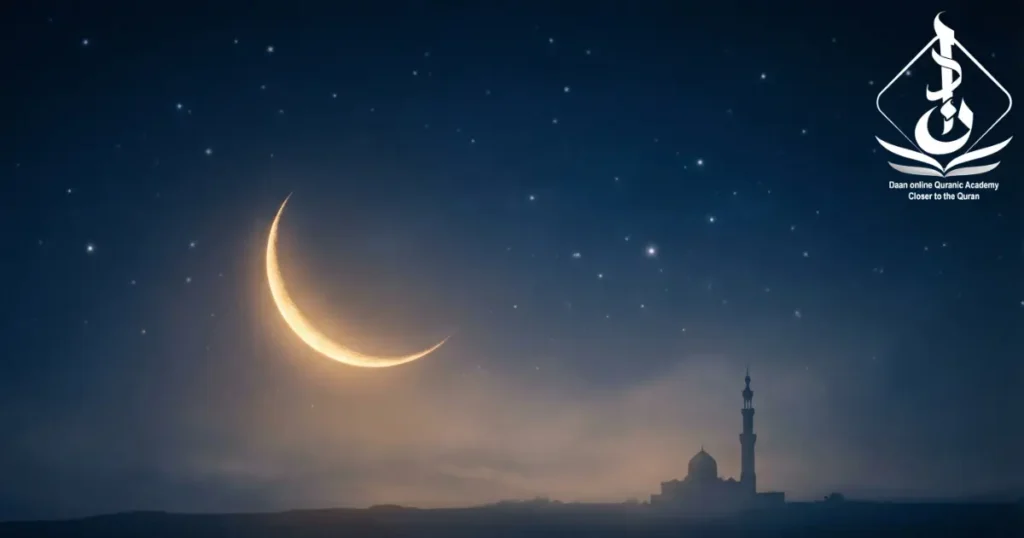
With the radiant emergence of the crescent moon of the blessed month of Ramadan, the features of the universe transform, souls are draped in a cloak of serenity, and the gates of heaven swing open to receive the supplications of the longing. Ramadan is not merely a passing moment on the year’s calendar; it is a Divine school, a cosmic season for radical change, and above all, it is the “vessel of the Quran” chosen by God to be the beginning of the greatest message ever brought forth to humanity.
In this article, we navigate together through the reaches of this holy month, uncovering its spiritual secrets and shedding light on its hidden jewel, “Laylat al-Qadr” (The Night of Decree), exploring how a person can reclaim their lost balance amidst the chaos of material life.
First: Ramadan.. The Appointment of Hearts and Divine Hospitality
Allah says in His clear revelation: {The month of Ramadan [is that] in which was revealed the Qur’an, a guidance for the people and clear proofs of guidance and criterion}. God chose this specific time to bear witness to the revelation, and from here we understand the secret of that deep emotional bond between the fasting person and the Quran.
Fasting, in its essence, is a journey of “reduction” for the sake of “growth.” It is the reduction of food, drink, and material pleasures to foster the growth of the soul, the mind, and the connection with the Creator. During Ramadan, a person discovers that they possess immense energies of patience they never knew they had, and that the body they perceived as weak is capable of enduring long hours, thereby enhancing self-confidence and the ability to control desires.
Ramadan and the Philosophy of Time
In Ramadan, our perception of time shifts. Dawn is not just the start of a workday; it is the beginning of the soul’s battle with its inclinations. Sunset is not merely the end of office hours, but the moment of the fasting person’s joy—”a joy when he breaks his fast.” This precise temporal discipline reprograms the human mind to be more focused and aware of every passing moment.
Second: Laylat al-Qadr.. The Crown of Time and the Jewel of the Ten Nights
At the heart of this great month, specifically within its last ten days, lies a night that is “better than a thousand months.” Laylat al-Qadr is the night when destinies are written, angels descend, and peace permeates every corner of the earth.
Secrets and Virtues of the Night of Decree
- The Blessing of Multiplied Worship: Performing a good deed on this night is equivalent, in God’s scales, to worship for more than eighty-three years. This is a generous Divine offer that no wise person should miss; it serves as a “shortcut through time” on the journey toward God.
- The Descent of the Angels and the Spirit: The Quran describes this night by stating that the angels and the Spirit (Gabriel, peace be upon him) descend therein by permission of their Lord for every matter. Imagine that the earth on that night becomes crowded with angels due to their sheer number, broadcasting a positive and luminous energy into the universe that only a purified soul can feel.
- Absolute Peace: It is “Peace it is until the emergence of dawn.” Peace here is not just the absence of war or noise, but an inner peace that floods the heart, a cessation of the whispers of devils, and a golden opportunity for emancipation from the Fire.
When Do We Seek It?
Although its exact date has been hidden from servants so they may strive throughout all the last ten nights, prophetic traditions indicate it falls on the odd-numbered nights. There is profound wisdom in this concealment: to keep the believer in a state of constant anticipation and worship, ensuring their effort is not limited to a single night followed by lethargy.

Third: The Holy Quran.. The Companion on the Path of Fasting
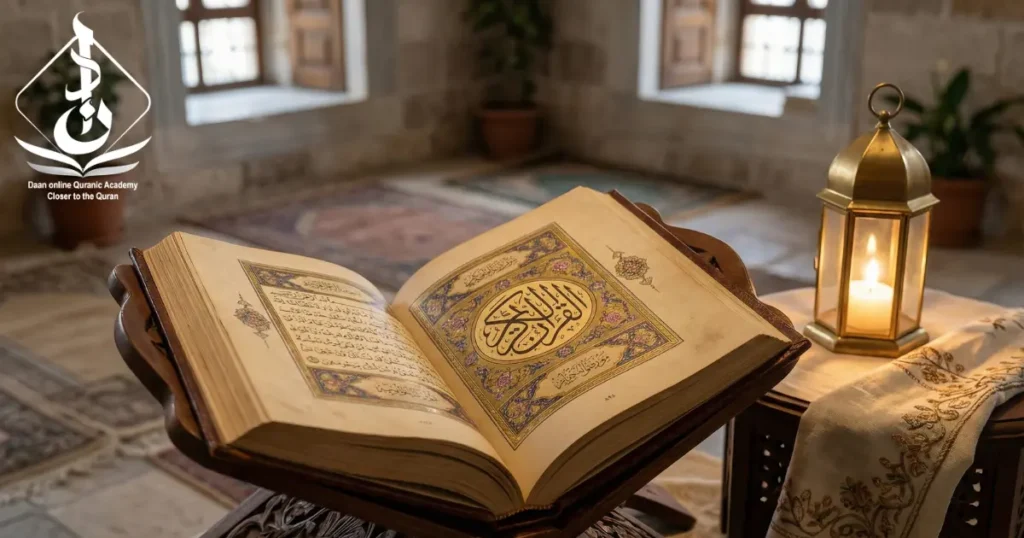
It is impossible to speak of Ramadan without speaking of the Quran. The Quran is the spirit with which Ramadan descended. In this month, recitation increases and completions of the book multiply, but what is more important than that is “Tadabbur” (contemplation).
Reading a single verse with reflection and meditation is better than completing the entire Quran without awareness of its meanings. The language of the Quran, with its miraculous eloquence, is capable of penetrating the veils of hardened hearts. When we read about God’s mercy, about Paradise and its bliss, and about patience and its reward, we find these meanings transforming into fuel that drives us to continue in obedience after Ramadan.
How to Contemplate the Quran in Ramadan?
- Pausing at Verses: Do not let your primary concern be the end of the Surah; rather, let your concern be: “What does this verse want to tell me today?”
- Linking Quran to Reality: Try to project Quranic guidance onto your daily life—in your dealings with your family, in your work, and in your ethics.
- Supplicating with the Quran: Let our tongues flow with Quranic supplications during times of response, especially at the time of Iftar and during the pre-dawn hours (Suhur).
Fourth: A Practical Program for Reviving the Last Ten Nights
To ensure these blessed days are not lost in the preoccupation of buying Eid clothes or tidying the home, a solid plan must be set:
- Spiritual Seclusion: Dedicate time daily to isolate yourself from people and social media, to be alone with God, remembering Him, seeking His forgiveness, and conversing with Him.
- Hidden Charity: Charity in the last ten days carries a great reward; it is a purification for the soul and a consolation for the poor.
- Abundant Supplication: Especially the prayer that the Prophet (peace be upon him) taught Aisha (may God be pleased with her): “O Allah, You are Forgiving and love forgiveness, so forgive me.”
- Night Prayer (Qiyam): Standing in prayer during the pre-dawn hours is the honor of the believer. It is the time when the Lord descends in a manner befitting His Majesty and asks: “Is there any seeker of My favor that I may give to him? Is there any seeker of My forgiveness that I may forgive him?”
Fifth: The Impact of Fasting on the Soul and Society
Ramadan is not just an individual journey; it is a major social phenomenon. In it, the values of solidarity and compassion are manifested. When the wealthy feel the hunger of the poor, their hearts soften, and their hands open in giving. When neighbors and relatives gather around the Iftar table, disputes dissolve and bonds strengthen.
Fasting refines character, teaching us to restrain anger: “If someone insults him or fights him, let him say: I am fasting.” If this moral discipline continued with us throughout the year, our societies would transform into oases of safety and peace.
Conclusion: Farewell to Ramadan.. A Continuation of the Impact
At the end of this month, the believer stands at the threshold of Eid al-Fitr, carrying a spiritual provision sufficient for an entire year. Success in Ramadan is not measured solely by fasting and praying, but by the lasting impact these acts of worship leave on one’s behavior and heart.
Laylat al-Qadr is the true starting point; it is the night we are born anew if we are sincere with God in seeking it. Let our Ramadan be the beginning of a new covenant with God—a covenant that does not end with the month’s conclusion, but continues until we meet God while He is pleased with us.
We ask Allah Almighty to allow us to reach Laylat al-Qadr, to make us among those emancipated from the Fire, to accept from us and from you our righteous deeds, and to return these days to us with prosperity and blessings.
O Allah, make our fasting the fasting of those who truly fast, and our standing in prayer the standing of those who truly stand, and awaken us therein from the sleep of the heedless.
Experience our unique approach first-hand. Book your free free trial sessions now with no strings attached.