
Raising children in Western societies presents a profound challenge for Muslim families. Children often find themselves immersed in environments where values, customs, and lifestyles differ significantly from Islamic principles. The goal is not to isolate the child from society, but to build a “value shield” that allows them to take pride in their Islamic identity while interacting positively with their surroundings.
This article explores comprehensive strategies to root Islamic identity in the hearts and minds of children living in the West.
I. Leading by Example: The Home as the Core
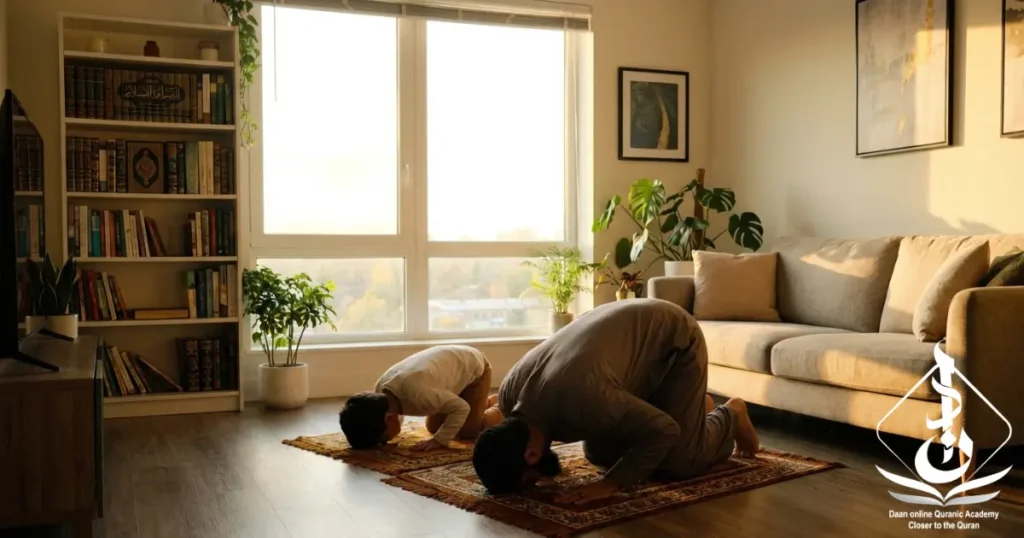
Parents cannot expect children to adhere to values they do not witness in daily behavior. Children are precise “simulation devices”; they observe how their parents handle prayer, honesty, integrity, and respect for others.
- Living the Values: When a child sees their parents stop everything for prayer, they realize that Allah is the ultimate priority.
- Psychological Balance: The child must see a model of a Muslim at peace—one who balances professional success with religious commitment, avoiding both alienating extremism and harmful assimilation
II. Building an Emotional Bridge with Allah
A common mistake is turning religion into a list of “prohibitions” (Haram, shame, punishment). In the West, where temptations are plenty, a child will only resist them through an “internal compass” driven by love, not fear.
- Introducing Allah’s Names: Teach your child that Allah is the Most Merciful, the Loving (Al-Wadud), and the Provider. Make them love Allah first so they naturally want to follow His guidance.
- Dialogue, Not Indoctrination: Open the door for questions, no matter how bold. Western societies value critical thinking; if a child doesn’t find convincing answers at home, they will look elsewhere.
III. The Arabic Language: The Key to Identity
Language is more than a communication tool; it is the vessel of culture and the Quran. Losing Arabic often leads to a gradual loss of the ability to deeply understand religious texts.
- “Arabic at Home” Policy: Agree that Arabic (or a close dialect) remains the language of communication within the house.
- Fun Learning: Use stories, purposeful cartoons, and interactive games rather than rigid academic lessons that may exhaust the child after a long school day.
IV. Good Companionship and the “Alternative Community”
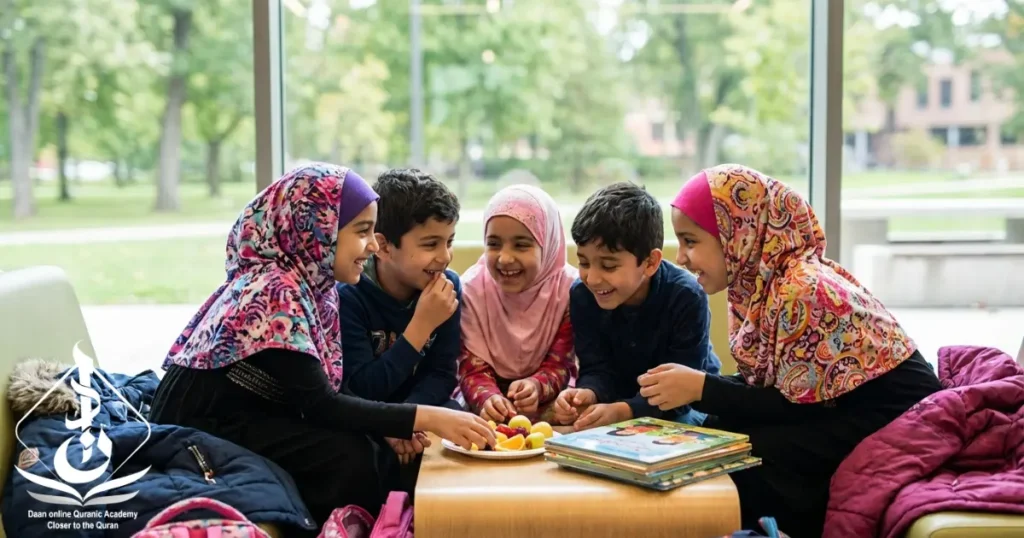
Humans are social beings, and children need to feel they belong to a group that resembles them. In the West, a child may feel “different,” which is where the Muslim community plays its role.
- The Mosque as a Hub: The mosque should be a beloved place for the child, associated with play, socializing, and fun—not just a place for silence and ritual.
- Family Friendships: Build relationships with Muslim families who have children of similar ages. When a child sees their peers praying and fasting, it becomes “normal” rather than an exception.
V. Fostering Pride in Historical Heritage
Muslim children in the West sometimes suffer from an “inferiority complex” regarding Western material dominance. The solution lies in connecting them to their roots.
- Stories of Prophets and Companions: Present them as real-life heroes who surpass fictional “superheroes.”
- Muslim Scientific Contributions: Teach them that their ancestors were pioneers in medicine, astronomy, and mathematics, fostering a sense of civilizational pride.
VI. Navigating Western Holidays with Wisdom
Children face social pressure during holidays like Christmas or Halloween. Absolute prohibition without an alternative creates feelings of deprivation.
- Magnify Islamic Eid Celebrations: Make Eid al-Fitr and Eid al-Adha extraordinary events (decorations, gifts, parties). The child should feel their holidays are more joyful.
- Gentle Explanation: Explain that every nation has its cultural specificity. We respect others’ celebrations but do not participate in their theological aspects because we cherish our own.

VII. Media Literacy and Digital Awareness
In the era of TikTok and Netflix, ideas contrary to innate nature (Fitra) and religion seep into children’s rooms easily.
- Co-Watching: Do not leave your child at the mercy of algorithms. Watch with them and discuss: “Why is this behavior wrong?” or “What does our religion say about this value?”
- Providing Alternatives: There are high-quality Islamic educational and entertainment platforms that can compete with Western content.
VIII. Instilling “Positive Citizenship”
Islamic identity does not mean isolation or resentment toward Western society. It means being a qualitative addition to it.
- Benefiting People: Teach them the Hadith: “The best of people are those most beneficial to people.” Encourage volunteering and academic excellence as a form of worship.
- Self-Confidence: A child confident in their identity won’t feel embarrassed saying, “I am Muslim, I don’t drink alcohol.” Confidence is the strongest weapon against bullying and peer pressure.
Conclusion
Preserving Islamic identity in the West is not a lost cause; it is a journey of patience and long-term investment. It requires an open heart, continuous dialogue, and much prayer (Dua). The ultimate goal is for the child to enter Western society carrying firm faith, useful knowledge, and refined character—acting as a true ambassador of their faith.
Experience our unique approach first-hand. Book your free free trial sessions now with no strings attached.