Preserving Islamic Identity in the West: A Guide for Muslim Families
Raising children in Western societies presents a profound challenge for Muslim families. Children often find themselves immersed in environments where values, customs, and lifestyles differ significantly from Islamic principles. The goal is not to isolate the child from society, but to build a “value shield” that allows them to take pride in their Islamic identity while interacting positively with their surroundings. This article explores comprehensive strategies to root Islamic identity in the hearts and minds of children living in the West. I. Leading by Example: The Home as the Core Parents cannot expect children to adhere to values they do not witness in daily behavior. Children are precise “simulation devices”; they observe how their parents handle prayer, honesty, integrity, and respect for others. II. Building an Emotional Bridge with Allah A common mistake is turning religion into a list of “prohibitions” (Haram, shame, punishment). In the West, where temptations are plenty, a child will only resist them through an “internal compass” driven by love, not fear. III. The Arabic Language: The Key to Identity Language is more than a communication tool; it is the vessel of culture and the Quran. Losing Arabic often leads to a gradual loss of the ability to deeply understand religious texts. IV. Good Companionship and the “Alternative Community” Humans are social beings, and children need to feel they belong to a group that resembles them. In the West, a child may feel “different,” which is where the Muslim community plays its role. V. Fostering Pride in Historical Heritage Muslim children in the West sometimes suffer from an “inferiority complex” regarding Western material dominance. The solution lies in connecting them to their roots. VI. Navigating Western Holidays with Wisdom Children face social pressure during holidays like Christmas or Halloween. Absolute prohibition without an alternative creates feelings of deprivation. VII. Media Literacy and Digital Awareness In the era of TikTok and Netflix, ideas contrary to innate nature (Fitra) and religion seep into children’s rooms easily. VIII. Instilling “Positive Citizenship” Islamic identity does not mean isolation or resentment toward Western society. It means being a qualitative addition to it. Conclusion Preserving Islamic identity in the West is not a lost cause; it is a journey of patience and long-term investment. It requires an open heart, continuous dialogue, and much prayer (Dua). The ultimate goal is for the child to enter Western society carrying firm faith, useful knowledge, and refined character—acting as a true ambassador of their faith. Experience our unique approach first-hand. Book your free free trial sessions now with no strings attached.
A Testament of Divine Mercy: The Eternal Legacy of the Opening of Makkah
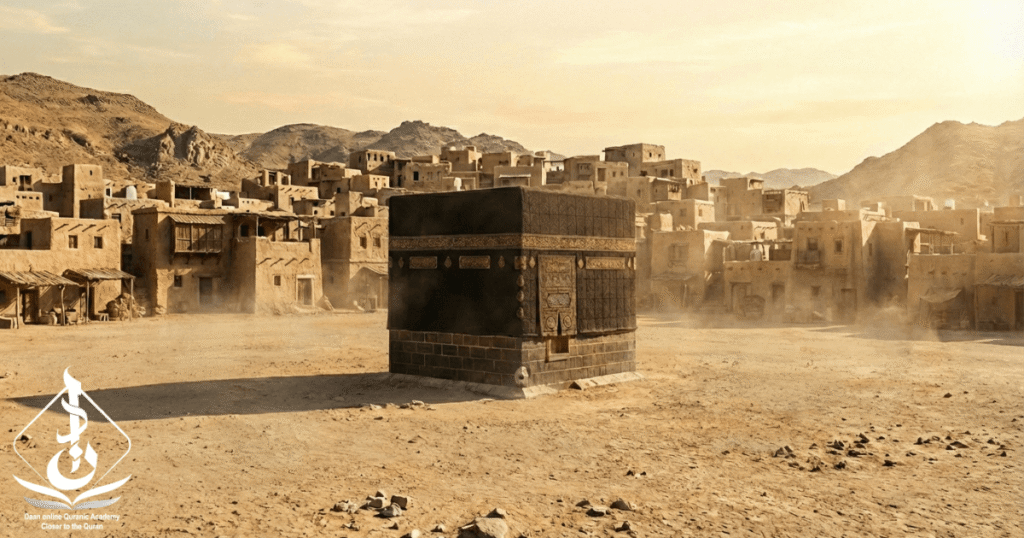
On the 20th of the blessed month of Ramadan, in the eighth year of the Hijra, the Arabian Peninsula witnessed an event that was far more than a mere military victory; it was a moral and social revolution that redefined the concepts of conquest and power. This was the “Opening of Makkah,” or what historians call “The Greatest Conquest” (Al-Fath al-A’zam). It closed the chapter of paganism in its final stronghold and heralded the birth of a new era dominated by monotheism and tolerance. 1. The Roots of the Event: A Broken Covenant The opening of Makkah was not born out of a desire for expansion or revenge, but was the natural result of Quraysh violating its treaties. In the sixth year of the Hijra, the “Treaty of Hudaybiyyah” was signed between the Muslims and Quraysh. One of its terms allowed tribes to choose their alliance; the tribe of Khuza’ah joined the Prophet’s (PBUH) alliance, while Banu Bakr joined Quraysh. Peace lasted for two years until the unexpected happened: Quraysh aided Banu Bakr with weapons and men to attack Khuza’ah at night at a well called “Al-Wateer,” killing some of them while they were in prayer. This was a flagrant violation of the treaty. A cry for help reached Madinah through the poet Amr ibn Salim al-Khuza’i, who stood before the Prophet (PBUH) reciting: “O Lord, I appeal to Muhammad… by the long-standing alliance of our fathers and his.” The Prophet responded with his famous promise: “You have been supported, O Amr ibn Salim.” 2. Desperate Attempts to Repair the Covenant Realizing the gravity of their mistake, Quraysh sent their leader, Abu Sufyan ibn Harb, to Madinah to try and renew the treaty. However, he found all doors closed. He approached the Prophet, who did not answer him, and then Abu Bakr, Umar, and Ali, all of whom refused to mediate. Abu Sufyan returned to Makkah realizing that a “storm” was coming and that the balance of power had shifted entirely toward Madinah. 3. Secret Preparation: “O Allah, Blind Their Eyes and Ears” The Prophet (PBUH) began preparing an army of ten thousand warriors—the likes of which had never been seen in Islamic history. Displaying military genius, he imposed a total media blackout on the operation. He closed the roads leading to Makkah and prayed: “O Allah, take away the eyes and news from Quraysh so that we may surprise them in their land.” His goal was to overwhelm Quraysh and crush their will to fight, thereby preventing bloodshed in the Sacred City. 4. The March Towards Makkah and the Psychological Strategy On the 10th of Ramadan, the great army moved. When they reached “Marr al-Zahran” near Makkah, the Prophet ordered ten thousand fires to be lit—one for each soldier—to make it appear to Makkah that they were surrounded by an unstoppable force. This was a brilliant psychological tactic to paralyze any resistance. During this time, Abu Sufyan went out to scout and met Al-Abbas ibn Abd al-Muttalib (the Prophet’s uncle), who took him to the Muslim camp. There, in a historic dialogue, Abu Sufyan realized that the power of Islam was invincible and embraced the faith. Recognizing Abu Sufyan’s status among his people, the Prophet issued a wise decree that saved many lives: “Whoever enters the house of Abu Sufyan is safe, whoever locks his door is safe, and whoever enters the Sacred Mosque is safe.” 5. The Entry of the Victors: Humility Over Arrogance The Islamic army entered Makkah from four directions to ensure full control: The Prophet (PBUH) entered Makkah riding his camel, “Al-Qaswa,” bowing his head in such humility before Allah that his beard almost touched his saddle. He was grateful for this long-awaited victory. He did not enter as a tyrant seeking revenge against those who had tortured and exiled him; he entered as a Messenger of Mercy. 6. Purifying the Kaaba: “Truth Has Come” The Prophet headed directly to the Kaaba, which was surrounded by 360 idols. He began striking them with his bow while reciting the verse: {And say, “Truth has come, and falsehood has departed. Indeed is falsehood, [by nature], ever bound to depart.”} The idols collapsed under the weight of monotheism, and the House of Allah was purified for the first time in centuries. He then ordered Bilal ibn Rabah—the former slave who had been tortured in Makkah’s heat—to climb the Kaaba and call the Adhan, announcing the dominance of Islam and the voice of truth above all else. 7. General Amnesty: The Greatest Lesson in Tolerance After purifying the House, the people of Makkah gathered at the Kaaba, waiting for the “Victorious Conqueror” to pass judgment on them. The Prophet (PBUH) looked at them—those who had harmed him, besieged him, killed his companions, and plotted against his life—and asked: “O people of Quraysh, what do you think I will do with you?” They replied: “Good. You are a noble brother and the son of a noble brother.” The Prophet then spoke words that continue to echo through history as the greatest charter of forgiveness: “Go, for you are the free ones.” With these words, the Prophet won hearts before he won land, and people entered the religion of Allah in crowds, out of love and conviction rather than force or fear. 8. Historical Impact of the Opening of MakkahThe victory had consequences that shook the foundations of the Arabian Peninsula: 9. Lessons for the Modern World The Opening of Makkah is not just a memory; it is a blueprint for action: Conclusion: The Opening of Makkah remains a testament that Islam did not spread by the sword as an end, but through values supported by strength to repel injustice. It was a day of mercy, a day of loyalty, and a day that proved Ramadan fasting provides a spiritual strength that transcends material limits, creating a victory that remains a beacon for humanity through the ages. Experience our unique approach first-hand. Book your free free trial sessions now with
A Testament of Divine Triumph: The Glorious Legacy of the Battle of Badr
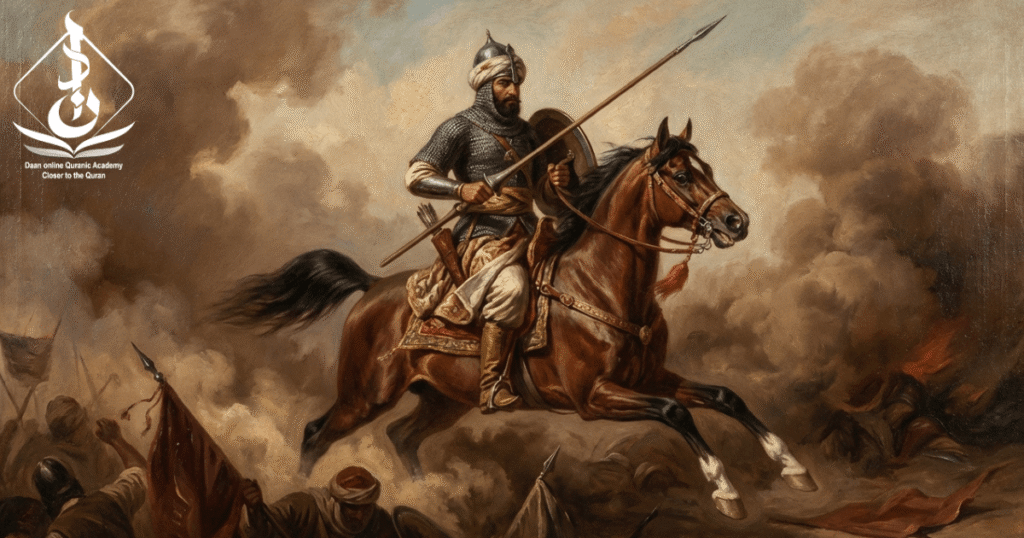
On the morning of the 17th of Ramadan, in the second year of the Hijra, the desert sands were destined for an event that was not merely a military confrontation between two armies, but a seismic shift that altered the course of human history. This was The Great Battle of Badr, which the Holy Quran named “The Day of Criterion” (Yawm al-Furqan), for it distinguished between an era of weakness and an era of empowerment, and between the age of paganism and the age of monotheism. 1. Precursors and Historical Context: Reclaiming Rights, Not Aggression The story of Badr did not begin solely in Ramadan; its roots stretched back to the moment the Muslims migrated from Makkah to Madinah, leaving behind their homes and wealth, which the Quraysh confiscated unjustly. In Madinah, the Muslims sought a means of economic pressure on Quraysh to force them to recognize the new state and cease their harassment. In the month of Ramadan, news reached the Prophet (peace be upon him) that a major trade caravan of the Quraysh, coming from the Levant and carrying a thousand camels with goods valued at fifty thousand gold dinars, led by “Abu Sufyan ibn Harb,” would pass near Madinah. The Prophetic objective was clear: intercept the caravan to reclaim part of the looted wealth and weaken the economic power of Quraysh. The Prophet (PBUH) set out with a small number (313 men), unprepared for a full-scale war. They had only two horses and seventy camels, which they took turns riding. 2. Abu Sufyan’s Intelligence and the Change of Course Abu Sufyan was a shrewd leader; he sensed danger and sent scouts to monitor the road. Upon learning of the Muslims’ departure, he cleverly changed his route toward the Red Sea coast, away from the usual caravan path. Simultaneously, he sent a cry for help to Makkah with “Damdam ibn ‘Amr al-Ghifari,” who entered Makkah with his shirt torn and his camel’s nose cut, shouting: “The caravan! The caravan! Your wealth with Abu Sufyan has been intercepted by Muhammad and his companions!” 3. Abu Jahl’s Arrogance and Quraysh’s Insistence on War Quraysh was enraged and marched out with a massive army of approximately $1,000$ fighters, including the elite knights of Arabia and the leaders of Makkah. Despite receiving a later message from Abu Sufyan informing them that the caravan was safe and asking them to return, “Abu Jahl” arrogantly insisted on moving forward, famously saying: “By Allah, we will not return until we reach Badr. We will stay there for three days, slaughter camels, feed people, drink wine, and the singers will perform for us. The Arabs will hear of our march and our gathering, and they will hold us in awe forever.” 4. The School of Shura: Decision-Making in Crises When the Prophet (PBUH) learned of the Makkan army’s departure, he faced a new reality: either return to Madinah with a military and moral defeat, or face an army three times his size. Here, the magnificence of Prophetic Shura (consultation) was manifested: With this spirit, the army transformed from a group intercepting a caravan into an ideological army ready to die for a principle. 5. Military Genius and Field Tactics The Muslims reached Badr, and the Prophet (PBUH) began organizing his ranks. Here, the importance of field expertise emerged: 6. The Night of the Battle: Tranquility and Divine Support On the night of the 17th of Ramadan, “slumber” overcame the Muslims as a sign of security and tranquility from Allah, resting their bodies and calming their fears. Rain also fell, which was a purification for the Muslims and a means to firm the ground under their feet, while for the polytheists, it was a heavy downpour that hindered their movement. The Prophet (PBUH) spent his night in supplication and prayer to his Lord until his cloak fell from his shoulders, saying: “O Allah, if this small band is destroyed today, You will not be worshipped on earth.” 7. The Epic Events: From Duels to Full Victory The battle began with the traditional Arab style of “individual duels”: Then the general attack began. The Prophet (PBUH) shouted to his companions: “Rise to a Paradise as wide as the heavens and the earth.” He threw a handful of pebbles toward the Quraysh, saying: “May these faces be deformed,” and there was not one of them whose eyes or nostrils were not struck by it. At that moment, divine support descended with thousands of angels fighting alongside the Muslims and firming their hearts. 8. Outcomes that Shook the Arabian Peninsula The battle ended in a resounding victory for the Muslims, with the following results: 9. Treatment of Prisoners: Noble Islamic Ethics The greatness of Islam was evident in the treatment of prisoners. The Prophet (PBUH) ordered that they be treated kindly, and the Muslims would prioritize the prisoners’ food over their own. Ransom was also implemented in innovative ways; those who were wealthy paid in money, while those who were poor but literate ransomed themselves by teaching ten Muslim children to read and write, confirming that Islam is a religion that celebrates knowledge even in the heart of war. 10. Lessons of Badr for Future Generations The Battle of Badr is not just a historical story; it is a constitution for success: Experience our unique approach first-hand. Book your free free trial sessions now with no strings attached.
“Read in the Name of Your Lord”: The Dawn of Message and the Story of Revelation

Fourteen centuries ago, the world was submerged in a profound darkness of spiritual and social confusion. The Arabian Peninsula was a stage for paganism and warring tribalism, where values of justice were absent, replaced by power and pre-Islamic customs. Amidst this human wreckage, there lived a man in Mecca known as “The Truthful, The Trustworthy” (Al-Sadiq Al-Amin). He carried in his heart profound questions about the Creator, the universe, and destiny. His soul did not lean toward the worship of idols; instead, it yearned for the ultimate truth. This yearning would eventually lead to a moment that changed the course of human history forever. 1. Solitude in the Cave of Hira: Seeds of Prophecy The signs of prophethood began to appear on the horizon of Muhammad’s (PBUH) life when he reached the age of thirty-eight. Solitude became beloved to him; he would leave the noise and conflicts of Mecca to ascend to the “Cave of Hira” at the peak of Jabal al-Nour (the Mountain of Light). There, in that narrow and desolate space, he would worship for consecutive nights, contemplating the kingdom of the heavens and the earth, distancing himself from the filth of idols. This seclusion served as a “divine preparation” for the Prophet’s soul and body to be ready to receive the weight of the “Heavy Word.” During this period, “True Visions” (Al-Ru’ya al-Sadiqa) began to manifest; he would not see a dream in his sleep except that it came true as clearly as the break of dawn, representing the first degrees of revelation. As the Quran later noted: “Your companion [Muhammad] has not strayed, nor has he erred” (Surah An-Najm). 2. The Grand Encounter: “Iqra” (Read) In the blessed month of Ramadan, specifically during the Night of Decree (Laylat al-Qadr), which the Quran describes as “better than a thousand months,” the event that shook the foundations of existence occurred. While the Prophet (PBUH) was in his cave, the silence of the night was shattered by the appearance of a great angel: Gabriel (Jibril), the Holy Spirit and the ambassador of heaven. The Prophet (PBUH) narrates this awe-inspiring scene, saying: “The Angel came to me and said: ‘Read!’ I replied: ‘I am not a reader.’” This was not a refusal but an acknowledgment of his human state and illiteracy; he had never learned to read or write. The Angel then seized him and embraced him so tightly that he reached the limit of his endurance, then released him and said: “Read!” The Prophet repeated his answer: “I am not a reader.” This happened three times. On the third time, Gabriel uttered the eternal words that were the first to be revealed of the Quran: “Read in the name of your Lord who created (1) Created man from a clinging substance (2) Read, and your Lord is the most Generous (3) Who taught by the pen (4) Taught man that which he knew not (5)” (Surah Al-Alaq). These words were a proclamation of the beginning of a new era—the era of science, reading, knowledge, and monotheism. 3. The Return and Trembling: The Role of Lady Khadija Gabriel departed, and the Prophet (PBUH) remained in the cave, gripped by intense awe and a majesty never before experienced by a human. He returned to Mecca with his heart trembling, entering upon his wife, Lady Khadija bint Khuwaylid (RA), saying: “Cover me! Cover me!” Here, feminine wisdom and psychological support manifested in their finest form. Khadija did not question him immediately; she waited until his fear subsided. He then told her what he had seen and said: “I feared for myself.” Khadija replied with words forged by faith and innate intelligence, saying: “Never! By Allah, Allah will never disgrace you. You keep good relations with your kith and kin, you help the poor and the destitute, you serve your guests generously, and you assist the deserving calamity-afflicted ones.” These words were the first “prophetic analysis” of the traits that made the Prophet worthy of the message. Her support highlights the profound “Positive Citation” of the family unit in the success of the divine mission. 4. Waraqa ibn Nawfal: Testimony from Ancient Books Lady Khadija was not content with merely calming the Prophet; she sought validation from a scholarly source. She took him to her cousin, “Waraqa ibn Nawfal,” an old man who had embraced Christianity during the pre-Islamic period and had read the ancient scriptures of the Torah and the Gospel. When Waraqa heard what had happened, he did not hesitate for a moment, saying: “This is the same Namus (Angel of Revelation) that Allah sent to Moses.” He informed the Prophet that he would be the Prophet of this nation and warned him that his people would belie him, harm him, and drive him out. Waraqa wished he would be alive to support him strongly. This meeting served as an “external confirmation” for the Prophet (PBUH), letting him know that what he saw was not a dream or an illusion, but a divine selection. 5. The Hiatus of Revelation: A Period of Waiting Following this momentous event, the revelation paused for a period (scholars differ on its duration, ranging from days to months). The purpose of this hiatus was for the Prophet’s fear to dissipate and for him to long for the Angel’s return. During this time, the Prophet felt a great yearning, until the revelation returned to him while he was walking. He heard a voice from the sky, looked up, and saw the same Angel who had come to him at Hira, sitting on a throne between heaven and earth. The Prophet returned home once again in awe, and the words of the Almighty were revealed: “O you who covers himself [with a garment] (1) Arise and warn (2) And your Lord magnify (3) And your clothing purify (4) And uncleanness avoid (5)” (Surah Al-Muddathir). These verses signaled the transition from the stage of “Prophethood” (receiving) to the stage of “Messengership” (delivery and warning). 6. Significance and Lessons
The Best of You are Those Who are Best to Their Families”: Reclaiming the Spirit of the Home in Ramadan
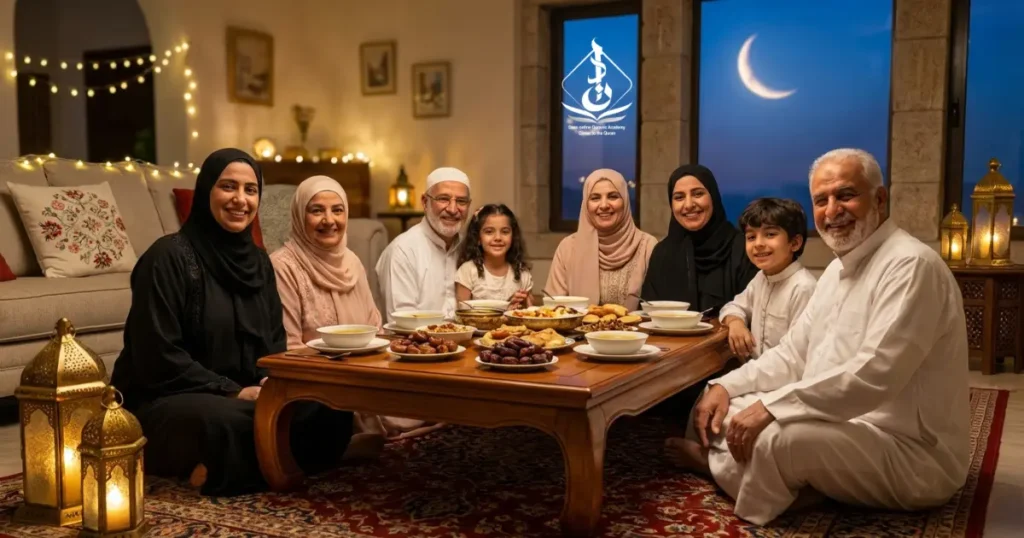
The holy month of Ramadan serves as the “greatest station” in the life of a Muslim family. It is not merely a chronological period for abstaining from food and drink; rather, it is a comprehensive “educational and social ecosystem” that redefines familial bonds and renews the love between its members. In an era where the frantic pace of modern life and the pressures of work and study often scatter the family unit throughout the year, Ramadan arrives to impose a calm, unified rhythm that gathers everyone under one roof. In this article, we will delve deep into how Ramadan acts as a bridge to strengthen family ties and how its rituals contribute to building the character of children and deepening the affection of parents. 1. The Iftar Table: More Than Just a Meal The moment of Iftar in Ramadan is one of the most precious times that families often miss during ordinary days. In the “pre-Ramadan world,” a father might eat at work, and children might eat in their rooms in front of screens. However, in Ramadan, everyone gathers around a single table at a unified time. This “temporal and spatial unity” has a massive psychological impact; it reinforces a sense of “belonging” within the individual. Sitting together while waiting for the Adhan (call to prayer) creates a state of “emotional sharing” in patience and anticipation. From an educational perspective, these minutes should be utilized for calm dialogue, away from criticism or disputes. The Iftar table is the ideal place to exchange stories, check on the well-being of children, and instill values of gratitude and appreciation to God for His blessings. 2. Crafting “Ramadan Memories” in Children’s Hearts Adults always remember the scent of incense in their grandparents’ homes, the sound of the old lantern, and the family gathering around the “Mesaharati” (the dawn caller). These memories are what form an individual’s cultural and religious identity. Therefore, it is the parents’ responsibility to “engineer beauty” within the home during Ramadan. Families can join together in decorating the house and designating a special corner for prayer and reading, often called the “Family Mihrab.” Involving children in these details makes them look forward to the month with joy and passion, linking worship in their minds with happiness rather than effort and fatigue. Furthermore, introducing children to fasting should be done through “gradualism and motivation,” not through coercion, with the necessity of celebrating their “first fast” as a great achievement that boosts their self-confidence. 3. Collective Worship: Spirituality That Unites Hearts When a son sees his father reading the Quran, and a daughter finds her mother diligent in performing the night prayer (Qiyam), it establishes a “silent role model” that exceeds the impact of thousands of verbal sermons. Ramadan provides families with the opportunity for “collective worship,” such as performing Tarawih prayers at home or in the mosque and sharing a daily portion (Wird) of the Quran. This type of activity strengthens the “spiritual bond” between family members. The collective supplication (Dua) before Iftar, where the father leads his family in prayers for their well-being and prosperity, creates a feeling of emotional security and tranquility. Ramadan teaches the family that “success” is not just material; it is a success in elevating the soul together toward the Creator. 4. The Mother’s Role: Balancing Worship and Service One cannot speak about Ramadan and the family without paying a tribute of respect to the mother, who often exerts double the effort to provide comfort for everyone. Here, an important ethical value emerges: “Family Cooperation.” It is unjust for the mother to spend most of her time in the kitchen while the rest of the family rests. Therefore, tasks should be distributed among everyone—setting the table, cleaning, and organizing the prayer area. The assistance of the father and children to the mother is not just “burden-lifting”; it is a practical application of the character of the Prophet (Peace Be Upon Him), who used to be “in the service of his family.” This cooperation breaks down psychological barriers and teaches children to take responsibility and appreciate the effort made for them. 5. Digital Detox: Reclaiming Lost Time One of the greatest challenges for the modern family is “digital isolation,” where each individual is drowned in their own phone. Ramadan is a golden opportunity to impose a “digital truce,” where the use of phones is prohibited during Iftar, Suhoor, or family gathering times. Reclaiming time from screens in favor of “eye contact” and direct conversation repairs many of the gaps caused by technology. During this time, the family can engage in mental games, discuss a book, or even enjoy a “beautiful silence” filled with remembrance and reflection. 6. Family and Society: Instilling Values of Giving Ramadan takes the family out of the boundaries of the “I” and into the “We.” Training children to prepare “Iftar meals” for neighbors or the needy, and involving them in choosing Eid clothes to donate, transforms the family into a “unit of goodness.” These practices plant “social intelligence” and mercy toward others in the hearts of the youth. A child who sees their parents keen on maintaining kinship ties (Silat al-Rahim) and visiting relatives in Ramadan grows up realizing the value of the “extended family” and the importance of social compassion, protecting them from self-absorption or isolation. 7. Suhoor: Blessing in Food and Connection The Prophet (PBUH) described Suhoor as a “blessing.” This blessing is not limited to physical strength for fasting but extends to the blessing of gathering during the time of “Sahar” (the pre-dawn period), a time when mercy descends. The quiet Suhoor session, away from the noise of the day, opens a space for “transparency and honesty” between spouses and between parents and children. It is a time for exchanging gentle advice and sincere prayers that leave an indelible mark on the soul. 8. Sustaining Ramadan’s Gains After Eid The true challenge for the family is how not to let this gathering disperse once the month departs. The family should
Ramadan: The School of Ethics – From Physical Abstinence to Behavioral Excellence

Many believe that the essence of Ramadan lies solely in abstaining from food and drink from dawn to sunset. However, the deep Islamic and educational vision of this month transcends hunger and thirst to reach the reconfiguration of the human character. Ramadan is not just an annual “fitness training” session; it is a “behavioral laboratory” aimed at refining ethics, self-control, and fostering values of social solidarity. As the famous saying goes: “Fasting is 1% not eating and 99% being a better person.” In this article, we will explore the behavioral and ethical aspects that make Ramadan a true school for human development. 1. The Philosophy of Fasting and Achieving “Behavioral Taqwa” (Piety) Fasting in the Quran is linked to a primary goal: “Taqwa” (Piety). In a behavioral sense, Taqwa is “self-monitoring”; it means an individual develops an internal conscience that prevents them from wrongdoing even in the absence of external supervision. During Ramadan, a fasting person abstains from permissible things (food and drink) in obedience to God. This daily training strengthens the “muscle of willpower.” If a person can refrain from what is originally halal, they naturally become more capable of refraining from behavioral prohibitions like lying, cheating, and injustice. This shift from external oversight to a “living conscience” is the first step toward ethical reform. 2. Self-Control and Anger Management Ramadan is a true test of a person’s ability to control their emotions. With feelings of hunger and thirst, the nervous system may lean toward tension. Here comes the sublime Prophetic guidance: “When any of you is fasting, let him not use foul language nor act in an ignorant manner. And if anyone insults him or tries to fight him, let him say: ‘I am fasting’.” This phrase, “I am fasting,” is not just words; it is an “educational technique” for anger management. It signifies declaring a truce with others and rising above petty disputes. As Mahatma Gandhi once noted: “The weak can never forgive. Forgiveness is the attribute of the strong.” Fasting teaches us that strength is not in “reacting in kind,” but in “the ability to suppress rage.” 3. Fasting of the Senses: Beyond Abstaining from Food Ethics in Ramadan are not limited to the heart; they must manifest in the “senses.” True fasting involves the tongue abstaining from backbiting and gossip, the eyes from following the faults of others, and the ears from listening to what is unbeneficial. Philosophers often suggest that “idle talk” consumes more soul energy than physical effort. Therefore, practicing wise silence and choosing kind words in Ramadan contributes to building a dignified and respected personality. As Rumi beautifully stated: “Raise your words, not your voice. It is rain that grows flowers, not thunder.” 4. Fostering Solidarity and Emotional Intelligence One of the most beautiful ethical aspects of Ramadan is “unity of feeling.” When the rich and the poor fast simultaneously, class differences vanish in the shared experience of hunger. This creates what modern psychology calls “Affective Empathy.” A fasting person does not help the poor simply because they are commanded to do so, but because they have “felt” what the poor feel. From here flow the ethics of generosity: Ramadan tents, food baskets, and Zakat al-Fitr. It reminds us that we are one body. As Albert Schweitzer said: “The purpose of human life is to serve, and to show compassion and the will to help others.” 5. Honesty and Integrity in Transactions There is much talk about the “jurisprudence of fasting,” but the most important aspect is the “behavior of the faster” in the market and at work. Ramadan ethics necessitate that a merchant does not monopolize and that an employee does not neglect their work under the pretext of fasting. Integrity in Ramadan manifests in mastering work despite physical fatigue. Turning work into an “act of worship” is an integral part of the Ramadan ethical system. Fasting that does not change a person’s honesty and commitment to promises is fasting that lacks its true impact. 6. Kinship Ties and Dissolving Conflicts Ramadan is the “season of connection.” The ethical behavior in this month pushes an individual toward initiating kinship ties, visiting relatives, and purifying souls from old grudges. The Iftar table that gathers the family is an opportunity to repair cracked relationships. Forgiveness in Ramadan is not weakness; it is ethical courage that purifies the heart and makes society more cohesive. 7. Transforming Behaviors into Sustainable Habits The greatest challenge is not just adhering to these ethics for 30 days, but transforming them into a “way of life.” Here are some behavioral steps to ensure the continuity of change: Conclusion Ramadan is the “Spring of Hearts” and the season for ethical growth. If we emerge from this month with empty stomachs but hearts full of resentment or sharp tongues, we have lost the true essence of this rite. Fasting is the bridge through which we cross from the narrow “I” to the wide “We,” and from behavioral randomness to ethical discipline. Let us make every day in Ramadan a new brick in building a personality characterized by mercy, honesty, and excellence. Experience our unique approach first-hand. Book your free free trial sessions now with no strings attached.
Fasting in the Balance of Science: A Comprehensive Guide to Vital Benefits and Biological Transformations

For centuries, fasting during the month of Ramadan has been viewed primarily as a spiritual and devotional pillar. However, in recent decades, fasting has become a focal point of interest for global research laboratories and major medical universities. It is no longer just a religious rite; it is being studied as a powerful biological mechanism capable of resetting the body’s “biological clock” and renewing its cells. As Benjamin Franklin once wisely noted, “To lengthen thy life, lessen thy meals,” a sentiment that modern science is now validating through rigorous clinical study. In this article, we will dive deep into the human body to understand what happens scientifically during fasting and how hours of abstinence from food transform into a comprehensive therapeutic journey. 1. Metabolic Switching: From Glucose to Ketones The most significant process occurring in the body during fasting is “Metabolic Switching.” Under normal conditions, the body relies on glucose derived from carbohydrates as its primary energy source. However, after approximately 8 to 12 hours of fasting, the body depletes its glycogen stores in the liver. This is where the body’s “biological intelligence” kicks in. It begins breaking down stored fat into fatty acids, which are then converted into “Ketone bodies.” These ketones are not just an alternative energy source; they are ultra-powerful signaling molecules that activate specific genes linked to longevity and disease resistance. Dr. Mark Mattson, a professor of neuroscience at Johns Hopkins University, describes this switch as “an evolutionary adaptation that improves performance and resilience.” This switch helps reduce insulin resistance, making fasting an effective tool for preventing Type 2 diabetes and improving metabolic efficiency. 2. The Miracle of “Autophagy” In 2016, Japanese scientist Yoshinori Ohsumi won the Nobel Prize for his discovery of the mechanisms of “Autophagy.” This process acts as an internal “recycling system” within cells and reaches its peak during prolonged fasting. Paracelsus, the father of toxicology, once stated, “Fasting is the greatest remedy—the physician within,” a quote that perfectly encapsulates the essence of autophagy. When the external supply of nutrients is cut off, the cell begins searching for damaged components, worn-out proteins, or internal microbes to “eat” and convert into energy or new building blocks. This process helps in: 3. Fasting and Brain Health: Enhancing Cognitive Abilities Contrary to the common belief that fasting causes mental lethargy, science proves the opposite. During fasting, the production of a protein called “Brain-Derived Neurotrophic Factor” (BDNF) increases. This protein acts like “fertilizer” for neurons; it helps build new nerve cells and strengthens the connections between existing ones. As the ancient Greek physician Hippocrates famously said, “To eat when you are sick, is to feed your illness,” implying that the body’s energy is better spent on healing and cognitive maintenance than on continuous digestion. Moreover, relying on ketones as fuel for the brain provides more stable and cleaner energy compared to glucose, reducing “brain fog” and increasing focus and the ability to learn. 4. Boosting the Immune System and Reducing Inflammation Chronic inflammation is the hidden root of most modern diseases, from heart disease to arthritis. Research has shown that fasting significantly reduces levels of pro-inflammatory “cytokines” in the blood. Regarding immunity, a study conducted by the University of Southern California (USC) found that fasting for two to four days (or recurrent fasting as in Ramadan) stimulates stem cells to produce entirely new white blood cells. Dr. Valter Longo, director of the USC Longevity Institute, notes that “Fasting gives the ‘OK’ for stem cells to go ahead and begin proliferating and rebuild the entire system.” This effectively “resets” the immune system, which is vital, especially after periods of illness or stress. 5. Cardiovascular Health Fasting positively affects all indicators of heart health. It assists in: 6. The Gut Microbiome: A Warrior’s Rest The gut is home to trillions of beneficial bacteria (the microbiome) that influence everything from our mood to our immunity. Fasting gives the digestive system a chance to recover. Studies show that fasting changes the composition of gut bacteria in favor of species that help burn fat and reduce inflammation. As the saying goes, “A rested gut is a healthy gut,” and science confirms that periodic rest prevents “leaky gut” syndrome, which causes allergies and autoimmune issues. 7. The Scientific Protocol for Healthy Fasting in Ramadan To achieve these scientific benefits, a correct nutritional methodology must be followed. Science warns against “destroying” the benefits of fasting with poor habits at Iftar. This aligns with the Prophetic wisdom: “The son of Adam does not fill any vessel worse than his stomach,” emphasizing moderation. Conclusion Fasting in Ramadan is not merely an abstinence from food and drink; it is a “comprehensive maintenance” process for the human body at the cellular and molecular levels. It mirrors the essence of the Prophetic tradition: “Fast and you shall be healthy” (صوموا تصحوا). Modern science only confirms the ancient wisdom behind fasting, demonstrating it as the most powerful natural tool for enhancing physical and mental health. When applied in a scientifically balanced way, it grants individuals an annual opportunity to renew their biological youth and protect themselves from modern-age diseases. Suggested Scientific References for Further Reading: Experience our unique approach first-hand. Book your free free trial sessions now with no strings attached.
The Blessed Fiqh of Fasting in Islam: A Comprehensive Guide Rooted in Scriptural Evidence
“The month of Ramadan [is that] in which was revealed the Qur’an, a guidance for the people and clear proofs of guidance and criterion.” (Surah Al-Baqarah, 2:185) Fasting is considered a major spiritual and educational school, and it is the fourth of the five pillars of Islam upon which this great religion is built. Fasting is not merely abstaining from food and drink; rather, it is a profound act of worship aimed at achieving “Taqwa” (God-consciousness), as Allah Almighty said: {O you who have believed, decreed upon you is fasting as it was decreed upon those before you that you may become righteous} [Al-Baqarah: 183]. In this article, we review the jurisprudence (Fiqh) of fasting in detail, based on the authentic Hadiths established from the Prophet ﷺ. First: The Virtues of Fasting and Its Status in the Sunnah Allah the Almighty has bestowed upon those who fast virtues that He has not granted to others, including: Second: Conditions for the Obligation of Fasting Fasting is only obligatory for those who meet certain conditions: Third: The Pillars of Fasting and Its Legal Reality Fasting has two basic pillars without which it is invalid: Fourth: Sunnahs and Prophetic Etiquettes of Fasting The Prophet ﷺ was keen to teach us etiquettes that elevate the spiritual value of fasting: Fifth: Nullifiers of Fasting (Mufattirat) The things that invalidate fasting are divided into types, the most important of which are: Things that do NOT invalidate fasting: (Eye drops, ear drops, asthma inhalers when necessary, non-nutritional injections, tasting food for need without swallowing it, tooth extraction while being careful not to swallow blood). Sixth: Excuses Permitting Breaking the Fast and Rulings on Making it Up Out of Allah’s mercy, He has permitted breaking the fast for certain groups: Seventh: Voluntary Fasting (Nafil) The Prophet ﷺ encouraged fasting on specific days other than Ramadan to increase reward: Eighth: Laylat al-Qadr and Itikaf In the last ten days of Ramadan, worship increases in search of Laylat al-Qadr (the Night of Decree), which is better than a thousand months. When the last ten days of Ramadan began, the Prophet ﷺ “would stay up at night, wake his family, and tighten his waist-belt (exert himself in worship)” (Agreed upon). Itikaf (seclusion in the mosque) is a confirmed Sunnah in these ten days to cut off distractions and devote oneself to the obedience of Allah. Experience our unique approach first-hand. Book your free free trial sessions now with no strings attached.
Ramadan “The Month of Quran”: A Spiritual Oasis for Positive Change.

With the radiant emergence of the crescent moon of the blessed month of Ramadan, the features of the universe transform, souls are draped in a cloak of serenity, and the gates of heaven swing open to receive the supplications of the longing. Ramadan is not merely a passing moment on the year’s calendar; it is a Divine school, a cosmic season for radical change, and above all, it is the “vessel of the Quran” chosen by God to be the beginning of the greatest message ever brought forth to humanity. In this article, we navigate together through the reaches of this holy month, uncovering its spiritual secrets and shedding light on its hidden jewel, “Laylat al-Qadr” (The Night of Decree), exploring how a person can reclaim their lost balance amidst the chaos of material life. First: Ramadan.. The Appointment of Hearts and Divine Hospitality Allah says in His clear revelation: {The month of Ramadan [is that] in which was revealed the Qur’an, a guidance for the people and clear proofs of guidance and criterion}. God chose this specific time to bear witness to the revelation, and from here we understand the secret of that deep emotional bond between the fasting person and the Quran. Fasting, in its essence, is a journey of “reduction” for the sake of “growth.” It is the reduction of food, drink, and material pleasures to foster the growth of the soul, the mind, and the connection with the Creator. During Ramadan, a person discovers that they possess immense energies of patience they never knew they had, and that the body they perceived as weak is capable of enduring long hours, thereby enhancing self-confidence and the ability to control desires. Ramadan and the Philosophy of Time In Ramadan, our perception of time shifts. Dawn is not just the start of a workday; it is the beginning of the soul’s battle with its inclinations. Sunset is not merely the end of office hours, but the moment of the fasting person’s joy—”a joy when he breaks his fast.” This precise temporal discipline reprograms the human mind to be more focused and aware of every passing moment. Second: Laylat al-Qadr.. The Crown of Time and the Jewel of the Ten Nights At the heart of this great month, specifically within its last ten days, lies a night that is “better than a thousand months.” Laylat al-Qadr is the night when destinies are written, angels descend, and peace permeates every corner of the earth. Secrets and Virtues of the Night of Decree When Do We Seek It? Although its exact date has been hidden from servants so they may strive throughout all the last ten nights, prophetic traditions indicate it falls on the odd-numbered nights. There is profound wisdom in this concealment: to keep the believer in a state of constant anticipation and worship, ensuring their effort is not limited to a single night followed by lethargy. Third: The Holy Quran.. The Companion on the Path of Fasting It is impossible to speak of Ramadan without speaking of the Quran. The Quran is the spirit with which Ramadan descended. In this month, recitation increases and completions of the book multiply, but what is more important than that is “Tadabbur” (contemplation). Reading a single verse with reflection and meditation is better than completing the entire Quran without awareness of its meanings. The language of the Quran, with its miraculous eloquence, is capable of penetrating the veils of hardened hearts. When we read about God’s mercy, about Paradise and its bliss, and about patience and its reward, we find these meanings transforming into fuel that drives us to continue in obedience after Ramadan. How to Contemplate the Quran in Ramadan? Fourth: A Practical Program for Reviving the Last Ten Nights To ensure these blessed days are not lost in the preoccupation of buying Eid clothes or tidying the home, a solid plan must be set: Fifth: The Impact of Fasting on the Soul and Society Ramadan is not just an individual journey; it is a major social phenomenon. In it, the values of solidarity and compassion are manifested. When the wealthy feel the hunger of the poor, their hearts soften, and their hands open in giving. When neighbors and relatives gather around the Iftar table, disputes dissolve and bonds strengthen. Fasting refines character, teaching us to restrain anger: “If someone insults him or fights him, let him say: I am fasting.” If this moral discipline continued with us throughout the year, our societies would transform into oases of safety and peace. Conclusion: Farewell to Ramadan.. A Continuation of the Impact At the end of this month, the believer stands at the threshold of Eid al-Fitr, carrying a spiritual provision sufficient for an entire year. Success in Ramadan is not measured solely by fasting and praying, but by the lasting impact these acts of worship leave on one’s behavior and heart. Laylat al-Qadr is the true starting point; it is the night we are born anew if we are sincere with God in seeking it. Let our Ramadan be the beginning of a new covenant with God—a covenant that does not end with the month’s conclusion, but continues until we meet God while He is pleased with us. We ask Allah Almighty to allow us to reach Laylat al-Qadr, to make us among those emancipated from the Fire, to accept from us and from you our righteous deeds, and to return these days to us with prosperity and blessings. O Allah, make our fasting the fasting of those who truly fast, and our standing in prayer the standing of those who truly stand, and awaken us therein from the sleep of the heedless. Experience our unique approach first-hand. Book your free free trial sessions now with no strings attached.
5 Pillars of Islam
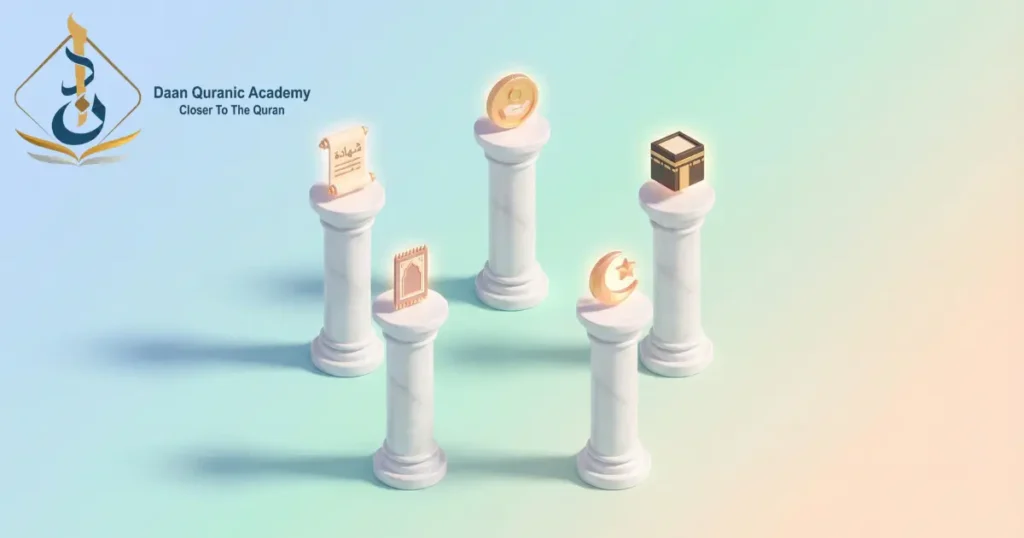
The Foundations of Faith and Life In Islam, faith is not merely a set of abstract beliefs but a lived reality expressed through specific acts of worship. These acts are known as the Five Pillars of Islam (Arkan al-Islam). They function as the spiritual framework that supports the life of a Muslim, providing a structure for devotion, morality, and community.Just as a building requires sturdy pillars to remain upright, the spiritual life of a believer relies on these five essential practices to maintain a strong connection with the Creator and a healthy relationship with humanity. 1. Shahada: The Testimony of Faith The first and most fundamental pillar is the Shahada, the declaration of faith. It is the gate through which one enters Islam. The testimony consists of the words:”Ashhadu alla ilaha illa-Allah, wa ashhadu anna Muhammadan rasul-Allah.”(I bear witness that there is no god worthy of worship except Allah, and I bear witness that Muhammad is the Messenger of Allah.)Significance: This pillar establishes the concept of Tawhid (the oneness of God). It is a lifelong commitment to monotheism and an acknowledgment of Prophet Muhammad (peace be upon him) as the final guide. Everything else in Islam stems from this core conviction. 2. Salah: The Five Daily Prayers Salah refers to the five obligatory prayers performed at specific times throughout the day: Dawn (Fajr), Noon (Dhuhr), Afternoon (Asr), Sunset (Maghrib), and Night (Isha).Significance: Prayer is the direct link between the servant and the Divine. It serves as a spiritual “reset,” allowing the believer to detach from the distractions of the world and find peace in the presence of God. It fosters discipline, mindfulness (Taqwa), and humility. When performed in a congregation, it also strengthens the bond of brotherhood and equality among Muslims. 3. Zakat: Almsgiving and Social Justice Zakat is the compulsory charitable contribution, typically 2.5% of a Muslim’s surplus wealth and savings annually, given to the poor and needy.Significance: The word “Zakat” literally means “purification” and “growth.” By giving a portion of their wealth, Muslims purify their souls from greed and recognize that all wealth ultimately belongs to God. It is a vital tool for social justice, ensuring that wealth circulates within the community and supports those in difficult circumstances. 4. Sawm: Fasting During Ramadan Sawm is the practice of abstaining from food, drink, and other physical needs from dawn until sunset during the holy month of Ramadan, the ninth month of the Islamic calendar.Significance: Fasting is a profound exercise in self-restraint and patience (Sabr). It allows believers to feel the hunger experienced by the less fortunate, fostering deep empathy and gratitude. Beyond physical abstinence, it is a time for intense spiritual reflection, increased prayer, and reading the Quran. 5. Hajj: The Pilgrimage to Mekka The Hajj is the pilgrimage to the holy city of Mecca that every Muslim who is physically and financially able must perform at least once in their lifetime.Significance: Hajj is the ultimate manifestation of Islamic unity and equality. Millions of Muslims from every corner of the globe gather in Mecca, dressed in simple white garments (Ihram), stripping away all distinctions of race, status, or nationality. It is a spiritual journey that commemorates the trials of Prophet Ibrahim (Abraham) and his family, representing a total surrender to the will of Allah.Conclusion: A Holistic Way of Life The Five Pillars of Islam are not isolated rituals; they are an integrated system designed to refine the human character. The Shahada provides the vision, Salah maintains the connection, Zakat promotes compassion, Sawm builds willpower, and Hajj symbolizes global unity. Together, they transform faith from a private feeling into a comprehensive way of life that benefits both the individual and society. Experience our unique approach first-hand. Book your free free trial sessions now with no strings attached.