
Beyond the Crescent: A Comprehensive Guide to Maintaining Spiritual Habits After Ramadan
The true measure of a successful Ramadan is not what you did during the thirty days — it is who you become once they are over. Maintaining spiritual habits after Ramadan is the real test of Istiqamah (steadfastness), and it is a challenge every Muslim faces when the structure, community energy, and heightened motivation of the blessed month give way to ordinary life. This guide provides a practical, Quran-grounded roadmap for staying consistent after Ramadan — combining spiritual discipline, daily Quranic connection, Arabic language learning, and Prophetic guidance into a sustainable year-round routine for Muslims across the UK, USA, Europe, and Australia.
This ayah captures everything that spiritual habits after Ramadan are meant to build toward: not a burst of thirty-day effort, but a lifetime of Istiqamah — steadfastness on the path of Allah. The angels that descend upon the steadfast are a divine reward for consistency, not intensity. That is the spirit that should carry every Muslim from the last night of Ramadan into the months that follow.
📑 Table of Contents
- Understanding Istiqamah: The Foundation of Post-Ramadan Spiritual Habits
- Practical Steps to Maintain Your Quranic Connection After Ramadan
- Bridging the Gap: Arabic as a Spiritual Tool After Ramadan
- Establishing Your Post-Ramadan Routine
- Fasting the Six Days of Shawwal
- The Power of Dua in Staying Consistent After Ramadan
- Overcoming Obstacles: What If I Slip?
- Frequently Asked Questions
Understanding Istiqamah: The Foundation of Post-Ramadan Spiritual Habits
The departure of the holy month leaves a bittersweet feeling in the hearts of Muslims worldwide. We miss the tranquility of السُّحُور (Suhoor), the communal warmth of الإِفْطَار (Iftar), and the profound spiritual elevation felt during التَّرَاوِيح (Tarawih) prayers. But the question every sincere Muslim faces after Eid is: how do I keep this alive? The Islamic answer is a single word: Istiqamah.
In Islamic terminology, الاِسْتِقَامَة (Istiqamah — steadfastness) refers to being upright, firm, and consistent on the path of Allah. It is the quality that transforms a month of intense spiritual experience into a lifetime of transformed character. When the Prophet ﷺ was asked for a piece of advice that would suffice a person entirely, he gave the most concise and complete answer possible:
“Say: ‘I believe in Allah,’ then be steadfast.”
Two words after the declaration of faith: be steadfast. This is the entire post-Ramadan programme condensed into a single Prophetic instruction. Maintaining spiritual habits after Ramadan is not a supplementary goal — it is the direct fulfilment of this command. And the Prophet ﷺ gave us the key principle for how to do it:
“The most beloved of deeds to Allah are those that are most consistent, even if they are small.”
Consistency over intensity. Small and steady over large and sporadic. This hadith is the entire philosophy of spiritual habits after Ramadan in one sentence — and it is the principle every practice in this guide is built upon. For a deeper exploration of the spiritual architecture of Ramadan itself, read our guide on Ramadan: A Spiritual Oasis for Positive Change.
Just as spiritual growth requires daily nourishment, learning Arabic requires consistent practice. If you stop engaging with the language after Eid, the vocabulary and grammar rules you worked hard for during Ramadan will fade quickly. Treat your Arabic studies as an act of عِبَادَة (Ibadah — worship) — a direct means to understand Allah’s word more intimately throughout the year. Maintaining spiritual habits after Ramadan and maintaining your Arabic journey are the same act of Istiqamah applied to two dimensions of the same goal.
Practical Steps to Maintain Your Quranic Connection After Ramadan
During Ramadan, many of us strive for a خَتْم (Khatm — complete recitation of the Quran). After Ramadan, the goal should shift from quantity to quality. The Companions (RA) were known to spend months revising and deeply absorbing a single surah rather than racing through the entire Quran repeatedly without comprehension. Post-Ramadan spiritual habits around the Quran should reflect this shift — from completing to connecting. For the full fiqh framework governing Ramadan fasting and the Quran’s role within it, read our Complete Beginner’s Guide to Ramadan Fiqh.
The “One Page a Day” Rule
Don’t overwhelm yourself with post-Ramadan guilt about reduced Quran reading. Commit to just one page daily in Arabic — a practice so light that no day is too busy for it, yet so consistent that it compounds into a complete recitation every few months. If you are still a beginner, spend 15 minutes focusing on the Arabic alphabet or core Tajweed rules instead. The principle of maintaining spiritual habits after Ramadan is not to replicate Ramadan — it is to remain in consistent contact with the Quran at a sustainable pace throughout the year.
Deepen Your Understanding Through Tafsir
For non-Arabic speakers, reciting without understanding can sometimes feel disconnected from worship — as if the ritual is present but the meaning is absent. Use the post-Ramadan period to change that relationship entirely. Read the translation of the verses you recite daily. Learn the root words of common Quranic vocabulary — understanding that ح-م-د (H-M-D) is the root of Alhamdulillah, which is also the root of the Prophet’s own name Muhammad, reveals the Quran as a living web of meaning rather than isolated text. Listen to professional Quranic recitation while following the text to improve your pronunciation and rhythm. These three practices transform post-Ramadan spiritual habits around the Quran from maintenance into genuine growth.
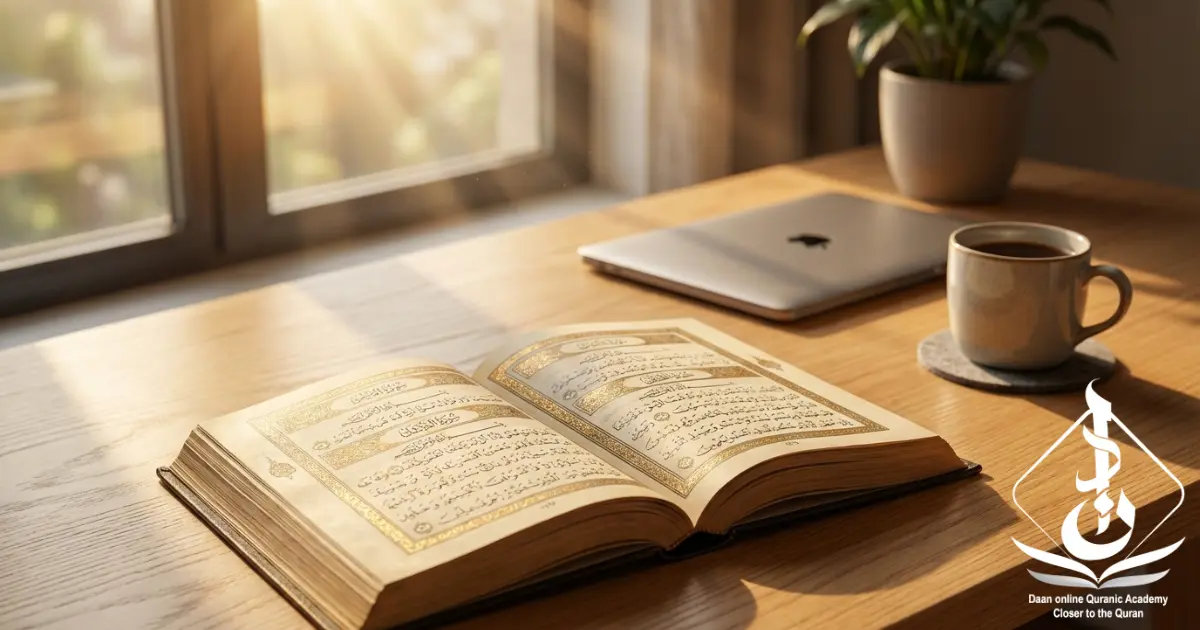
Bridging the Gap: Arabic as a Spiritual Tool After Ramadan
One of the most effective ways to sustain spiritual habits after Ramadan is to see Arabic not as a subject to be studied but as a key to the heart — a living bridge between the reader and the divine meaning of every ayah they recite. When you understand the language, your Salah transforms from a ritual into a deep, personal conversation with your Creator. Every Subhan, every Alhamdu, every Allahu Akbar becomes a statement understood rather than a sound performed.
The Power of Daily Arabic Vocabulary
Start with the words used in your daily أَذْكَار (Adhkar — remembrances). When you understand the precise linguistic depth of terms like SubhanAllah — that سُبْحَانَ (Subhana) derives from a root implying free, swift movement through open water, conveying that Allah transcends every limitation — your heart engages on a qualitatively different level. This is what maintaining spiritual habits after Ramadan through Arabic study actually produces: not just language competence, but a transformation in the quality of every act of worship. Our guide on Common Arabic Expressions with “Allah” provides a deep linguistic analysis of the most important daily phrases to begin with.
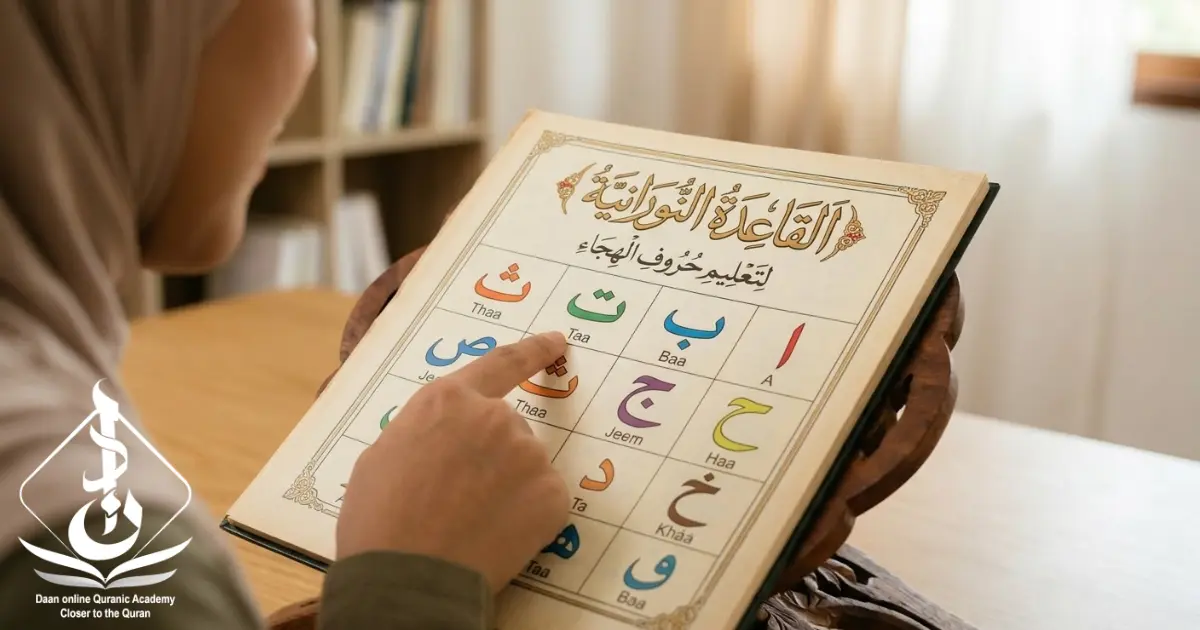
Learning Arabic independently can be motivating but isolating — particularly for English-speaking Muslims who have no Arabic-speaking household to practise in. A structured course with a qualified native teacher provides the accountability, curriculum, and live correction that self-study cannot. Our Quran, Tajweed, and Arabic language courses are designed specifically for English-speaking Muslims at every level — from beginners learning the alphabet to intermediate students building Quranic comprehension — in private 1-on-1 live sessions that sustain the post-Ramadan spiritual habits momentum you built during the blessed month.
Establishing Your Post-Ramadan Routine
The “Post-Ramadan Slump” is real, well-documented among scholars and teachers of Islam, and entirely preventable — but only if you replace the Ramadan structure with a deliberate new structure before it collapses. The key insight about maintaining spiritual habits after Ramadan is that Ramadan provided external scaffolding: community Iftar, Tarawih schedules, social reinforcement. Post-Ramadan, you must build your own internal scaffolding.
| Time of Day | Spiritual / Learning Habit | Duration |
|---|---|---|
| Morning (after Fajr) | Morning Adhkar in Arabic — with attention to meaning | 10 minutes |
| Late morning | One page of Quran recitation with translation review | 10–15 minutes |
| Afternoon | Arabic vocabulary review — 5 new Quranic root words | 10 minutes |
| Evening (after Maghrib) | Evening Adhkar + 5 minutes Tafsir reading | 10 minutes |
| Before sleep | مُحَاسَبَة (Muhasabah — self-reflection) on the day’s deeds and intentions | 5 minutes |
This routine totals approximately 45 minutes — less than half of what most people spend on social media daily. Yet applied consistently, it creates a complete structure of spiritual habits after Ramadan that addresses Quran recitation, linguistic understanding, remembrance, and spiritual accountability. The total weekly Quran engagement, if maintained, covers more ground in genuine comprehension than a rushed Khatm approached without understanding.
The most reliable method for sustaining post-Ramadan spiritual habits is habit-stacking — attaching each new practice to an existing anchor. Adhkar after Fajr; one page of Quran immediately after Dhuhr; vocabulary review during lunch. When the new habit is chained to an existing behaviour, it requires no new decision-making — it becomes automatic within two to three weeks of consistent application.
Fasting the Six Days of Shawwal
Among the most powerful spiritual habits after Ramadan available to every Muslim is the voluntary fast of the six days of Shawwal — a Prophetic Sunnah that carries extraordinary reward and directly bridges the Ramadan fasting discipline into the wider year. The Prophet ﷺ described its reward in precise terms:
“Whoever fasts Ramadan and follows it with six days of Shawwal, it will be as if he fasted for a lifetime.”
The scholars explain this on the basis that every good deed is multiplied ten times — Ramadan’s thirty days equal three hundred, and the six Shawwal days equal sixty, totalling three hundred and sixty: an entire year. This single Sunnah transforms Ramadan from an annual event into a year-round ibadah cycle. The six days of Shawwal are the most accessible of all post-Ramadan spiritual habits because they require no new learning — simply applying the discipline of fasting already established during Ramadan to six additional days within the same month.
Spiritual Benefit: Sustaining Self-Discipline
Fasting these six days keeps the physical and spiritual discipline of Ramadan alive in the body and the nafs immediately after Eid. It prevents the abrupt spiritual contrast between the structured Ramadan and an unstructured post-Eid period — one of the primary causes of the “Post-Ramadan Slump.” This is among the most Prophetically grounded of all spiritual habits after Ramadan.
Language Connection: Fasting Vocabulary and Hijri Calendar
The six days of Shawwal are also an excellent framework for learning the specific duas for breaking the voluntary fast and for memorising the names of the twelve Hijri months in Arabic — a practical linguistic goal that deepens your connection to the Islamic calendar and the vocabulary of worship. This dual approach — spiritual practice paired with targeted Arabic learning — is the most effective strategy for maintaining spiritual habits after Ramadan over the long term.
The Power of Dua in Staying Consistent After Ramadan
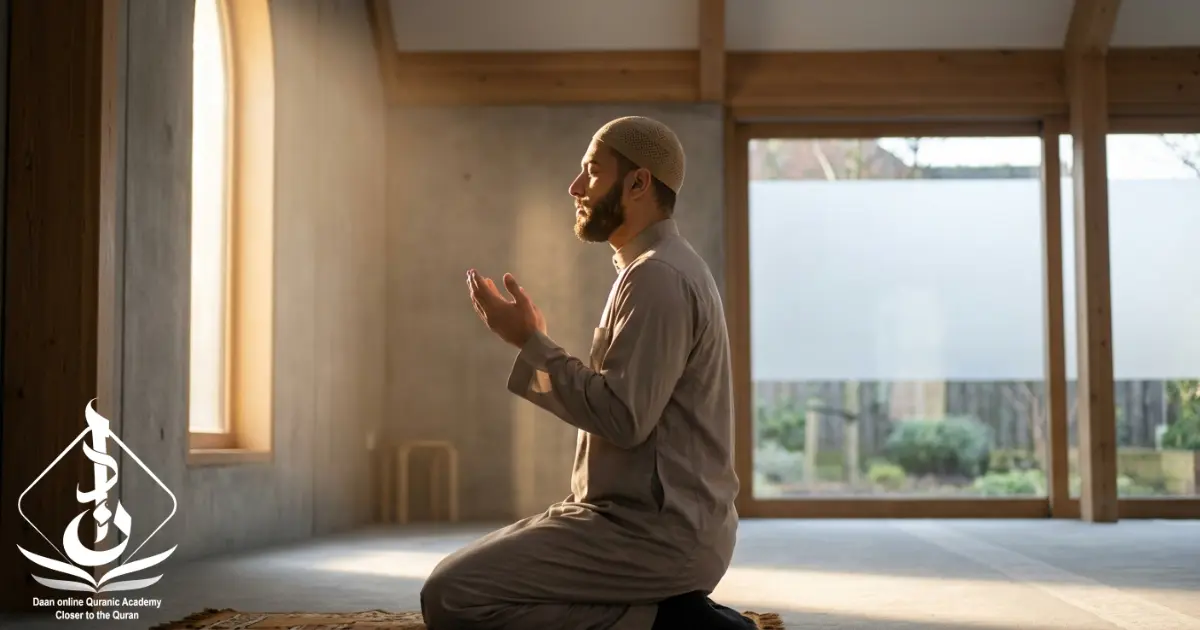
Never underestimate the role of supplication in sustaining spiritual habits after Ramadan. Istiqamah is not achieved by willpower alone — it is a gift from Allah that must be actively sought. The Prophet ﷺ himself made a specific dua for steadfastness of the heart, teaching us that even the most spiritually elevated of human beings understood their dependence on Allah for consistency:
“O Turner of the hearts, keep my heart firm upon Your religion.”
يَا مُقَلِّبَ الْقُلُوبِ ثَبِّتْ قَلْبِي عَلَى دِينِكَ
(Yā Muqallibal-qulūb, thabbit qalbī ʿalā dīnik)
Learning this supplication in its original Arabic language adds a layer of sincerity and direct connection that translations often miss. When you say يَا مُقَلِّبَ الْقُلُوبِ and understand that مُقَلِّب literally means “the One who turns over and transforms hearts” — and that you are asking this very attribute of Allah to hold your heart steady — the dua moves from recitation to genuine communication. This is the deepest level of maintaining spiritual habits after Ramadan: not merely performing worship, but engaging with it in full understanding.
Overcoming Obstacles: What If I Slip?
Iman fluctuates — this is not a deficiency of faith but a universal human reality acknowledged by the Prophet ﷺ himself. You might miss a day of Quran reading, skip an Arabic class, or find the post-Eid social world pulling you away from the morning Adhkar you established in Ramadan. The question for spiritual habits after Ramadan is never “Did I slip?” — it is always “What do I do next?”
Avoid the “All or Nothing” Mindset
The most damaging pattern in post-Ramadan spiritual habits is the binary thinking that missing one day means the habit is broken. If you can’t study Arabic for an hour, study for five minutes. If you can’t read a full page of Quran, read one ayah with its translation. The Prophet’s teaching about consistency applies here directly: a small deed done consistently is more beloved to Allah than a large deed done once. Every partial practice is infinitely better than complete absence.
Return Through Tawbah — Every Day Is a New Beginning
If you fall back into old habits, the Islamic response is immediate and complete: التَّوْبَة (Tawbah — sincere repentance and return to Allah). Every day is a new opportunity to begin your “personal Ramadan.” The Companions (RA) used to supplicate for six months after Ramadan for Allah to accept their deeds — not assuming acceptance, but humbly seeking it with continued effort. This spirit of ongoing striving, not achievement-based satisfaction, is the true foundation of maintaining spiritual habits after Ramadan year after year. See our guide on Reclaiming the Spirit of the Home in Ramadan for how to create an environment that sustains these habits even when personal motivation fluctuates.
Build External Accountability
One of the structural advantages of Ramadan is community — the mosque, the family, the shared schedule all provide external accountability that supports individual practice. Post-Ramadan spiritual habits lose that scaffolding, which is precisely why structured learning environments matter so much after Eid. A qualified teacher who monitors your Arabic progress, knows your goals, and checks your consistency provides exactly the accountability that community Tarawih provided during Ramadan. Explore our approach to tutor accountability and student support — designed specifically for English-speaking Muslims building year-round Islamic learning habits.
Frequently Asked Questions About Maintaining Spiritual Habits After Ramadan
How do I stay consistent after Ramadan when motivation drops?
The most reliable method for maintaining spiritual habits after Ramadan when motivation drops is to shift from motivation-dependent practice to structure-dependent practice. Motivation fluctuates; structure remains. Attach your post-Ramadan habits to existing daily anchors — Adhkar immediately after Fajr, Quran after Dhuhr, Arabic review during lunch — so they require no motivational decision-making. The Prophet ﷺ’s teaching that the most beloved deeds are consistent small ones (Sahih al-Bukhari 6464) is the direct antidote to waiting for Ramadan-level motivation before practising: begin with something small enough to do on your worst day, and do it every day.
Is it allowed to fast the six days of Shawwal non-consecutively?
Yes — the six days of Shawwal may be fasted consecutively or spread throughout the month, according to the majority of scholars including Imam Al-Nawawi and Ibn Qudamah. The hadith in Sahih Muslim (1164) does not specify that the days must be consecutive, only that they be within the month of Shawwal. The only restriction is that they must all fall within Shawwal itself. For those who missed days of Ramadan due to illness, travel, or other valid reasons, the majority position is that Shawwal voluntary fasts should be preceded by completing the Ramadan qada first — though scholars differ on this point.
What is the minimum Quran practice to maintain after Ramadan?
Scholars recommend a minimum of one page per day for those who recited regularly during Ramadan — enough to complete the Quran approximately every two months. For those at earlier stages of learning, 15 minutes of focused Tajweed or alphabet practice daily is a sufficient and sustainable minimum. The key principle for post-Ramadan spiritual habits around the Quran is that consistency matters more than quantity: one page every day for a year produces far more genuine connection to the Quran than sporadic bursts of intensive reading followed by weeks of absence.
How long does it take to see results from learning Arabic after Ramadan?
With consistent daily practice of 15–20 minutes and regular sessions with a qualified native teacher, most English-speaking adult beginners begin recognising common Quranic vocabulary and understanding key phrases in their Salah within 8–12 weeks. Children, whose phonological systems are more flexible, often progress faster. The transition from “reciting without understanding” to “understanding basic meaning” is one of the most spiritually transformative milestones in any Muslim’s journey — and it is entirely achievable as a spiritual habit after Ramadan with the right instruction. Book a free trial class with Daan Academy to begin with a qualified native Egyptian tutor.
What did the Companions do after Ramadan to stay spiritually consistent?
The Companions (RA) are reported to have approached post-Ramadan consistency with profound seriousness. Ibn Rajab al-Hanbali and other classical scholars record that the Salaf (pious predecessors) would spend six months after Ramadan making dua for Allah to accept their Ramadan, and the preceding six months asking Allah to allow them to reach the next Ramadan. This framing — in which the entire year is oriented around Ramadan as its spiritual centrepiece — is the exact model of maintaining spiritual habits after Ramadan that modern Muslims can adopt. The specific practices they maintained included Shawwal fasting, continued night prayer, generous charity, and consistent Quran recitation.
Can online Quran classes help me maintain spiritual habits after Ramadan?
Yes — structured online Quran and Arabic classes are one of the most effective tools for sustaining post-Ramadan spiritual habits precisely because they provide the external accountability that Ramadan community structures naturally offered. A scheduled weekly session with a qualified teacher creates a commitment that is far harder to deprioritise than a private self-study intention. At Daan Quranic Academy, our certified native Egyptian tutors offer private 1-on-1 live sessions for all levels — children and adults, beginners and advanced — across the UK, USA, Europe, and Australia. See our flexible plans starting from $9/hr and begin your year-round Islamic learning journey.
Keep the Ramadan Spirit Alive — All Year Long
Ramadan was the training ground; the rest of the year is the actual journey. At Daan Quranic Academy, we specialise in helping English-speaking Muslims, reverts, and children maintain their spiritual habits after Ramadan through structured Quran, Tajweed, and Arabic learning — so the light of the blessed month never fully dims.
No commitment required. One free session to experience the Daan Academy difference.
Final Thoughts: Acceptance and Consistency
The Companions of the Prophet ﷺ used to supplicate for six months after Ramadan for Allah to accept their deeds — not assuming acceptance, but seeking it actively through continued effort and humility. Let our post-Ramadan goal carry the same dual intention: acceptance of what we offered in Ramadan, and consistency in what we build after it.
Ramadan was the training ground. The rest of the year is the actual journey. By combining the spiritual habits after Ramadan outlined in this guide — Istiqamah through small consistent practices, daily Quran engagement, Arabic vocabulary building, Shawwal fasting, and the dua for steadfast hearts — you are not simply maintaining a seasonal elevation. You are building a lifestyle of growth that will be stronger next Ramadan than it was this one, and stronger the year after that than the year before.
May Allah accept our Ramadan, grant us Istiqamah on His path, keep our hearts turned toward Him throughout the year, and make our Arabic journey a means of drawing ever closer to His Book.
يَا مُقَلِّبَ الْقُلُوبِ ثَبِّتْ قَلْبِي عَلَى دِينِكَ
(O Turner of the hearts, keep my heart firm upon Your religion.)
Find more guides on Islamic spiritual practice and Quranic learning on our Islamic education blog.