For centuries, fasting during the month of Ramadan has been viewed primarily as a spiritual and devotional pillar. However, in recent decades, fasting has become a focal point of interest for global research laboratories and major medical universities. It is no longer just a religious rite; it is being studied as a powerful biological mechanism capable of resetting the body’s “biological clock” and renewing its cells. As Benjamin Franklin once wisely noted, “To lengthen thy life, lessen thy meals,” a sentiment that modern science is now validating through rigorous clinical study.
In this article, we will dive deep into the human body to understand what happens scientifically during fasting and how hours of abstinence from food transform into a comprehensive therapeutic journey.
1. Metabolic Switching: From Glucose to Ketones
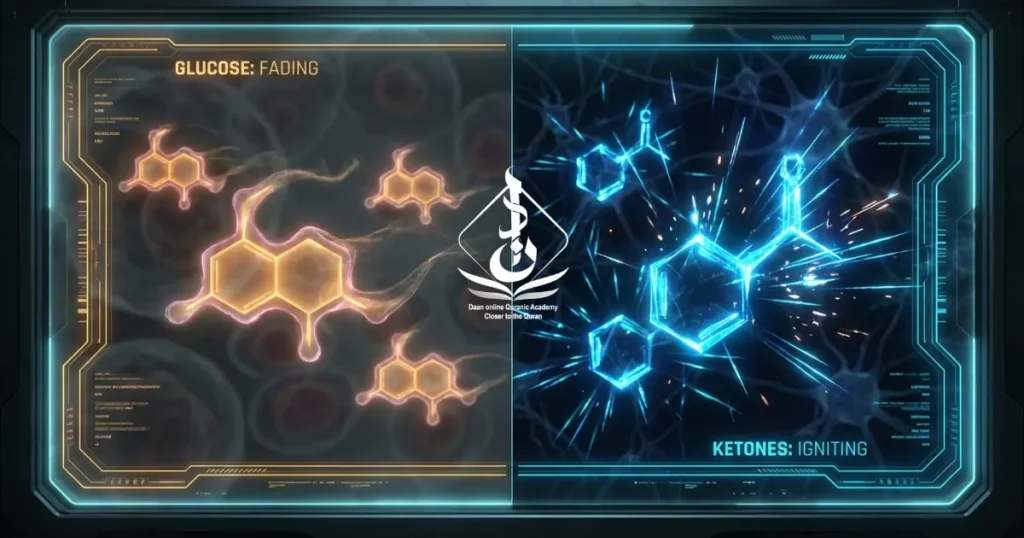
The most significant process occurring in the body during fasting is “Metabolic Switching.” Under normal conditions, the body relies on glucose derived from carbohydrates as its primary energy source. However, after approximately 8 to 12 hours of fasting, the body depletes its glycogen stores in the liver.
This is where the body’s “biological intelligence” kicks in. It begins breaking down stored fat into fatty acids, which are then converted into “Ketone bodies.” These ketones are not just an alternative energy source; they are ultra-powerful signaling molecules that activate specific genes linked to longevity and disease resistance. Dr. Mark Mattson, a professor of neuroscience at Johns Hopkins University, describes this switch as “an evolutionary adaptation that improves performance and resilience.” This switch helps reduce insulin resistance, making fasting an effective tool for preventing Type 2 diabetes and improving metabolic efficiency.
2. The Miracle of “Autophagy”
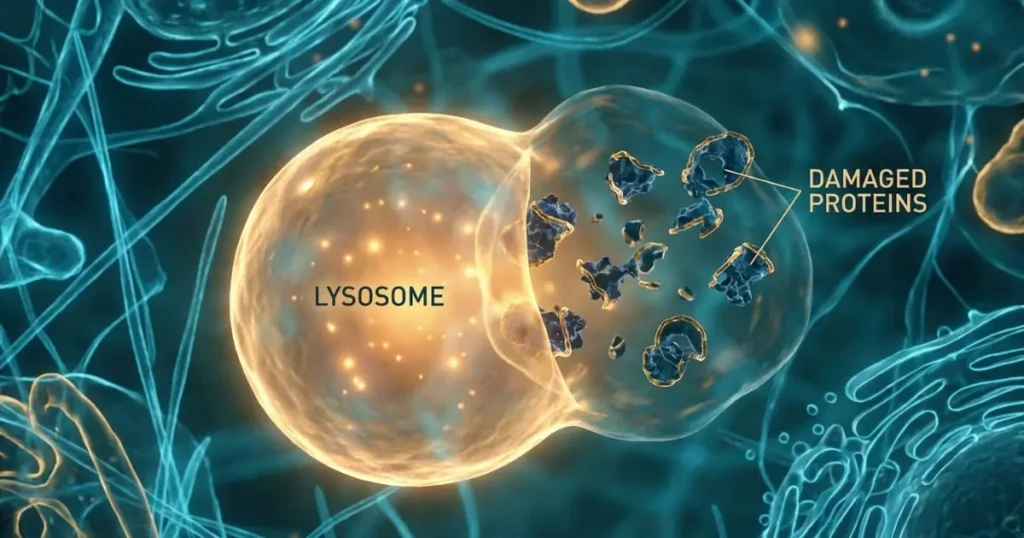
In 2016, Japanese scientist Yoshinori Ohsumi won the Nobel Prize for his discovery of the mechanisms of “Autophagy.” This process acts as an internal “recycling system” within cells and reaches its peak during prolonged fasting. Paracelsus, the father of toxicology, once stated, “Fasting is the greatest remedy—the physician within,” a quote that perfectly encapsulates the essence of autophagy.
When the external supply of nutrients is cut off, the cell begins searching for damaged components, worn-out proteins, or internal microbes to “eat” and convert into energy or new building blocks. This process helps in:
- Delaying Aging: By disposing of cellular waste that causes senescence.
- Cancer Prevention: By destroying cells that have begun showing signs of abnormal division.
- Neuroprotection: Protecting against neurodegenerative diseases like Alzheimer’s and Parkinson’s, as fasting clears the brain of harmful amyloid protein plaques.
3. Fasting and Brain Health: Enhancing Cognitive Abilities
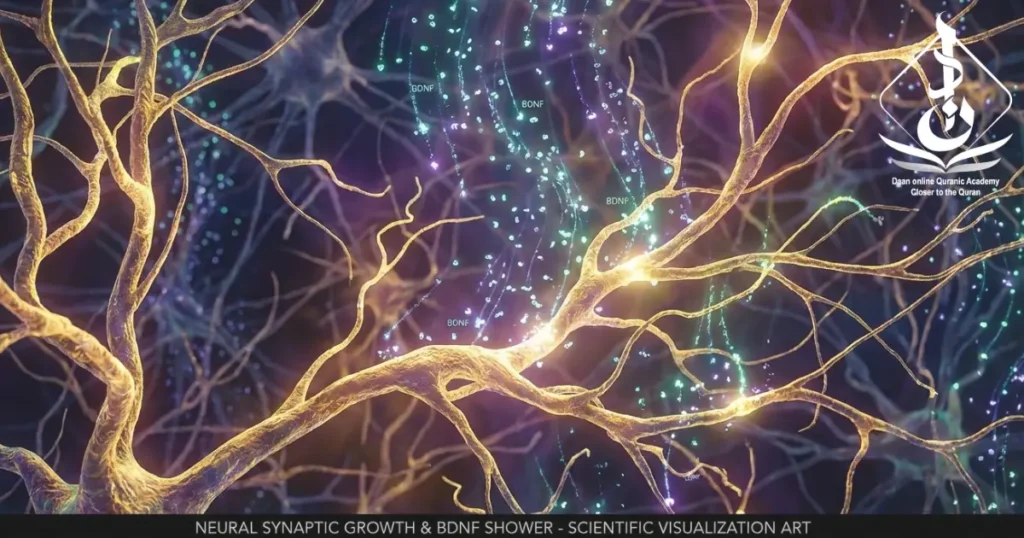
Contrary to the common belief that fasting causes mental lethargy, science proves the opposite. During fasting, the production of a protein called “Brain-Derived Neurotrophic Factor” (BDNF) increases. This protein acts like “fertilizer” for neurons; it helps build new nerve cells and strengthens the connections between existing ones.
As the ancient Greek physician Hippocrates famously said, “To eat when you are sick, is to feed your illness,” implying that the body’s energy is better spent on healing and cognitive maintenance than on continuous digestion. Moreover, relying on ketones as fuel for the brain provides more stable and cleaner energy compared to glucose, reducing “brain fog” and increasing focus and the ability to learn.
4. Boosting the Immune System and Reducing Inflammation
Chronic inflammation is the hidden root of most modern diseases, from heart disease to arthritis. Research has shown that fasting significantly reduces levels of pro-inflammatory “cytokines” in the blood.
Regarding immunity, a study conducted by the University of Southern California (USC) found that fasting for two to four days (or recurrent fasting as in Ramadan) stimulates stem cells to produce entirely new white blood cells. Dr. Valter Longo, director of the USC Longevity Institute, notes that “Fasting gives the ‘OK’ for stem cells to go ahead and begin proliferating and rebuild the entire system.” This effectively “resets” the immune system, which is vital, especially after periods of illness or stress.
5. Cardiovascular Health
Fasting positively affects all indicators of heart health. It assists in:
- Lowering Blood Pressure: By improving arterial elasticity and balancing the autonomic nervous system.
- Improving Lipid Profiles: It reduces levels of “bad” cholesterol (LDL) and triglycerides while maintaining or raising “good” cholesterol (HDL).
- Resting the Heart Muscle: Resting heart rate decreases, reducing the effort exerted by the body’s vital pump.
6. The Gut Microbiome: A Warrior’s Rest
The gut is home to trillions of beneficial bacteria (the microbiome) that influence everything from our mood to our immunity. Fasting gives the digestive system a chance to recover. Studies show that fasting changes the composition of gut bacteria in favor of species that help burn fat and reduce inflammation. As the saying goes, “A rested gut is a healthy gut,” and science confirms that periodic rest prevents “leaky gut” syndrome, which causes allergies and autoimmune issues.
7. The Scientific Protocol for Healthy Fasting in Ramadan
To achieve these scientific benefits, a correct nutritional methodology must be followed. Science warns against “destroying” the benefits of fasting with poor habits at Iftar. This aligns with the Prophetic wisdom: “The son of Adam does not fill any vessel worse than his stomach,” emphasizing moderation.
- The Rule of Breaking the Fast: It is preferred to start with dates and water. Dates provide fast-absorbing sugars to raise glucose levels in the brain, and water rehydrates the body immediately.
- Avoiding “Insulin Shock”: Consuming massive amounts of sweets and fried foods immediately upon Iftar causes a sharp spike in insulin, leading to fat storage and extreme lethargy.
- Smart Suhoor: Suhoor should contain “complex carbohydrates” (such as oats, legumes, whole grains) and slow-digesting proteins to ensure a steady supply of energy for as long as possible and reduce hunger.
- Hydration Strategy: Drinking small, distributed amounts of water between Iftar and Suhoor is far better than drinking large quantities at once.
Conclusion
Fasting in Ramadan is not merely an abstinence from food and drink; it is a “comprehensive maintenance” process for the human body at the cellular and molecular levels. It mirrors the essence of the Prophetic tradition: “Fast and you shall be healthy” (صوموا تصحوا).
Modern science only confirms the ancient wisdom behind fasting, demonstrating it as the most powerful natural tool for enhancing physical and mental health. When applied in a scientifically balanced way, it grants individuals an annual opportunity to renew their biological youth and protect themselves from modern-age diseases.
Suggested Scientific References for Further Reading:
- Research by Dr. Yoshinori Ohsumi on “Autophagy” (Nobel Prize in Medicine).
- Dr. Mark Mattson, “Intermittent Metabolic Switching, Neuron Plasticity and Brain Health,” Nature Reviews Neuroscience.
- Valter Longo et al., “Fasting-mimicking diet and markers/risk factors for aging, diabetes, cancer, and cardiovascular disease,” Science Translational Medicine.
Experience our unique approach first-hand. Book your free free trial sessions now with no strings attached.